Adaptation Theory: Patterns Across the Funnel
The Wicked funnel is a 125-year case study in how stories move between media. This page extracts the patterns that recur at each translation. If you want to understand adaptation as craft — not just this specific adaptation — this is where to look.
1. The POV Flip
At the first translation (Baum → Maguire), the single most powerful move is the point-of-view flip. Baum tells the story of the girl who kills the Witch. Maguire tells the story of the Witch. The plot is largely the same; the meaning is reversed because the lens has changed.
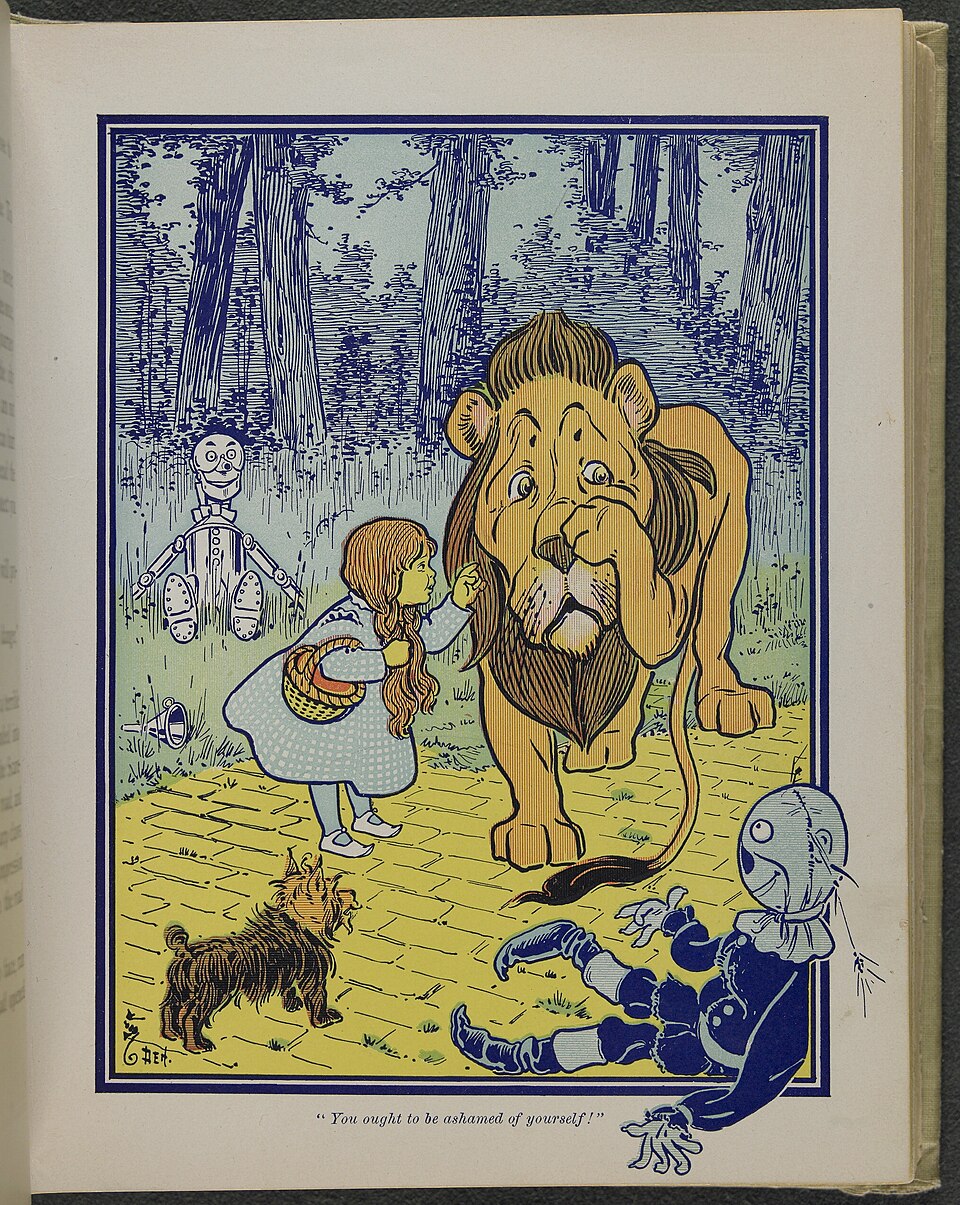
— the Witch is an obstacle (1900)
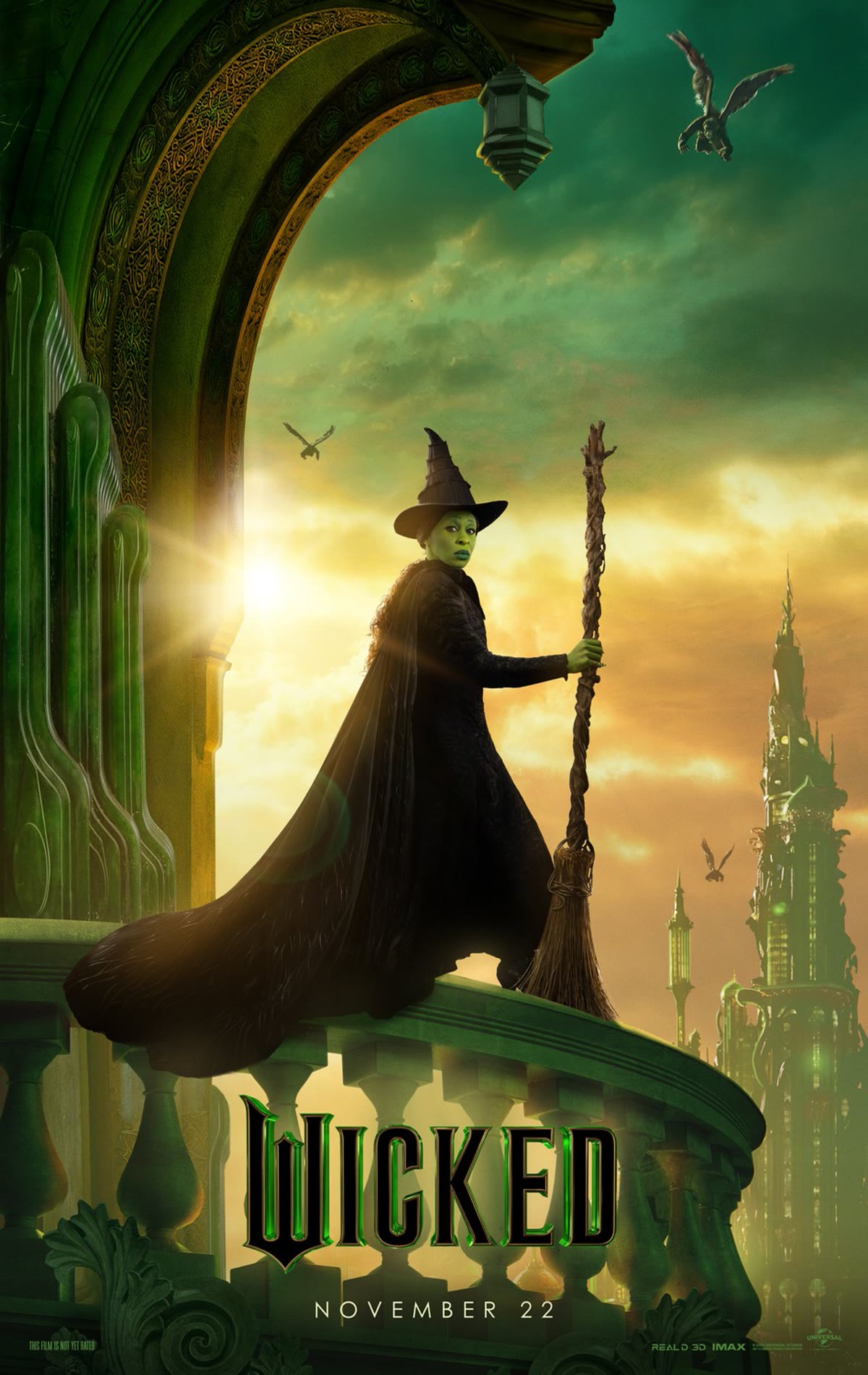
the protagonist (2024 film)
This is the foundational adaptation technique for "re-visioning" a canonical work. Examples in other properties: Jean Rhys's Wide Sargasso Sea (the madwoman from Jane Eyre), Tom Stoppard's Rosencrantz and Guildenstern Are Dead (the minor characters from Hamlet), and John Gardner's Grendel (the monster from Beowulf). Maguire's Wicked is in this tradition. The technique is: keep the plot, change whose story it is.
2. Naming as Enabling
Baum's Witch has no name. Maguire names her Elphaba. Once named, she has an interior life; once she has an interior life, she can be a protagonist; once she can be a protagonist, the whole downstream chain is possible.
This is more than a detail. Naming is the enabling act of character. A named character has a biography, a psychology, a point of view. An unnamed character is a function. Maguire's single act of naming is the seed of the entire franchise.
3. Compression vs. Expansion
Each translation in the funnel moves in a consistent direction with respect to time:
| Translation | Direction | Mechanism |
|---|---|---|
| Baum 1900 → Maguire 1995 | Expansion | Baum's brief villain becomes the center of a 400-page life. |
| Maguire 1995 → Musical 2003 | Compression | A 40-year life becomes a 2h 50m show focused on the school years. |
| Musical 2003 → Film 2024/25 | Re-expansion | Act 1 alone becomes a 160-minute film, drawing back on Maguire for cut material. |
The pattern: each adapter goes back to the source their predecessor used, and re-expands what was compressed. Schwartz/Holzman compressed Maguire to make the stage show. Chu/Holzman/Fox re-expanded, but not by un-compressing the stage show — by going back to Maguire (and to new invention) for material the stage show had dropped. The funnel is not strictly reductive. It oscillates.
4. The Dark-to-Light Gradient
The material gets lighter as it moves down the funnel:
| Stage | Tone | Audience |
|---|---|---|
| Baum 1900 | Light, comic, optimistic | Children |
| Maguire 1995 | Dark, ironic, tragic | Adults |
| Musical 2003 | Mixed; comic surface, melancholy core | Broad (families, tourists, fans) |
| Film 2024/25 | Spectacular; family-friendly with edge | Global mass audience |
Maguire darkens Baum. The musical lightens Maguire. The film lightens further, while adding visual spectacle. This is the standard pattern for a property moving toward a mass audience: the further downstream, the lighter and more spectacular. The dark core (the Witch is sympathetic, the Wizard is a fraud) is preserved at every stage, but it is progressively wrapped in more accessible packaging.
5. The Public-Domain Foundation
The entire chain rests on Baum's book being in the public domain. Maguire did not need permission to write a derivative novel. If Baum's book were still under copyright, the estate would likely have blocked an adult political revision (estates frequently do). The legal status of the source is not a detail — it is the enabling condition.
The 1939 MGM film is under copyright. This shaped both downstream adaptations: the stage musical was legally prohibited from referencing MGM's visuals, which forced it to invent its own. The 2024 film can reference MGM (Universal negotiated the rights), which is why it nods to the 1939 film. The copyright status of the source determines what the adaptation is allowed to do.
6. The Legal Constraint as Aesthetic Engine
Constraints produce invention. The stage musical's "twisted Edwardian" look exists because the production could not reference MGM. The ruby slippers become silver shoes (Baum's original) in the novel because Maguire cannot legally use MGM's ruby. The film's MGM references exist because Universal cleared those rights. At every stage, the legal constraint forces a specific aesthetic choice, and that choice becomes part of the work's identity.
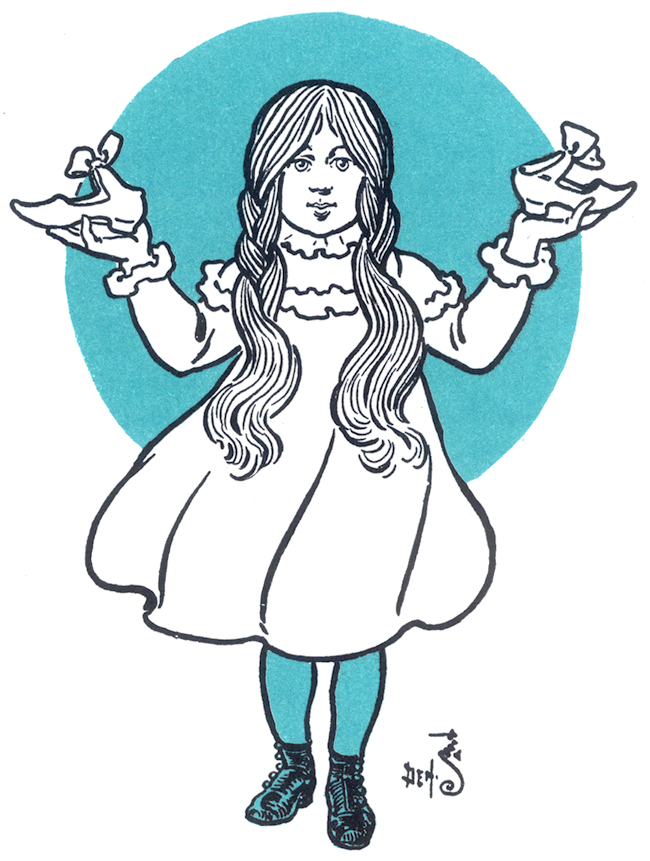
This is a general pattern in adaptation: the things you cannot do shape the thing you make. A property that can do anything often does nothing interesting. A property that is constrained often invents.
7. The Cutting-Room Floor as Evidence
Adaptation is revealed as much by what is dropped as by what is kept. In the Wicked funnel:
- Maguire drops Baum's episodic middle (Kalidahs, poppies, China Country) — it serves a children's-story structure he does not need.
- The musical drops Maguire's adult content (sex, assassination, religion, the child Liir) — it serves a novel's adult register that a Broadway musical cannot sustain.
- The film re-imports some of what the musical cut (Elphaba's childhood), but not all of it.
- "Which Way is the Party?" was cut in the San Francisco tryout and replaced with "Dancing Through Life." The cut is documented; the song is lost to the production but survives in demo recordings.
Reading the cuts tells you what each adapter thought was load-bearing and what was scaffolding. The cuts are the adapter's priorities made visible.
8. The Top-Down / Bottom-Up Feedback Loop
Adaptation is not strictly top-down. Performers feed back into the design:
- The 2003 San Francisco tryout rebalanced Elphaba and Glinda because Chenoweth's Glinda was dominating — a performer's force reshaping the book.
- Erivo contributed Elphaba's micro-braids and nails in the 2024 film — a performer feeding back into the visual design.
- The two-part split was Chu's pitch, not Universal's initial plan — a director reshaping the business structure.
The funnel is not a one-way pipe. At every stage, the people executing the adaptation push back up the chain and reshape the material they inherited. Adaptation is a negotiation, not a transmission.
9. The Song as Compression Device
In the musical and film, songs do specific structural work:
- The "I want" song ("The Wizard and I") establishes Elphaba's desire in 4 minutes. In prose, this would take a chapter.
- The rivalry song ("What Is This Feeling?") establishes the central relationship in 3 minutes.
- The bonding song ("Popular") turns the relationship in 4 minutes.
- The climax song ("Defying Gravity") stages the transformation in 6 minutes.
A song compresses emotional and narrative information more densely than prose or dialogue. This is why the musical can cover the same ground as a 400-page novel in under three hours: the song is the compression format. The film inherits this and adds the camera, which compresses further (a close-up of Elphaba's face during "Defying Gravity" does in seconds what the stage needs a full number to do).
10. The Happy Ending as Commercial Decision
In the novel, Elphaba dies. In the musical and film, she survives. This is the single biggest plot change in the funnel, and it is an adaptation decision driven by the target medium and audience:
- A Broadway musical aimed at families and tourists cannot end with the protagonist's death. The audience would not return.
- A global blockbuster film franchise even more so.
- The survival ending also creates the sequel possibility (which the Maguire novels provided in Son of a Witch).
The happy ending is not an artistic compromise — it is a structural consequence of the medium. If you are writing for a mass audience in a commercial form, the ending changes. This is true across adaptation: the medium dictates the ending more than the source does.
11. The Cumulative Weight of Invention
Each adapter inherits a pile of material and adds to it. By the time we reach the 2024 film, the "Wicked" property contains:
- Baum's geography and character names (1900)
- MGM's visual iconography (1939) — usable by the film, not by the stage musical
- Maguire's Elphaba, Shiz, Animal plot, Fiyero, Nessarose, Grimmerie, Kiamo Ko, the tonal reversal (1995)
- Schwartz's score (2003)
- The musical's happy ending and friendship spine (2003)
- The film's re-expansion, new songs, practical sets, and MGM visual references (2024/25)
None of these layers is replaced. They accumulate. The 2024 film is simultaneously a descendant of Baum, MGM, Maguire, Schwartz/Holzman, and Chu. Adaptation is accretive, not substitutive. This is why a "faithful adaptation" is an incoherent concept: faithful to which layer? The 2024 film is faithful to all of them, in different ways, and unfaithful to all of them, in different ways.
The Takeaway
If there is one lesson from the Wicked funnel for anyone thinking about adaptation as craft, it is this:
Each adapter adds more than they remove. The source is never replaced; it is buried under layers of later invention, each layer shaped by the legal, commercial, and artistic constraints of its moment. The final work — the 2024 film — is an archaeological site, with Baum at the bottom, MGM next, then Maguire, then Schwartz/Holzman, then Chu. Dig anywhere and you hit a different layer. That is what adaptation is.