Book → Book: How Baum Becomes Maguire
The first translation in the funnel is not Baum → musical. It's Baum → Maguire. A 1995 adult political novel is the missing intermediate that makes everything downstream possible.
The Source: Baum's 1900 Novel
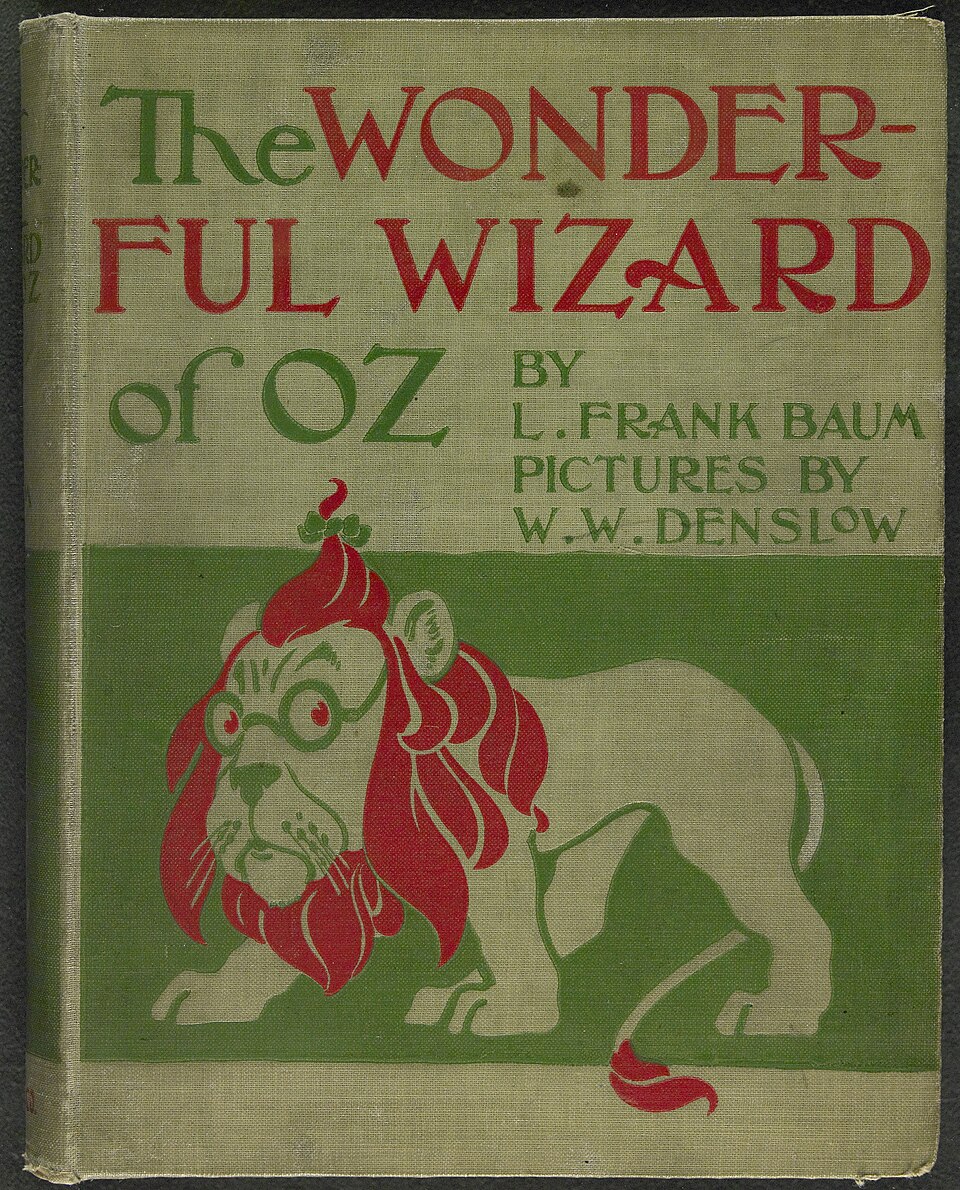
L. Frank Baum's The Wonderful Wizard of Oz (1900) is a children's fairy tale. The Wicked Witch of the West appears in only a handful of chapters, has no name, no backstory, no motivation beyond "wants the silver shoes," and is killed when Dorothy throws a bucket of water on her. She is, in the source, a plot obstacle — not a character.
Baum's book is in the public domain (the original copyright was not renewed). That means anyone can legally adapt, rewrite, sequel, or parody it without asking permission. This is the legal foundation that makes Maguire's novel — and everything downstream — possible.
The Pivot: What Maguire Saw in the Source
Gregory Maguire's 1995 novel Wicked: The Life and Times of the Wicked Witch of the West is the first creative act of distillation in the chain. His move is simple to state and difficult to execute: take the villain and make her the protagonist.
Read the 1900 book. Note that the "Wicked Witch" is never given a motivation. Ask: what would make a person do the things she does? Answer that question with a full life — childhood, family, education, politics, love, loss. The result is a novel.
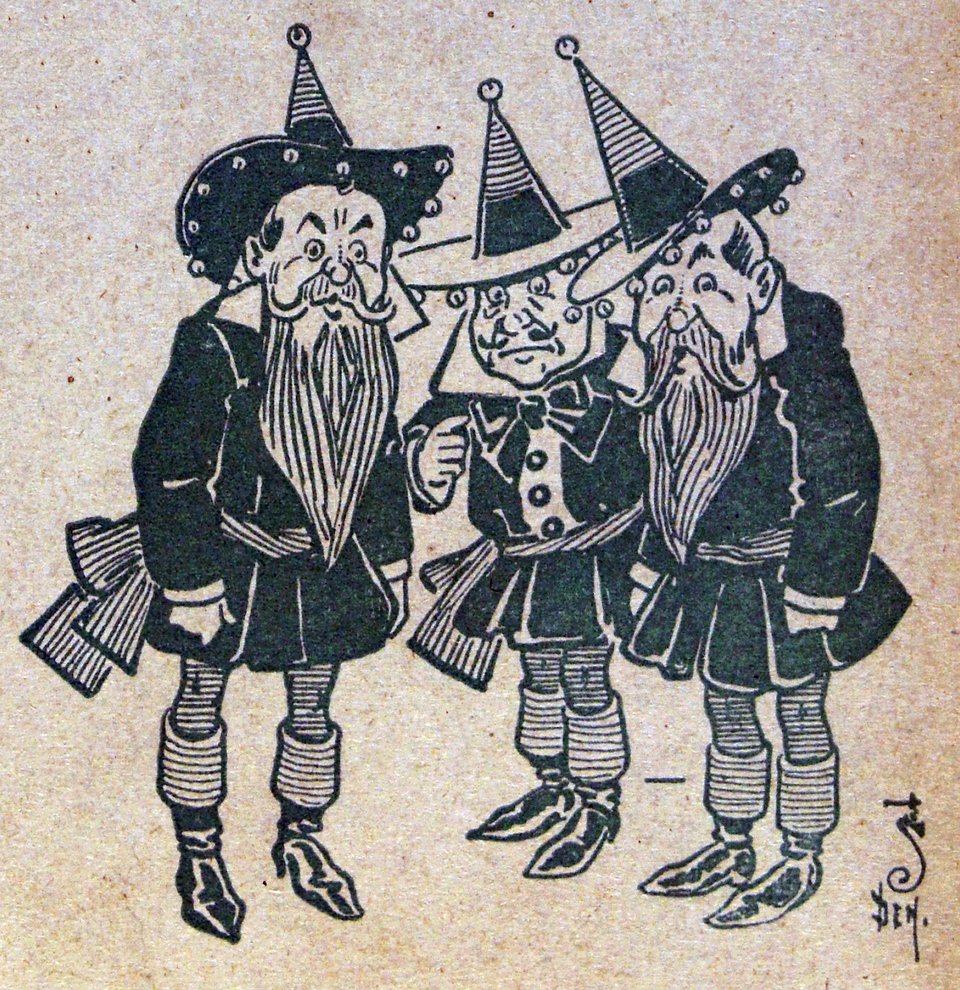
— a whimsical village
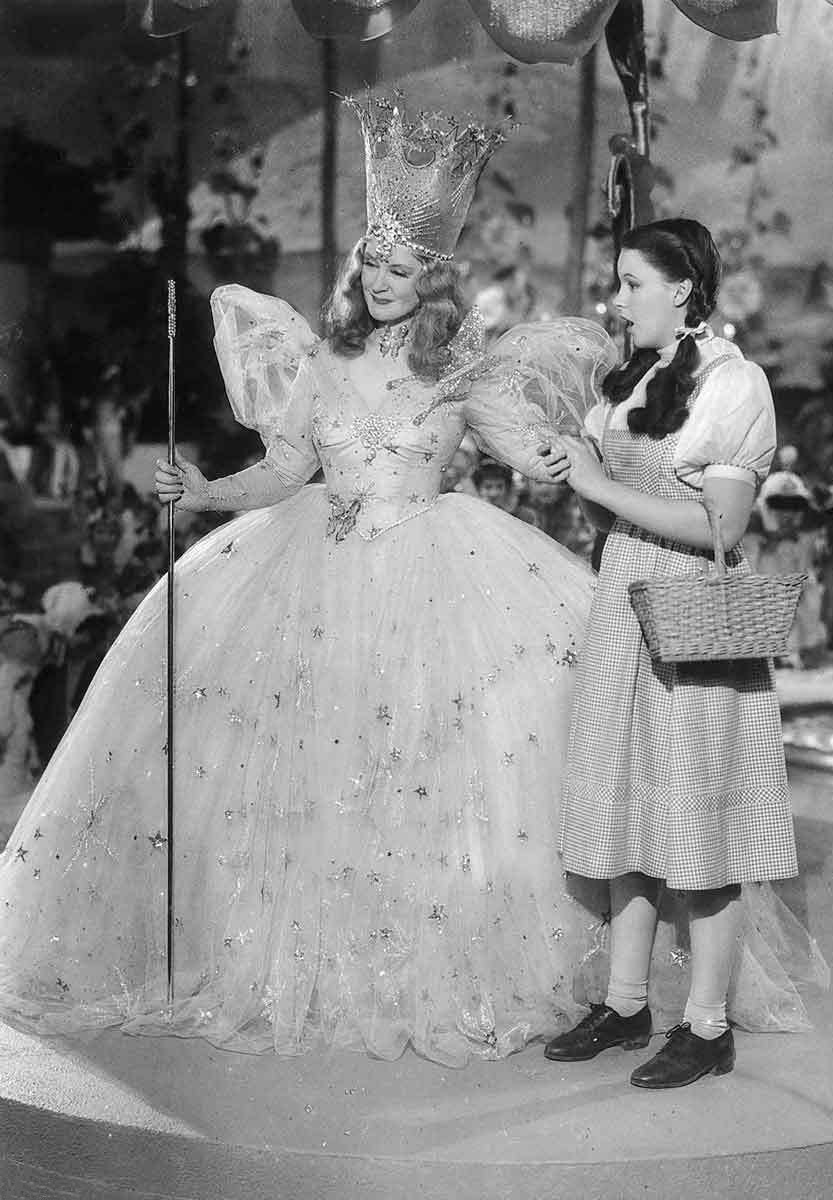
Dorothy a witch
Maguire has said in interviews that the specific spark was the 1939 film, not the 1900 book. Watching Margaret Hamilton's Witch ask "Are you a good witch or a bad witch?" — and watching Glinda answer for Dorothy — made him think about the act of labeling. What makes someone "wicked"? Who gets to decide? What if the label is wrong, or political, or both?
The Specific Distillation Moves
1. Re-centering
Baum's book is Dorothy's story. Maguire's novel is Elphaba's. Dorothy appears only at the end, and she is not the focus. This is the simplest form of adaptation: change the POV character. The plot events can stay the same; the meaning changes because the lens changes.
2. Aging Up
Baum's book is for children. Maguire's novel is for adults. The shift in target audience allows — requires — a shift in content: sex, politics, religious controversy, philosophy, violence. The Land of Oz becomes a place with real stakes, not a fairy-tale obstacle course.
3. Political Overlay
Maguire layers a political allegory onto Baum's fairy-tale world:
- The Wizard becomes a fascist dictator, not a harmless humbug. He suppresses Animals (talking animals) as a means of consolidating power.
- Elphaba's green skin becomes a racial marker — she is visibly Other from birth. Her life is shaped by the prejudice this produces.
- Munchkinland becomes a contested province, not a whimsical village. There is a separatist movement. Elphaba's family is at the center of it.
- Religion appears: the Unionist church, the pleasure faith, the unnamed deity. Baum's Oz has no religion; Maguire's has several.
None of this is in Baum. All of it is Maguire's invention, layered onto Baum's geography and character names.
4. Naming
Baum's Witch has no name. Maguire gives her one: Elphaba — a tribute to L. Frank Baum himself, derived from his initials (L-F-B → Elphaba). This single naming act is the hinge of the whole franchise. Once the Witch has a name, she has an interior life. Once she has an interior life, she can be the protagonist. This is not a detail; it is the enabling decision.
5. Backstory Construction
Baum gives the Witch no past. Maguire builds one:
| Baum (1900) | Maguire (1995) |
|---|---|
| Witch of the West. Wants silver shoes. Killed by water. | Elphaba Thropp. Born green to Melena (governor's wife) and an unknown traveling salesman (later revealed to be the Wizard). Raised in Munchkinland. Attends Shiz University. Becomes a revolutionary. Has an affair with Fiyero. Becomes a nun. Adopts a boy (Liir). Lives in the castle at Kiamo Ko. Killed when Dorothy throws water on her — possibly accidentally. |
The backstory is not "filling in gaps." There are no gaps to fill — Baum's Witch is a flat villain. Maguire's contribution is manufacturing a coherent life that makes the villain's actions in Baum's plot land as the actions of a specific, suffering person.
6. The Tonal Reversal
Baum's tone is light, comic, and optimistic. Maguire's tone is dark, ironic, and tragic. The plot points (house falls on sister, water melts the Witch) are preserved, but the meaning is reversed: in Baum they are triumphs of good over evil; in Maguire they are injustices visited on a sympathetic woman.
What Maguire Keeps From Baum
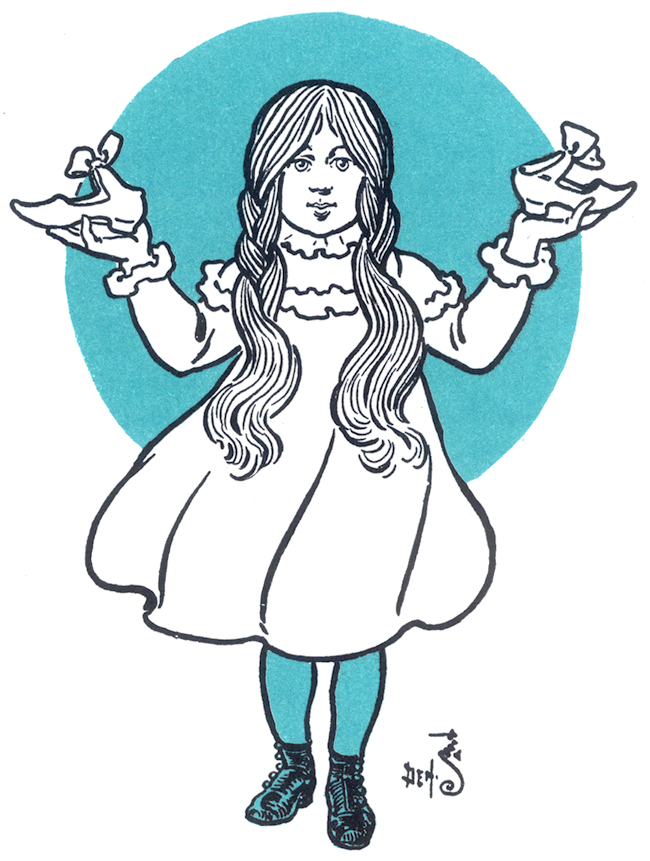
Despite the radical tonal shift, Maguire preserves a surprising amount:
- The geography — Munchkinland, the Emerald City, the Yellow Brick Road, the Winkie country, the Quadling country, Gillikin. These are Baum's, and they map directly.
- The character roster — Dorothy, the Scarecrow, the Tin Woodman, the Cowardly Lion, Glinda, the Wizard, the Witch's monkeys. All from Baum.
- The core plot mechanism — a girl from Kansas arrives, kills the Witch's sister, is sent to kill the Witch, kills the Witch with water. Maguire keeps the skeleton.
- The "humbug Wizard" — Baum's joke that the Wizard is a fraud from Omaha is preserved and darkened. Maguire makes the joke into a political indictment.
What Maguire Adds That Becomes Load-Bearing Downstream
Several of Maguire's additions become central to the musical and the film:
Shiz University
The college where Elphaba and Glinda meet. Invented by Maguire. Becomes the setting of the entire first act of the musical and the first two-thirds of the 2024 film.
The Animal Suppression
The political plot: the Wizard is taking away the power of speech from Animals. Invented by Maguire. Becomes the central political conflict of the musical and film.
Fiyero
The prince who becomes Elphaba's love interest and (in the sequel) the Scarecrow. Invented by Maguire. Becomes the third lead of the musical.
Nessarose
Elphaba's sister — the one who dies when Dorothy's house falls on her. Baum's victim was just "the Wicked Witch of the East." Maguire makes her a specific person with a specific relationship to Elphaba.
The Grimmerie
The spell book. Named by Maguire (a portmanteau of "grimoire" and the name of the author of the 1939 screenplay, Noel Langley — though the etymology is debated). Becomes a principal scenic element of the musical.
Kiamo Ko
The Witch's castle. Named by Maguire. Becomes the setting of Act 2 of the musical and the climax of the second film.
What Maguire Drops From Baum
- The light tone. Baum's whimsy is gone. The novel is serious literary fiction with comic moments.
- The child's perspective. Baum's Dorothy is a child. Maguire's Dorothy, when she appears, is seen through adult eyes — as an innocent who causes harm without understanding it.
- The moral simplicity. Baum's world is morally clear: good is good, bad is bad, and the Wizard's fraud is a joke. Maguire's world is morally complex: the "good" characters do terrible things, and the "wicked" character is often right.
- Most of Book 1's plot. Maguire keeps the skeleton (Dorothy arrives, sister dies, Witch dies) but discards most of the episodic middle (the Kalidahs, the field of poppies, the Hammer-Heads, the China Country). These are Baum's inventions and they serve Baum's children's-story structure. Maguire does not need them.
The 95-Year Gap
There is a 95-year gap between Baum's novel (1900) and Maguire's (1995). This gap is not incidental. It is the reason Maguire's novel exists at all.
Baum's book entered the public domain in the US because its original copyright was not renewed. (The exact public-domain date is complicated by copyright term extensions, but the book was clearly PD by the time Maguire wrote.) If the book were still under copyright, Maguire would have needed the Baum estate's permission to write a derivative novel — and estates are frequently conservative about derivative works, especially ones that age up and politicize the source.
The public-domain status of Baum's book is the legal enabling condition of the entire Wicked franchise. Without it, there is no Maguire novel. Without the Maguire novel, there is no musical. Without the musical, there is no 2024 film. The legal history matters.
The 1939 MGM film is still under copyright (Turner Entertainment / Warner Bros. Discovery). Maguire can adapt Baum's book freely, but he cannot legally reproduce the film's specific elements (the ruby slippers, the film's specific Witch design, the film's musical numbers). This is why Maguire's novel uses silver shoes (Baum's original), not ruby slippers (MGM's invention). It is also why the 2003 stage musical — even though it references the film culturally — was legally prohibited from reproducing the film's visual elements. The musical had to invent its own visual language.
What the Musical Will Inherit From the Novel
When Schwartz and Holzman adapt Maguire's novel for the stage, they inherit:
- The named protagonist — Elphaba. They never have to invent her.
- The college setting — Shiz. The entire Act 1 structure is already there in the novel.
- The political plot — Animal suppression. The central conflict is pre-built.
- The friendship structure — Elphaba and Glinda as opposites who bond. This is Maguire's invention, and it is the emotional core the musical will exploit.
- The tonal reversal — the Witch as sympathetic. The musical lightens this considerably, but the basic reversal is Maguire's gift to the stage show.
What the musical will not inherit from the novel is its darkness. Maguire's novel includes explicit sex, political assassination, religious controversy, and the death of a child. The musical strips almost all of this. That stripping is the next stage of the funnel.
Next stage of the funnel:
Book → Musical: How Maguire's novel becomes the 2003 Broadway show →
The source material itself:
/source/ — The Wonderful Source (Baum + 1939 film + Maguire)