Characters, As the Source Material Sees Them
The musical's characters come from the books, the film, and the Maguire novels — but they are not the same as the originals. This page presents the source versions first, then notes how the musical adapts them. The Wicked cast is treated in the sister study guide.
❦
The Travelers of the Yellow Brick Road
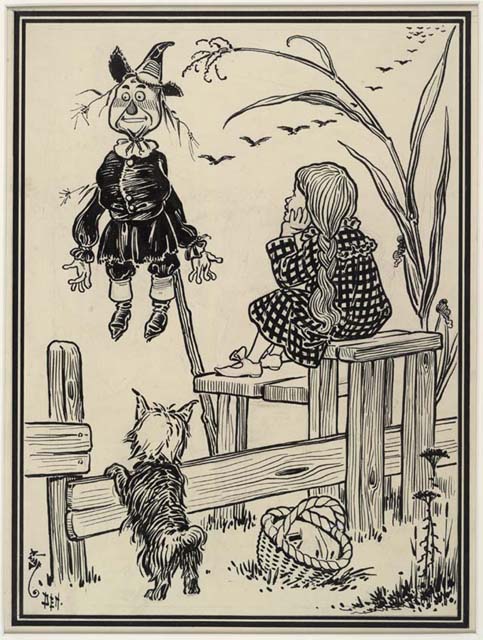
Dorothy Gale
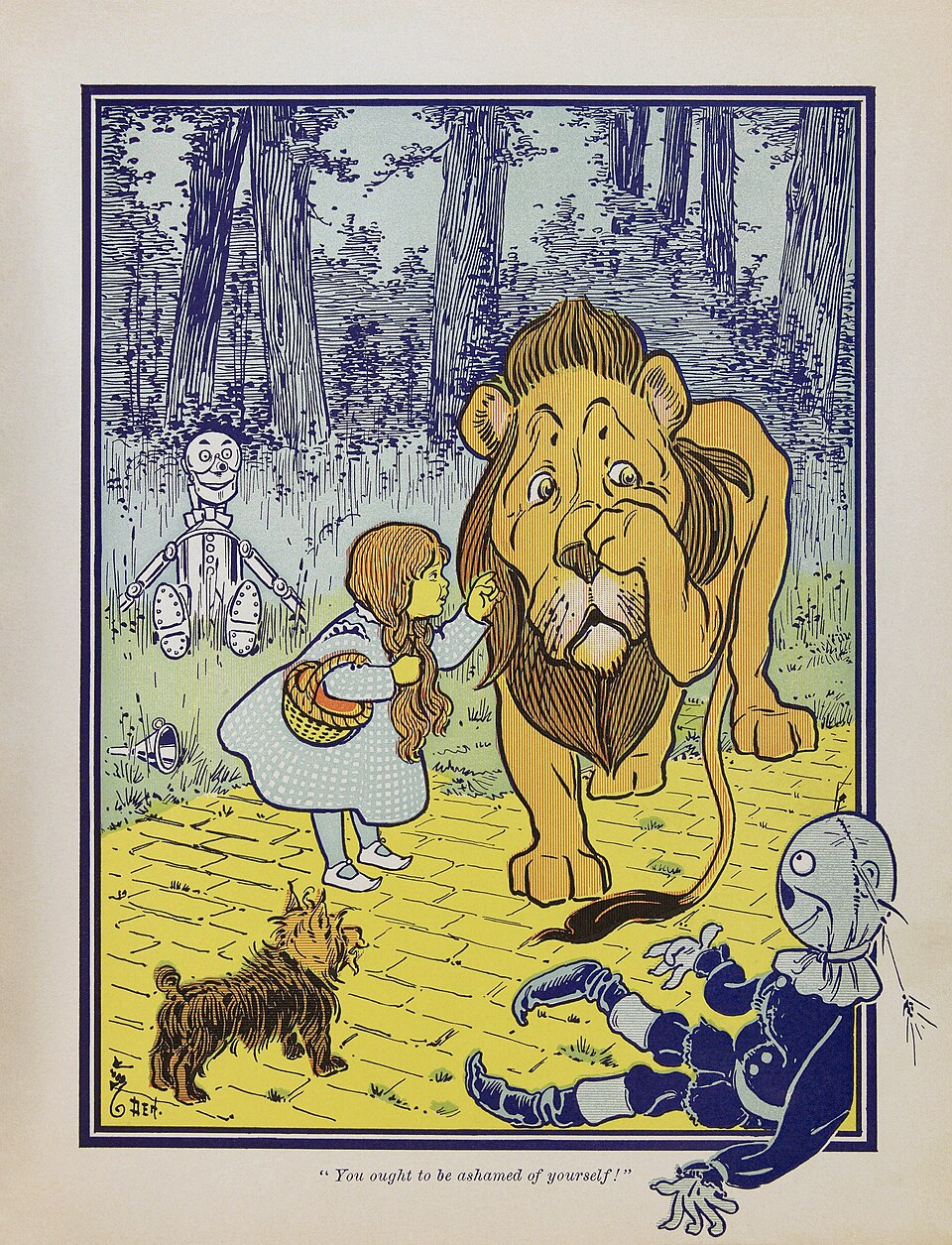
A small girl from a farm in Kansas, raised by her aunt and uncle after her parents' deaths. She is the protagonist of The Wonderful Wizard of Oz and of thirteen more Oz books. In the 1900 book, she is direct, brave, and ordinary: she solves problems by walking and asking. She never cries, never complains at length, and never has magical powers.
In the 1939 MGM film, Dorothy is played by Judy Garland and the character is older, more wistful, and given an iconic song ("Over the Rainbow"). The film added the framing device of Dorothy running away from home and being knocked unconscious by a tornado — not present in Baum's book, where the cyclone simply takes her.
In Maguire's 1995 Wicked, Dorothy barely appears. She is a Kansas child whose house lands on the Witch; the story of her arrival in Oz is told from Elphaba's perspective. The musical keeps this near-absence: Dorothy is a force, not a person, in the Elphaba-Glinda story.
Maguire's source: only 1900 + 1939 film. Musical: uses the 1900 name and the 1939 framing.
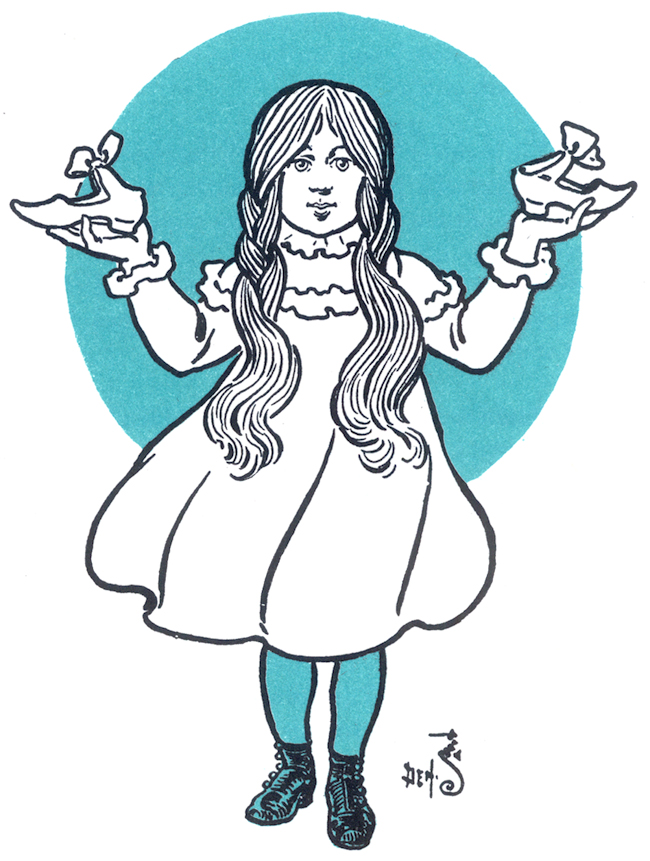
The Silver Shoes
Not a character, but worth a note: the magic object Dorothy inherits from the Wicked Witch of the East. In Baum's book, they are silver shoes with magical power. To return home, Dorothy must click her heels three times and command them to take her to Kansas. She nearly forgets how to use them until Glinda reminds her.
The 1939 film changed them to ruby slippers — silver showed up too pale against the yellow brick road in early Technicolor tests. The musical keeps the ruby slippers, but assigns them to Nessarose, who enchants them before her death. This is the biggest single physical change from source to musical.
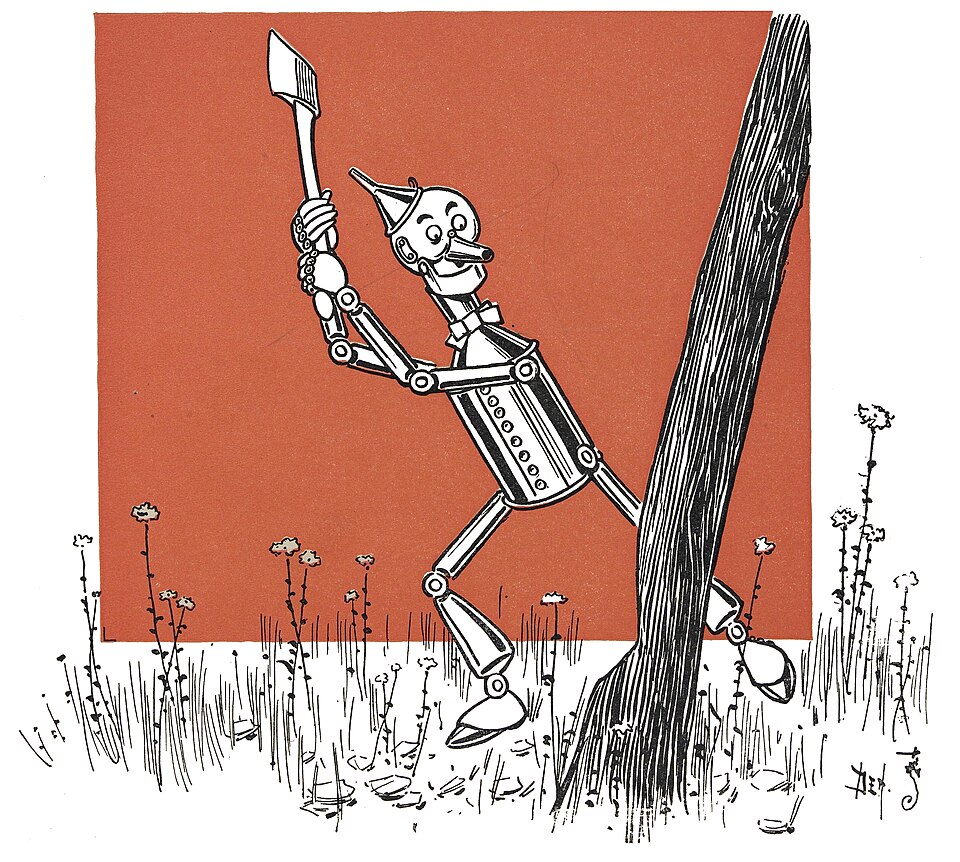
The Tin Woodman (Nick Chopper)
A woodcutter in the Munchkin country. The Wicked Witch of the East enchanted his axe so that it could not be lifted without chopping off a part of him; each time he lost a limb, the tinsmith replaced it with tin. Eventually nothing human was left. He joins Dorothy seeking a heart.
In the 1918 Tin Woodman of Oz, his full backstory is told: he was in love with a Munchkin girl named Nimmie Amee, who was also attacked by the same axe and replaced, and the two tin figures rusted together in the forest for years before Dorothy arrived. The musical makes Boq into the Tin Woodman; in the books, he is his own character, separate from the Wicked Years cast.
Maguire's source: Book 1 and Book 12. Musical: identity, backstory, and the "heart he always had" line.
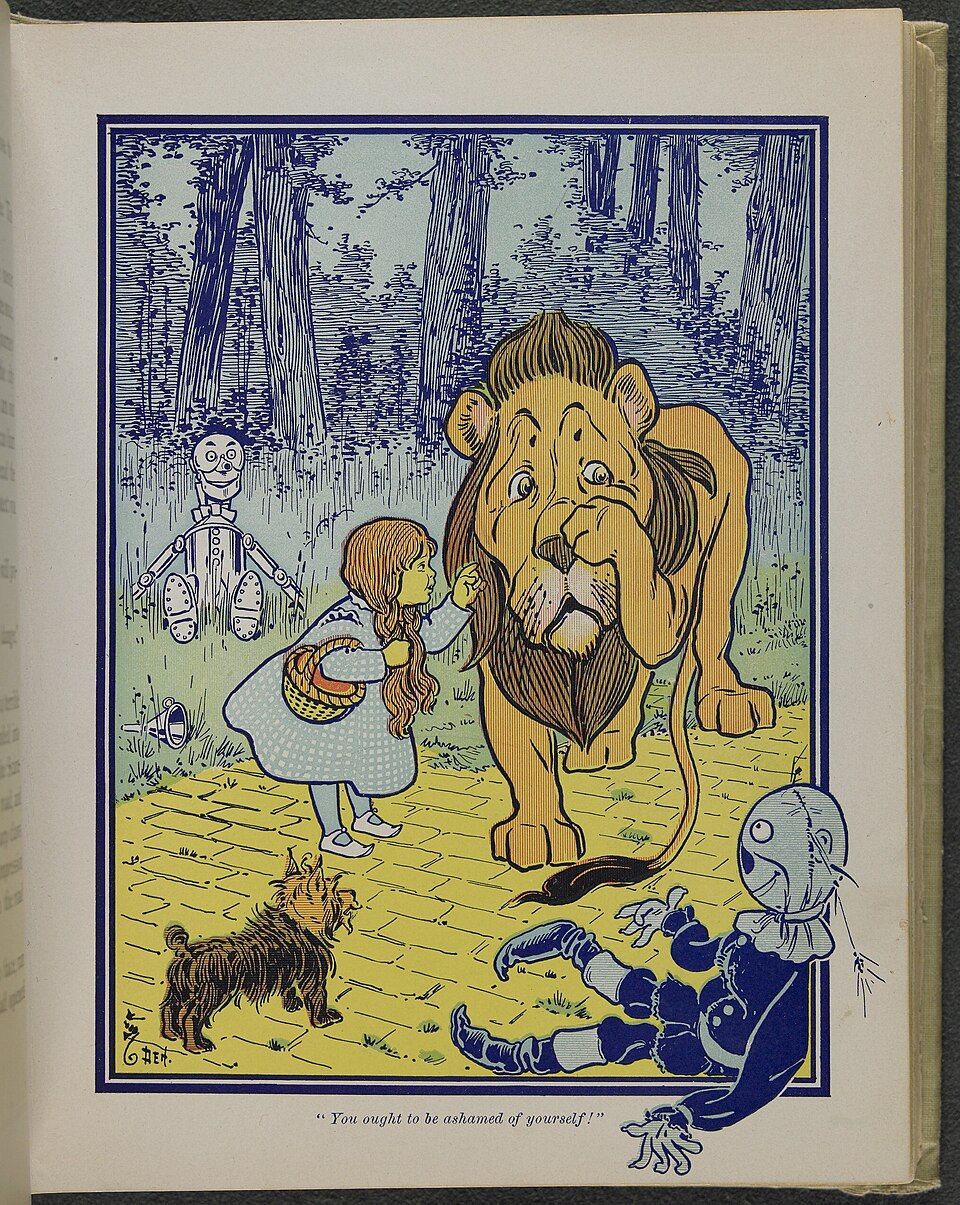
The Cowardly Lion
King of the Beasts in the wild forests of Oz, but cowardly. He joins Dorothy seeking courage. In the 1900 book, the "courage" he receives from the Wizard is a placebo — a green liquid that may be nothing — and Dorothy tells him that he had courage all along, just as the Scarecrow had a brain and the Tin Woodman a heart.
In The Emerald City of Oz (1910), the Cowardly Lion becomes ruler of the forest kingdom of Oz after the Wizard leaves. In Maguire's 2008 A Lion Among Men, the Lion — now an old figure called Brrr — narrates his life story to a journalist and reflects on what courage really means. The Wicked Years' Cowardly Lion is the source for the character in the musical; the Wicked Years' Brrr is the Lion as a tired, world-weary elder.
Maguire's source: Book 1, Book 6, and the Maguire novel A Lion Among Men (the 2008 book).
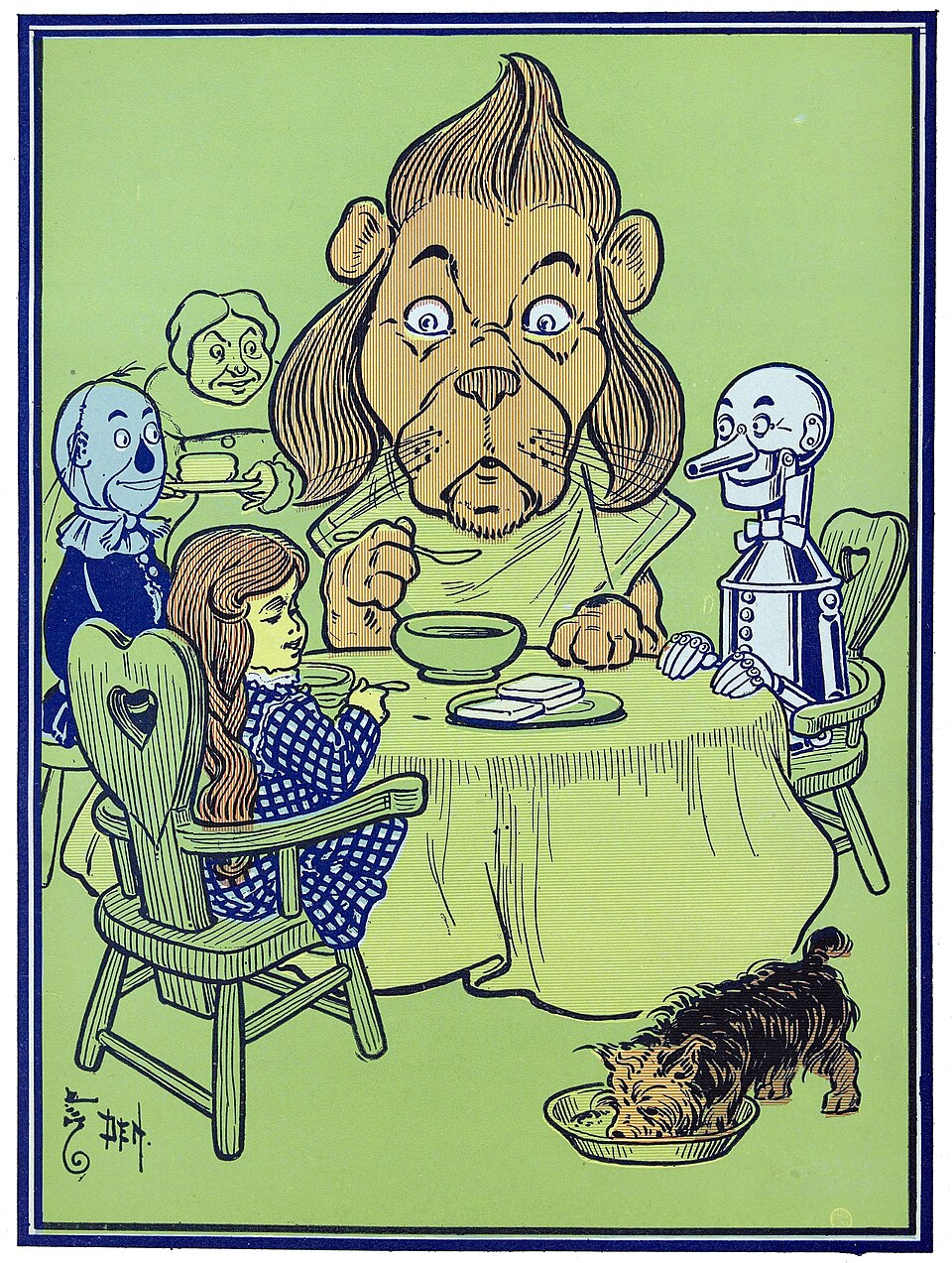
The Scarecrow
A figure made of straw stuffed into clothes, hung in a farmer's field to scare crows. In the 1900 book he joins Dorothy seeking brains; in The Marvelous Land of Oz (1904) he is briefly king of the Emerald City, then sets out adventuring; in The Scarecrow of Oz (1915) he is the protagonist of an entire book and shown still questing and still growing.
The Wicked musical's Fiyero-as-Scarecrow link comes from Son of a Witch (Maguire, 2005), in which Liir (Elphaba's son) encounters a Scarecrow figure that is implied to be Fiyero transformed — the same role, in a sense, that the Scarecrow plays in the books: the figure that seems simple, then turns out to be more.
Maguire's source: Books 1, 2, 9. Musical: identity, the "no brain" arc inverted to "no heart" for Fiyero.
❦
The Two Witches
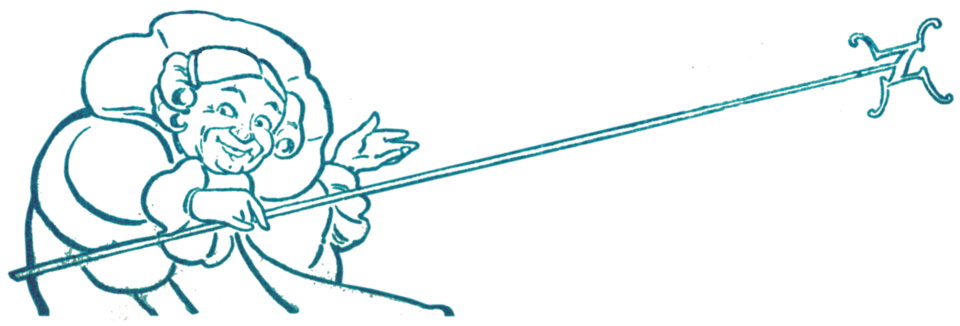
Glinda the Good Witch
Baum's Good Witch of the South (in Book 1) and Good Witch of the North (in the 1939 film) is a minor figure in the 1900 book — she appears once, at the end, to tell Dorothy how to use the silver shoes. She is barely a character; she is a deus ex machina.
From The Marvelous Land of Oz (1904) onward, Glinda becomes more important. She is the witch who knows that Tip is Ozma, and who hides the secret for years, releasing it at exactly the right political moment. In Glinda of Oz (1920), the last Oz book Baum wrote, Glinda is the central figure and the most powerful magical ruler in Oz — Glinda, Ozma, and the Wizard are the central triumvirate.
Maguire's Galinda/Glinda is a sharp, ambitious, ambitious socialite — based in part on Baum's 1920 political Glinda, in part on the 1939 film's version, in part invented. The musical changes the spelling (Galinda → Glinda) and adds the popularity, the pink, and the romantic arc. The Good Witch of the North (1939) and the Good Witch of the South (1900) are merged into a single character.
Maguire's source: Book 1, Book 2, Book 14, plus the 1939 film's Glinda.
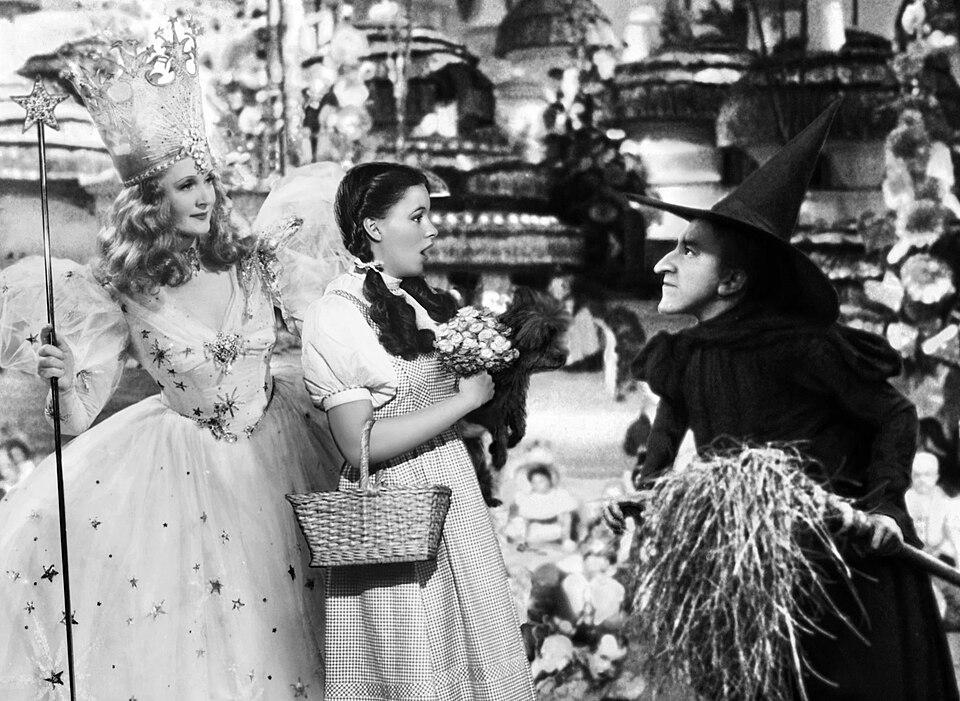
The Wicked Witch of the West
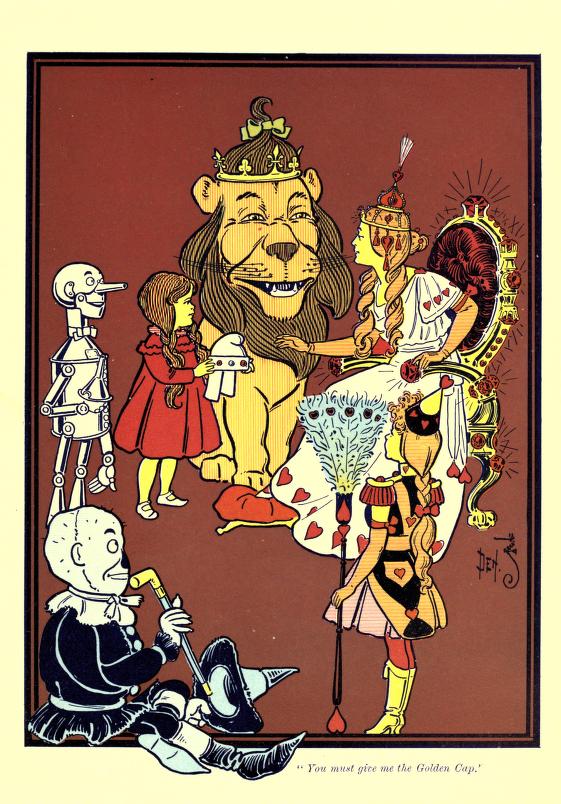
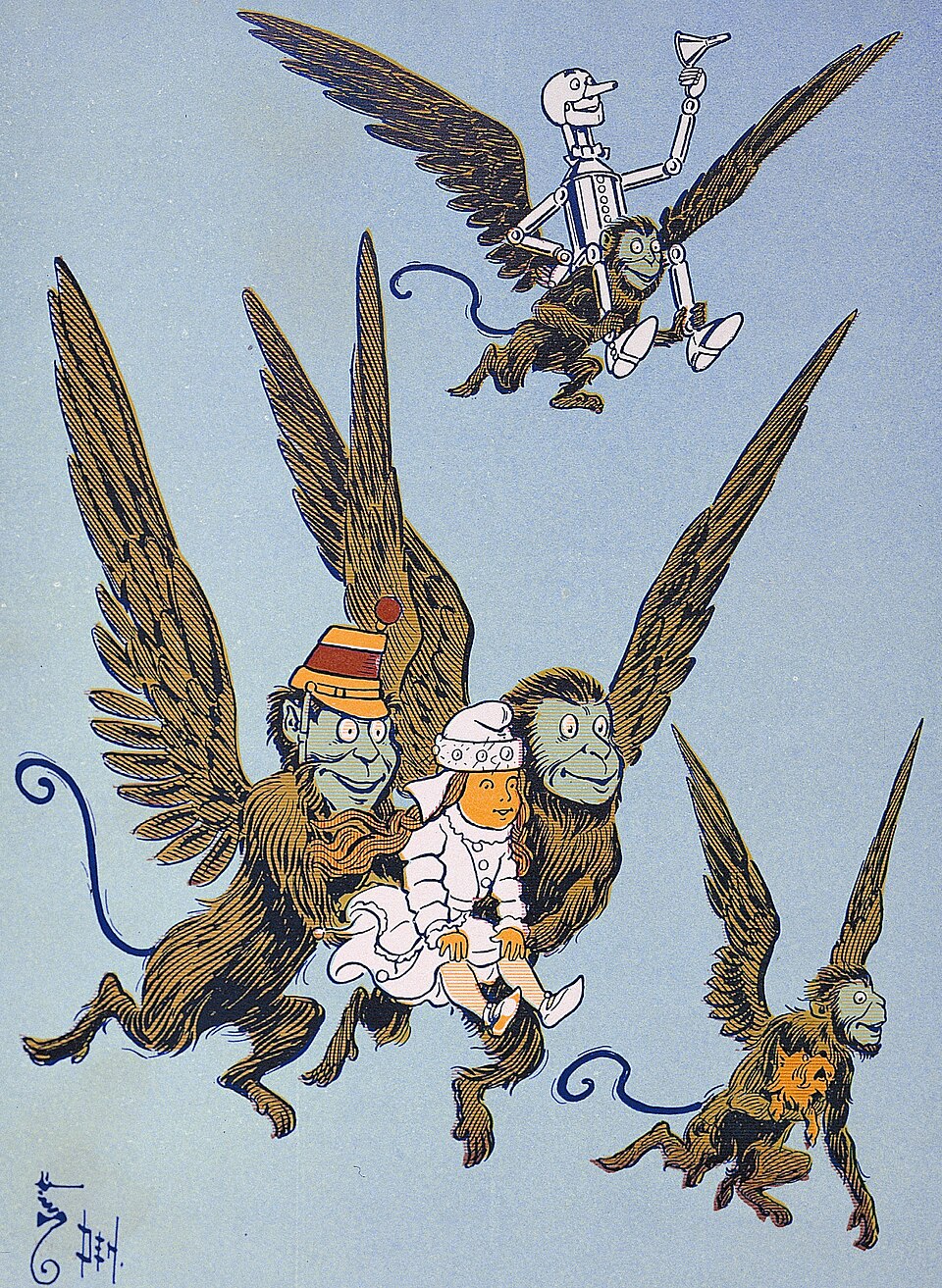
In Baum's 1900 book, the Wicked Witch of the West is briefly described: she is the only witch in Oz who refuses to do the work of slaves freed by the Wizard when the Wizard's rule began; she keeps a pack of forty wolves, forty crows, sixty bees, and a Golden Cap that summons the Winged Monkeys; she enslaves Dorothy's friends; and she is destroyed when Dorothy throws a bucket of water on her.
She is not seen much in the book. The audience learns of her mainly through her henchmen. Her death is, in the book, almost an accident — a frightened girl with a bucket of water.
In the 1939 film, Margaret Hamilton plays the Witch as a cackling, green-skinned, scene-stealing villain with an army of flying monkeys. The film is the source of most of the iconography the musical uses (hat, broom, green skin, black dress, ruby slippers, the death by water) — and the source of Maguire's reversal: the film's Witch is so cartoonish that Maguire asked, in effect, what kind of person would have to be, to become the figure on screen.
In Wicked (Maguire 1995), the Witch is Elphaba Thropp, born green-skinned in the winkie country, daughter of the governor of Munchkinland, brilliant at magic, religiously observant, and ultimately political — not an evil figure, but a person destroyed by the politics of the Wizard of Oz. The musical keeps Maguire's reversal and political reading, but strips most of the religious and adult content.
Maguire's source: Book 1 + 1939 film. Musical: the visual iconography of the 1939 film, the political reversal of Maguire.
❦
The Wizard and the Court of Oz
The Wizard of Oz (Oscar Zoroaster Phadrig Isaac Norman Henkle Emmannuel Ambroise Diggs)
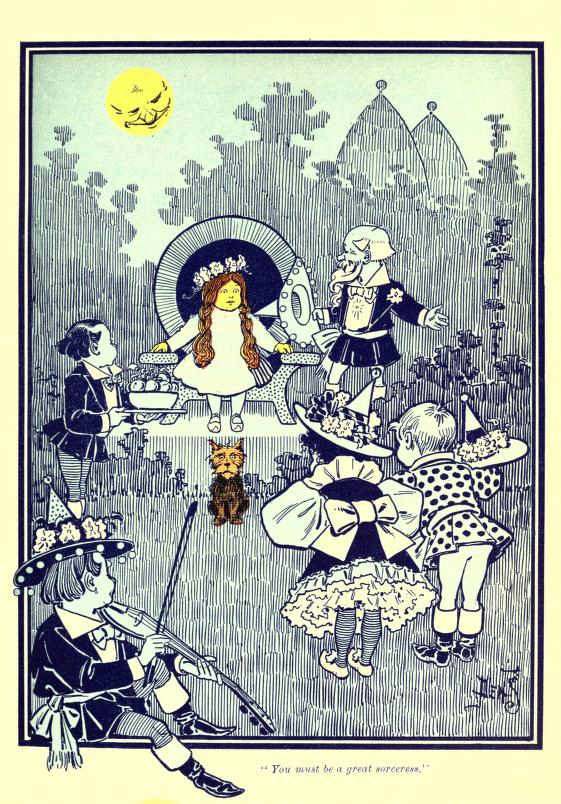
A humbug. A traveling balloonist from Omaha, Nebraska who arrived in Oz by accident and was accepted as a great wizard by the Ozians. His power is theater: a giant floating green head, fire-breathing "Great Oz" of the West, etc. He is exposed by Dorothy's dog Toto pulling back a curtain on a little old man at the controls. He stays on as a useful ally of the Emerald City and is granted a hot-air balloon ride home, which fails; he settles into Oz as its de facto political ruler.
In the 1939 film, Frank Morgan plays the Wizard as a kindly, gentle humbug — less a politician, more a kindly grifter who helps Dorothy. The film is much kinder to the Wizard than the book. In the 1900 book he is openly a fake; in the 1939 film he is a fake who is also genuinely trying to help.
Maguire's Wizard (in Wicked, 1995) is back to the book's political sharpness: he is a propagandist who uses animals, who suppresses dissent, and who has built a public image of himself that has nothing to do with his actual being. The musical keeps Maguire's political reading and adds the reveal — "an ordinary man" — at the heart of the Wizard's show.
Maguire's source: Book 1 + 1939 film. Musical: the political Wizard of Maguire, the showmanship of the 1939 film.
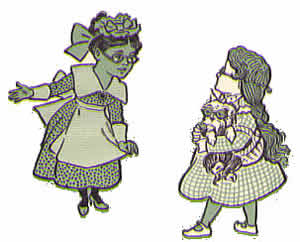
The Emerald City Inhabitants
Baum's Emerald City is populated by:
- Jellia Jamb — the Wizard's personal servant, kind to Dorothy, with rosy cheeks and green skin from the city's atmosphere.
- Omby Amby — the Captain of the Wizard's Guard, the tallest soldier in Oz, with a long green beard.
- The Soldier with the Green Whiskers — a private in the Wizard's guard, a minor comic figure in the 1900 book.
- Glinda's subjects in the South — quiet, peaceful, and not particularly described in Book 1.
None of these characters is given a backstory in the source material. They are functionaries. The musical's Madame Morrible, who is given an entire political arc, is not from the books — she is invented by Maguire, who made her a political operative working with the Wizard.
❦
The Wicked Years' Cast (Maguire's Additions)
Gregory Maguire's Wicked Years tetralogy introduces a number of characters not in Baum's books or the 1939 film. These are the figures the musical most heavily adapts — they are Maguire's characters, not Baum's.
Fiyero
Maguire, Wicked (1995)
Boq
Maguire, Wicked (1995)
Nessarose
Maguire, Wicked (1995)
Doctor Dillamond
Maguire, Wicked (1995)
Madame Morrible
Maguire, Wicked (1995)
Pfannee & Shen Shen
Maguire, Wicked (1995)
For full coverage of these characters as the musical presents them, see our sister study guide: Wicked: A Visual Study Guide — Characters.