Filter:
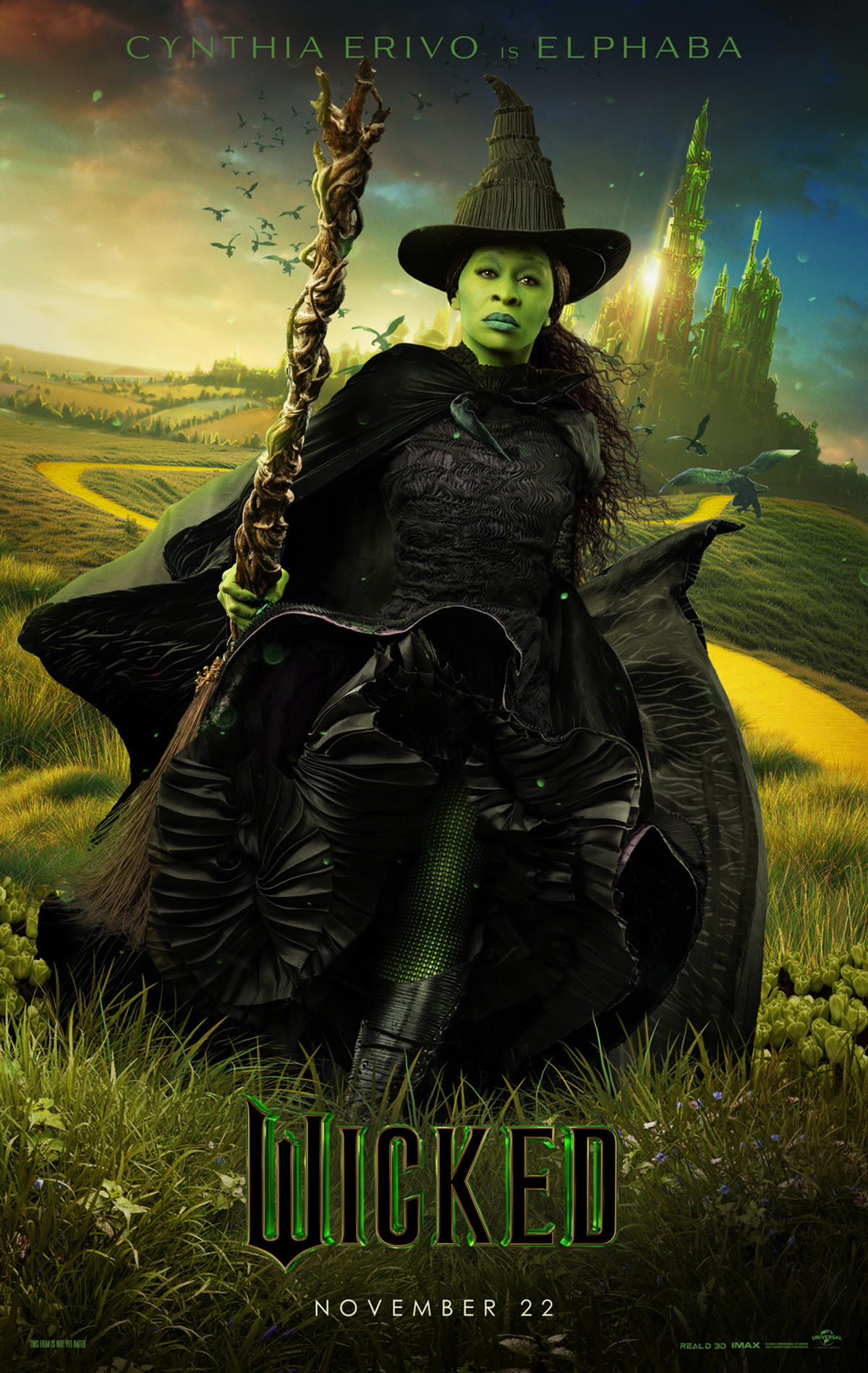
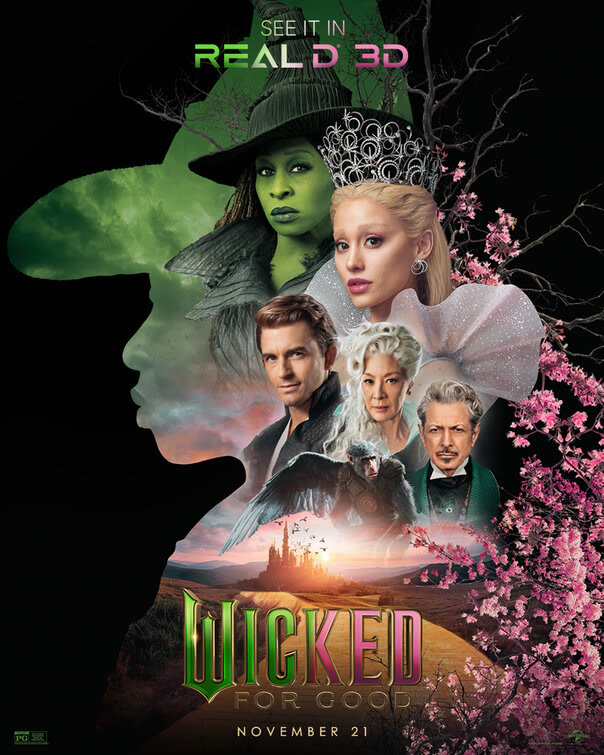
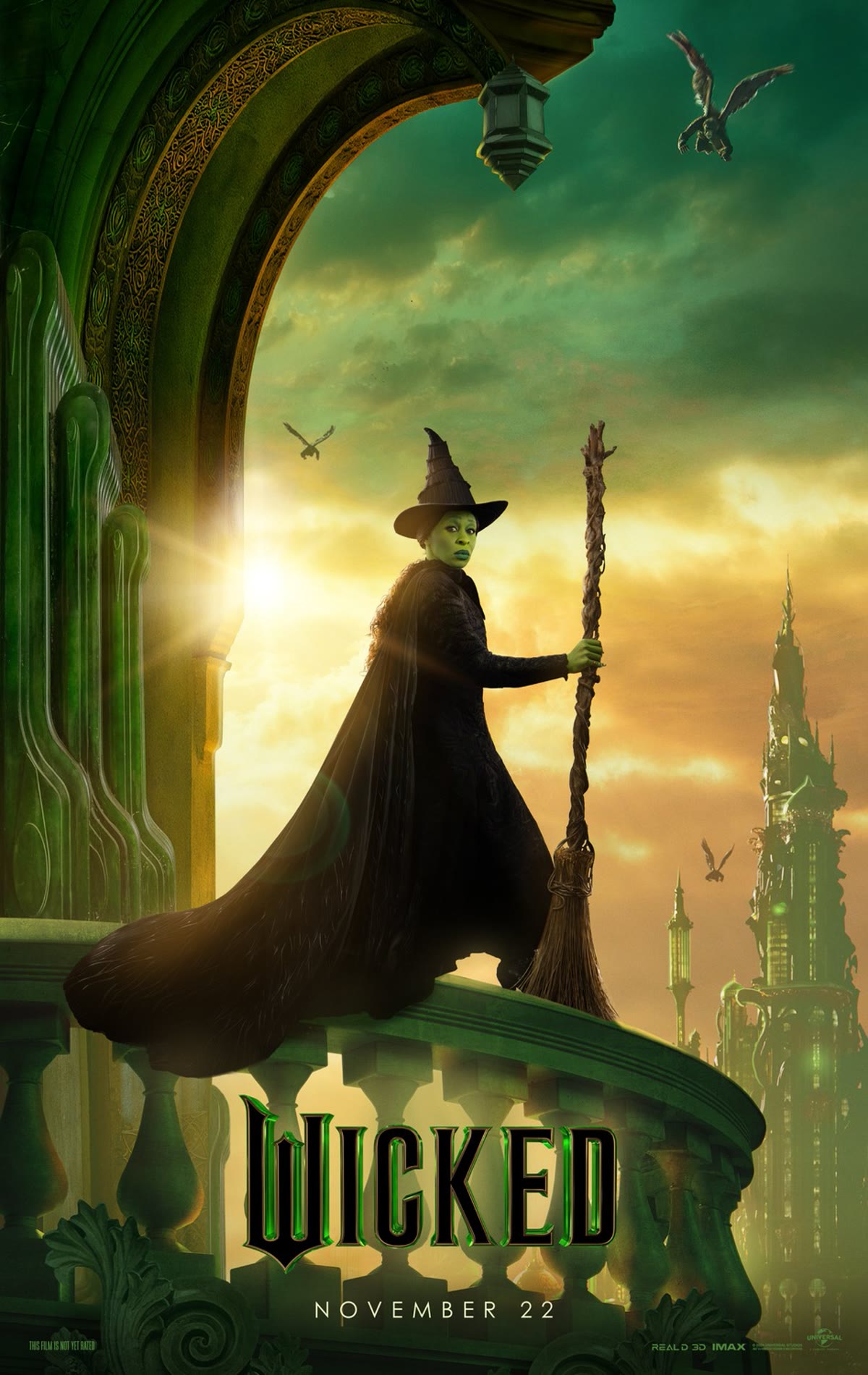
Official character poster: Elphaba Thropp

Elphaba Thropp

The future Wicked Witch of the West

Born with emerald skin after her mother drank a green elixir in an affair with a travelling salesman, Elphaba is intelligent, prickly, and politically aware. Disowned by her father, raised by a strict religious guardian, she arrives at Shiz University with a chip on her shoulder and discovers she is the most powerful magic-user the land has ever seen. Her growing conscience — particularly about the silencing of Oz's talking Animals — leads her to the Wizard, then to open rebellion, then to infamy as the “Wicked Witch.”
Role: Protagonist / tragic figure Themes: Otherness, integrity, propaganda, the cost of being right Notable songs: “The Wizard and I,” “Defying Gravity,” “No Good Deed,” “For Good”
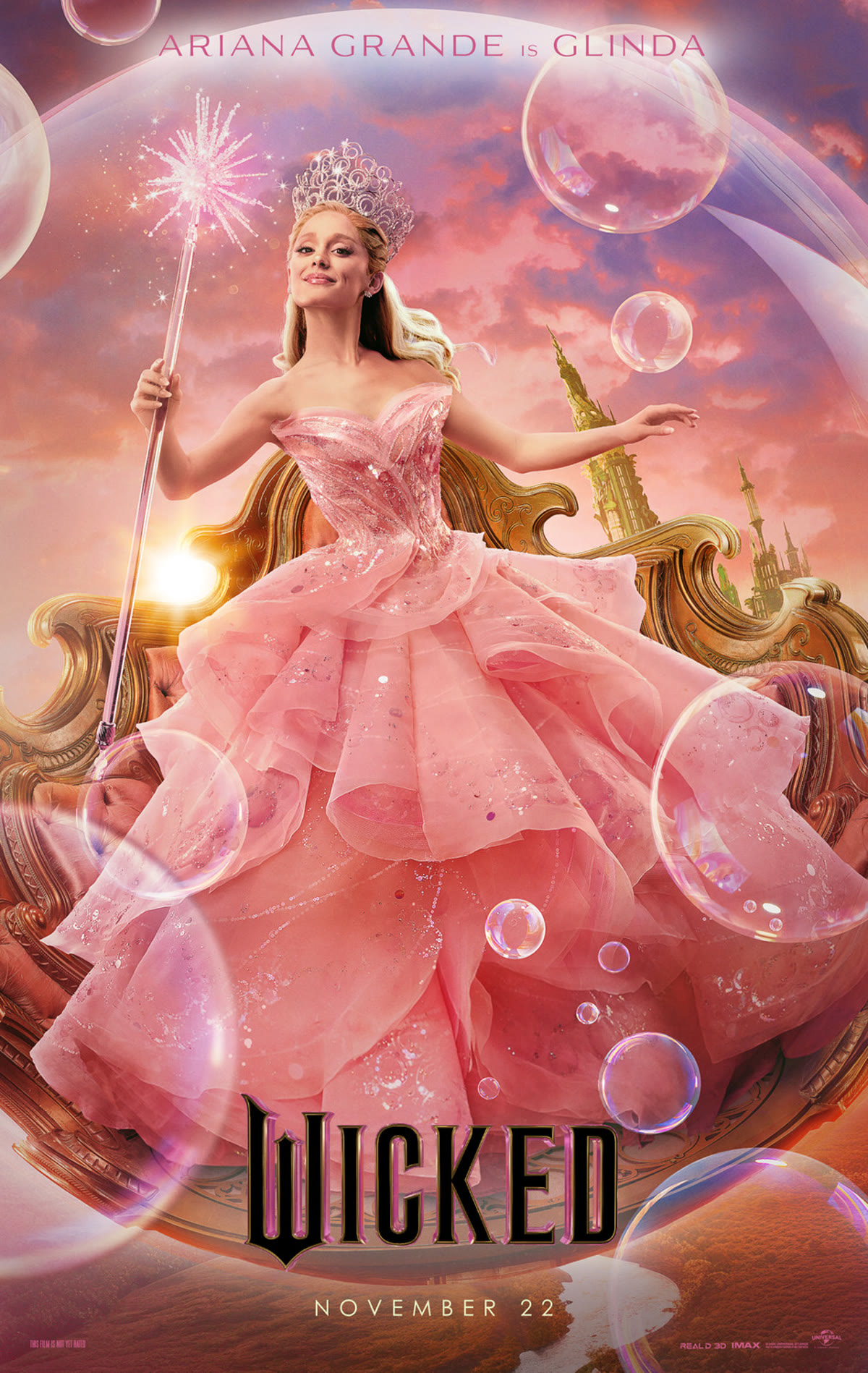
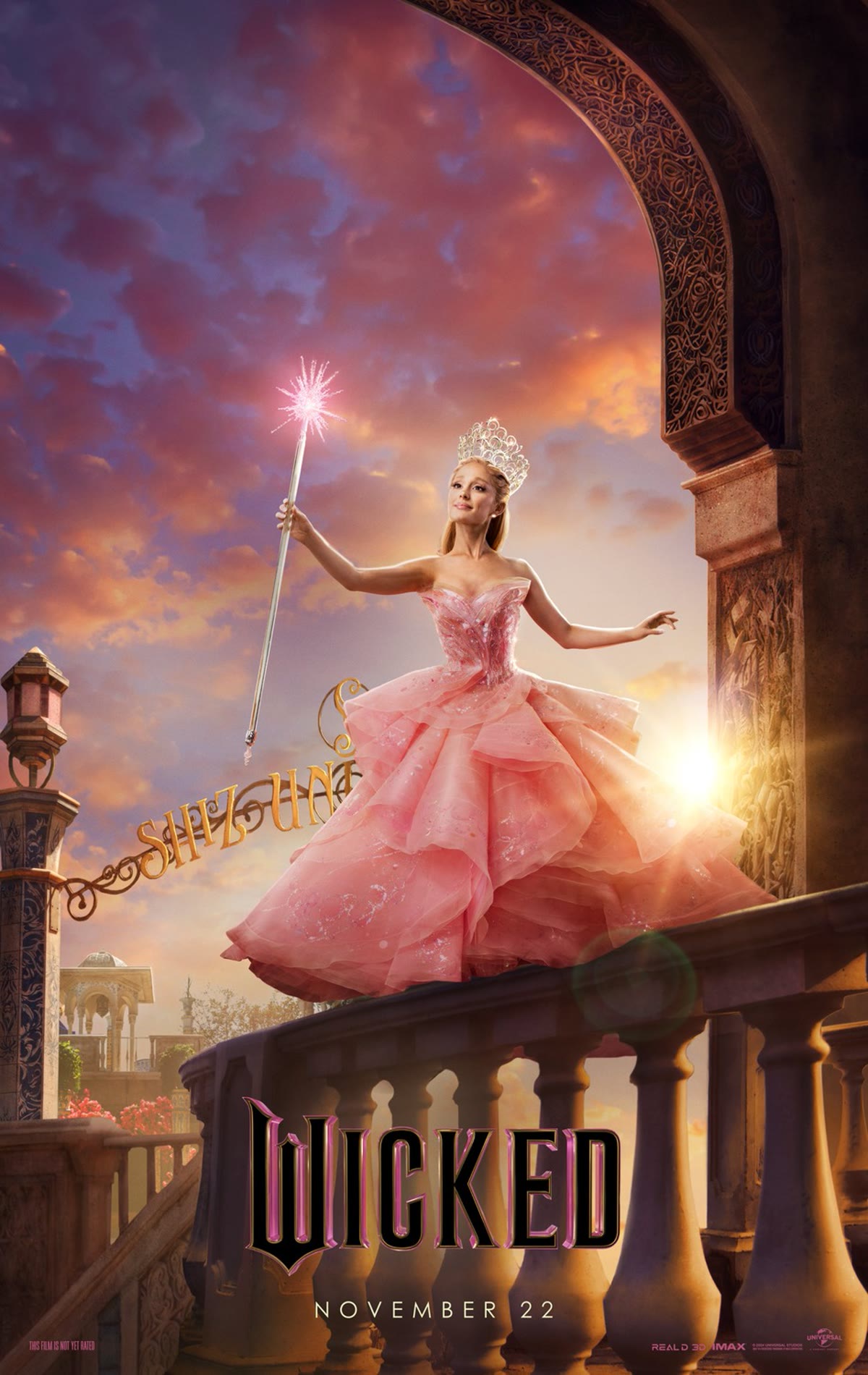
Official character poster: Glinda Upland

Glinda Upland (born Galinda)

Oz's golden girl — and Elphaba's oldest friend

Privileged, ambitious, fashion-obsessed, and genuinely kind beneath the popularity, Galinda Upland arrives at Shiz as a pampered socialite. She renames herself “Glinda” (with a hard “G”) after Elphaba's fall from grace, and rises to become Glinda the Good — Oz's most beloved public figure. The show is, in part, the story of her complicity: she traded principle for popularity, and the second act is haunted by what that cost her and her friend.

Role: Co-lead / narrator in the stage show Themes: Complicity, friendship, the price of being liked, moral compromise Notable songs: “Popular,” “Thank Goodness,” “For Good”
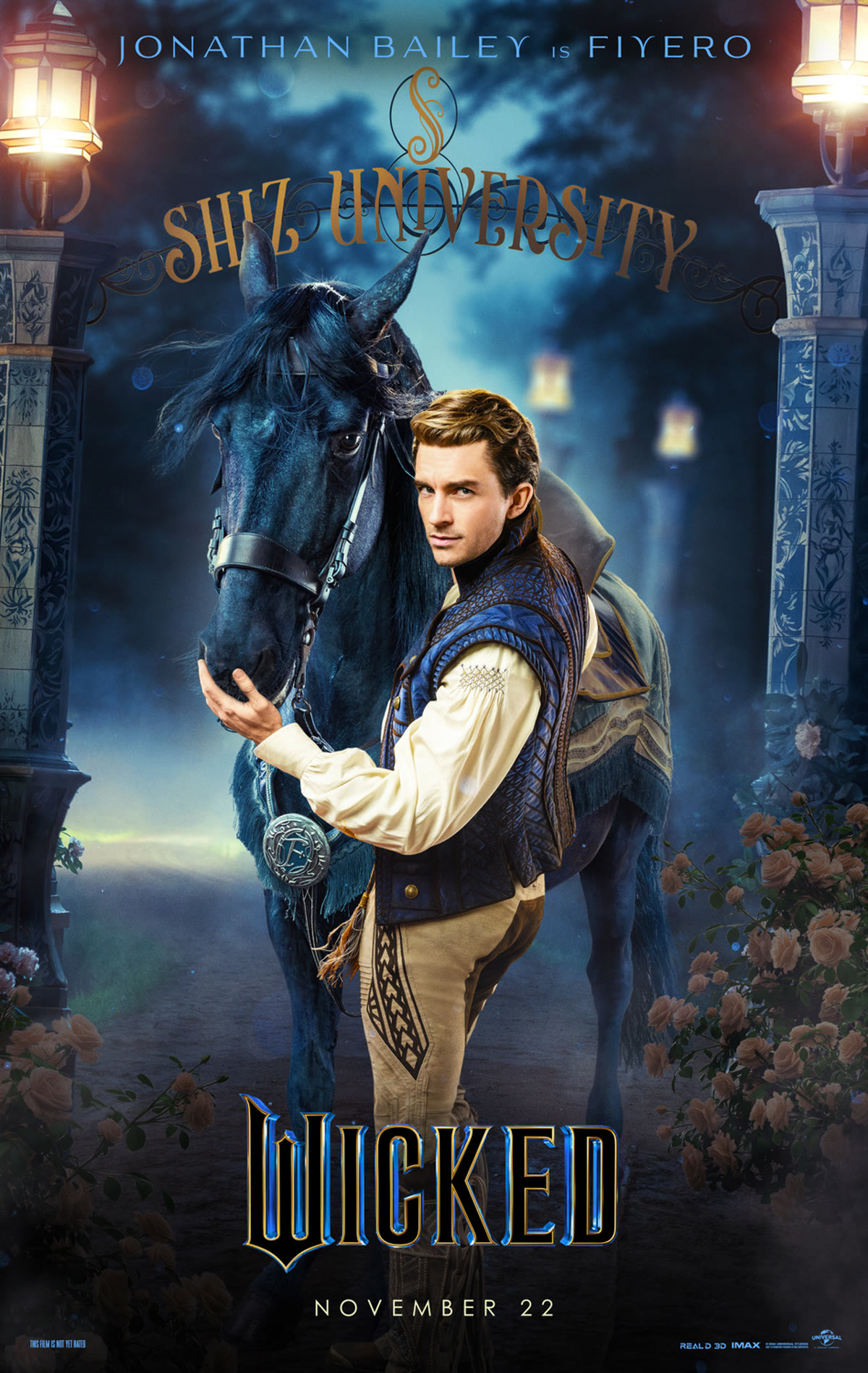
Official character poster: Fiyero Tigelaar

Fiyero Tigelaar

A Winkie prince who chooses the harder path

A prince of the Winkie Country in western Oz, Fiyero arrives at Shiz as a charming, dismissive transfer student. He initially toys with Galinda's affections, then with Boq's loyalty, then falls genuinely and inconveniently for Elphaba. His arc — from carefree princeling to the man who walks into the wrong crowd for love — sets up one of the show's central questions: what does it cost to do the right thing when it costs you everything?

Role: Love interest, second-act catalyst Themes: Privilege, transformation, choosing discomfort over ease Notable songs: “Dancing Through Life,” “As Long as You’re Mine” Connection to 1939: His fate foreshadows the Scarecrow
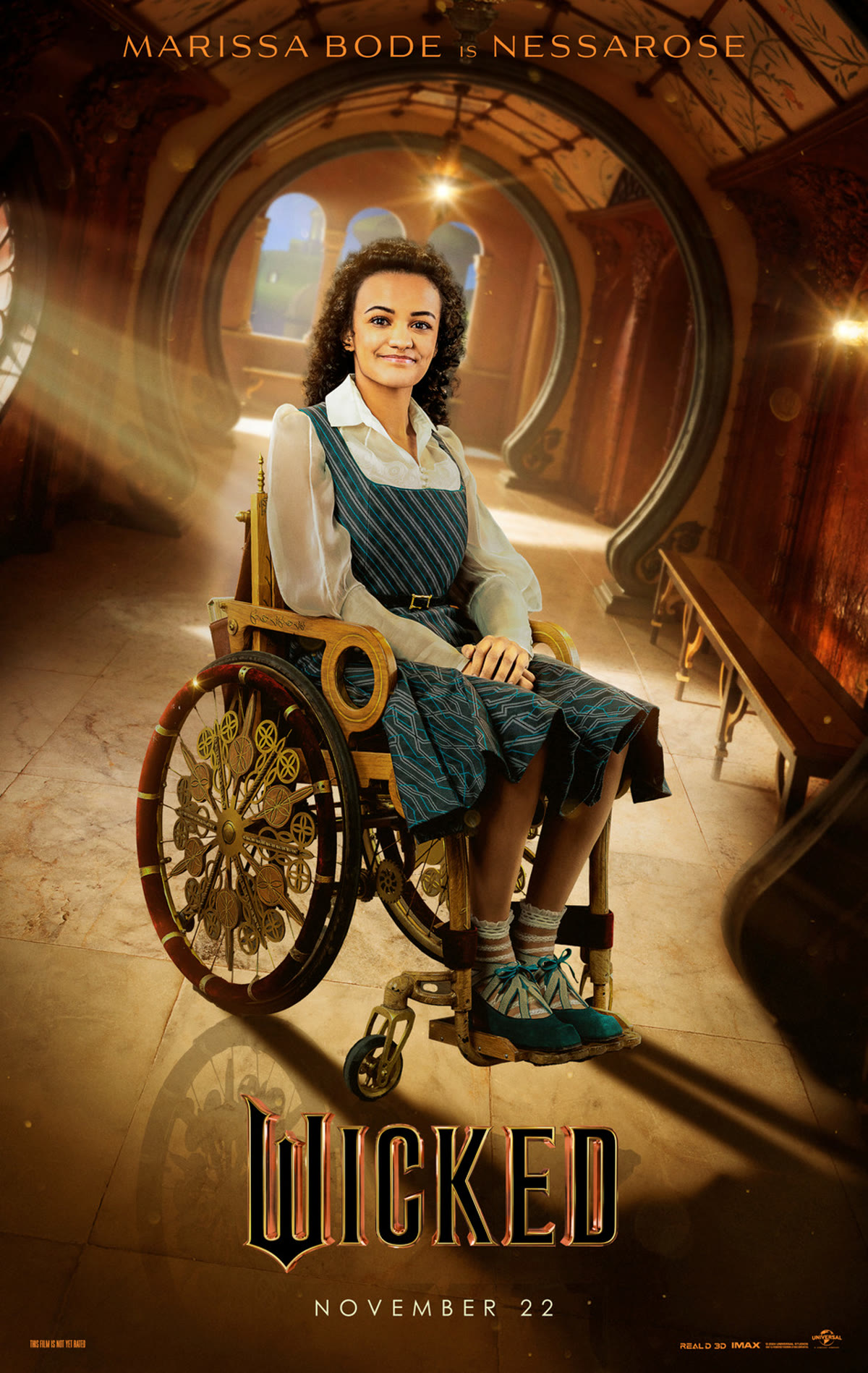
Official character poster: Nessarose Thropp

Nessarose Thropp

Elphaba's favoured — and vulnerable — younger sister

Elphaba's younger half-sister, born without the use of her legs. Sheltered, religiously devout, and emotionally vulnerable, Nessarose has been raised to believe that physical disability and moral goodness are linked. She is made Governor of Munchkinland by the Wizard, and her tragic, morally compromised end — and the fate of her silver shoes — are the engine of Act Two.

Role: Elphaba's sister, Governor of Munchkinland Themes: Ableism, religious fundamentalism, the corruption of power Notable songs: “Wonderful,” “The Wicked Witch of the East” Connection to 1939: Her shoes become Dorothy's Silver Shoes
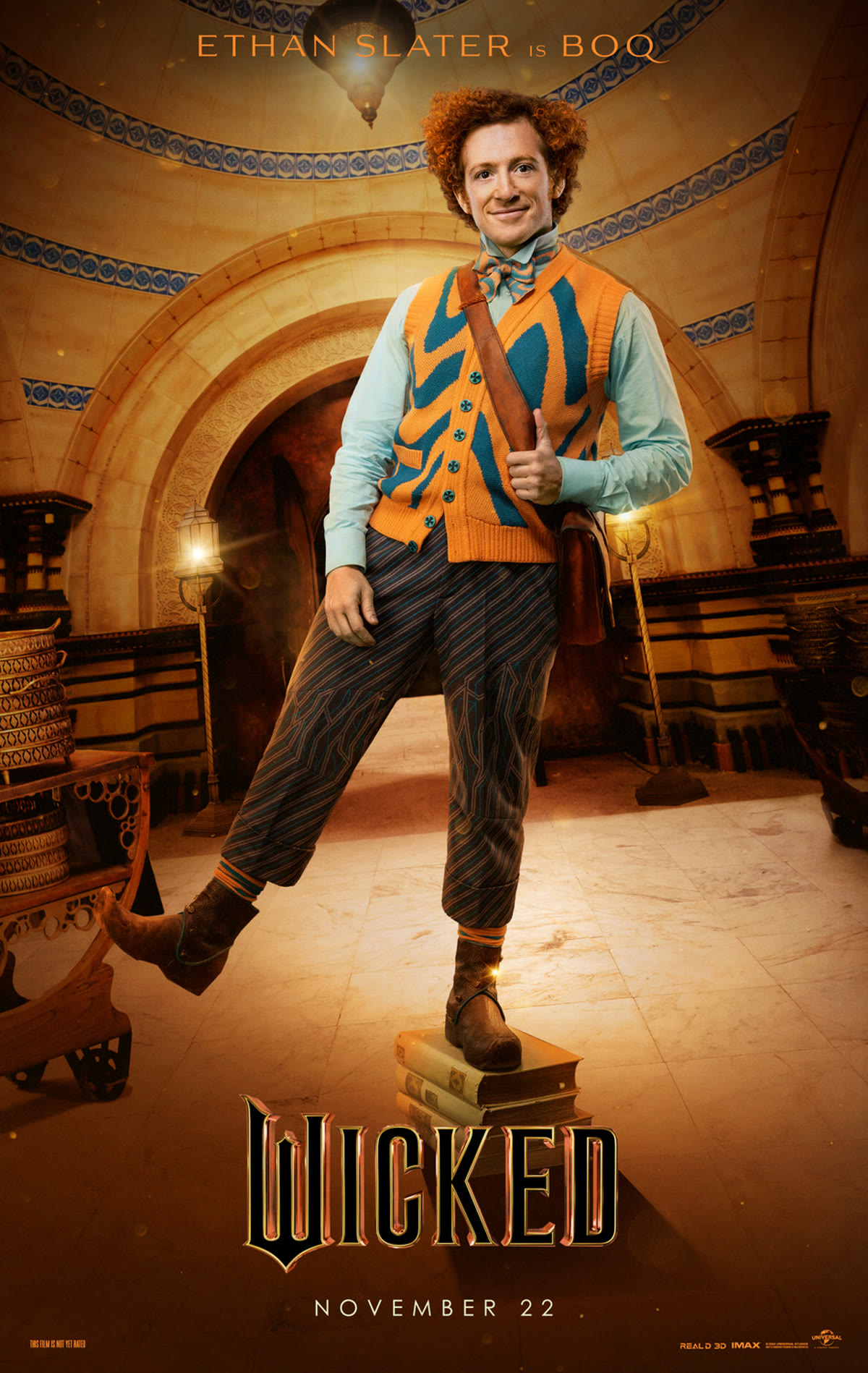
Official character poster: Boq Woodsman

Boq Woodsman

A selfless Munchkin who loves the wrong person

A kind-hearted Munchkin who works in the Shiz dining hall and harbours an unrequited crush on Galinda. He is manipulated by Galinda into courting Nessarose out of pity, and the resulting marriage ends in tragedy. His final transformation — the show's nod to the Tin Man — closes one of the story's quieter arcs of love misdirected and love given too late.

Role: The unrequited admirer Themes: Unrequited love, manipulation, becoming what you are consumed by Notable songs: “Dancing Through Life,” “March of the Witch Hunters” Connection to 1939: He becomes the Tin Man
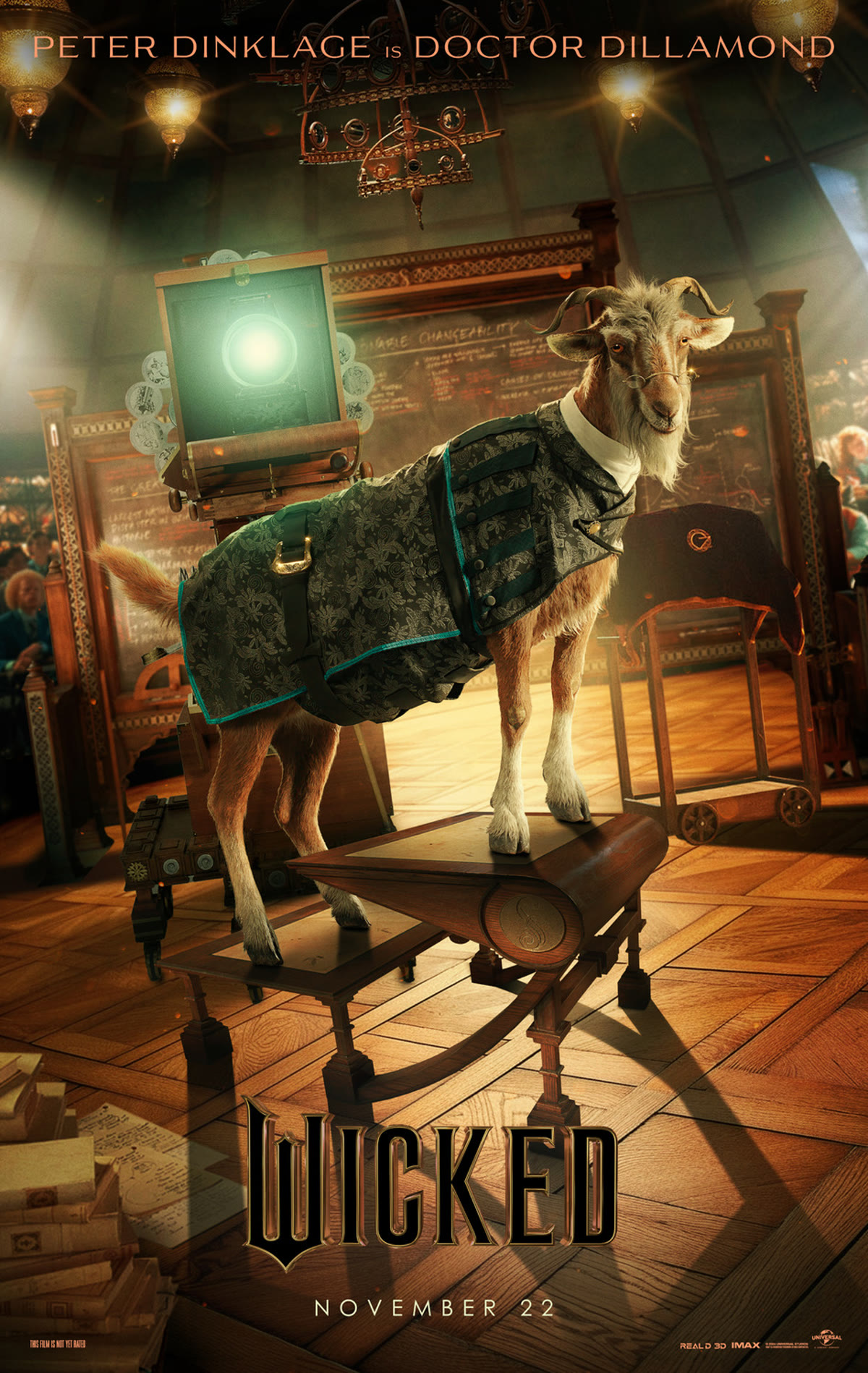
Official character poster: Doctor Dillamond

Doctor Dillamond

The last speaking Animal professor at Shiz

A talking goat and Shiz's History professor, Doctor Dillamond is the conscience of Act One. He is the first character to discover the conspiracy that is silencing Oz's talking Animals — caged, locked out of public life, eventually “going vertical” (losing the ability to speak). In the stage musical he is dismissed from his post; in the 2024 film he is forcibly removed. Either way, his loss is the political tipping point of the story.

Role: The moral catalyst Themes: Persecution of minorities, the silencing of inconvenient truths, scapegoating Notable songs: “Something Bad,” “A Sentimental Man”
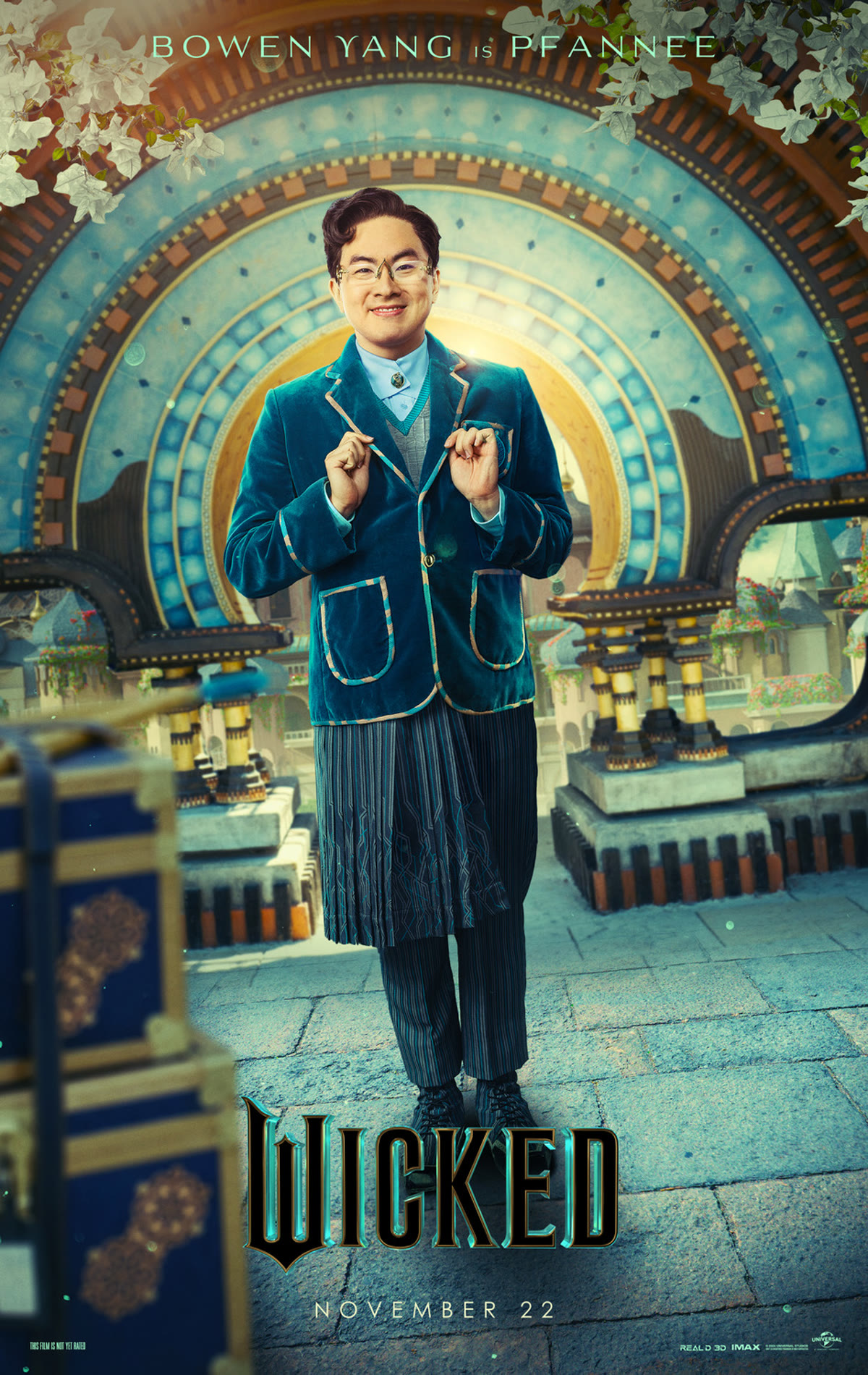
Official character poster: Pfannee

Pfannee

One of Glinda's two sidekicks at Shiz

A fellow Shiz student, Pfannee is part of Glinda's inner circle of admirers — the chorus of mean girls who amplify the popularity contest. Pfannee's role is small but pointed: she is the loyal follower whose casual cruelty to Elphaba goes unnoticed because it is delivered in pastel and with a smile.

Role: Glinda's friend, part of the Shiz social set Themes: Conformity, peer cruelty disguised as friendship Featured in: “What Is This Feeling?,” “Popular”
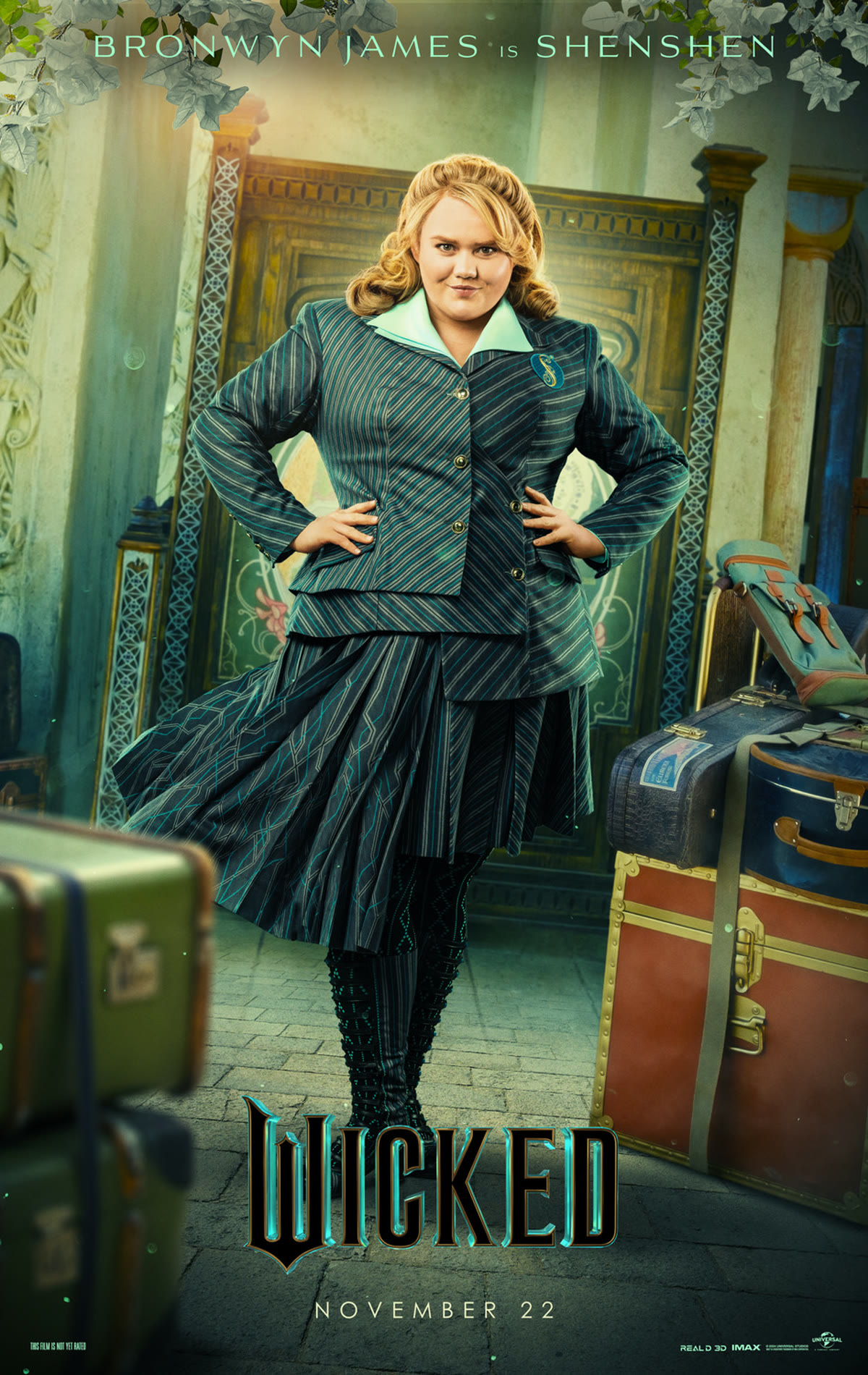
Official character poster: Shen Shen

Shen Shen

The other half of Glinda's entourage

Glinda's other sidekick at Shiz, Shen Shen completes the trio of socialites. Like Pfannee, she is a mouthpiece for the in-crowd's values — and a useful contrast to Elphaba, who is judged from the moment she arrives because she does not match the group's polish.

Role: Glinda's friend, socialite at Shiz Themes: Conformity, group identity Featured in: “What Is This Feeling?,” “Popular”
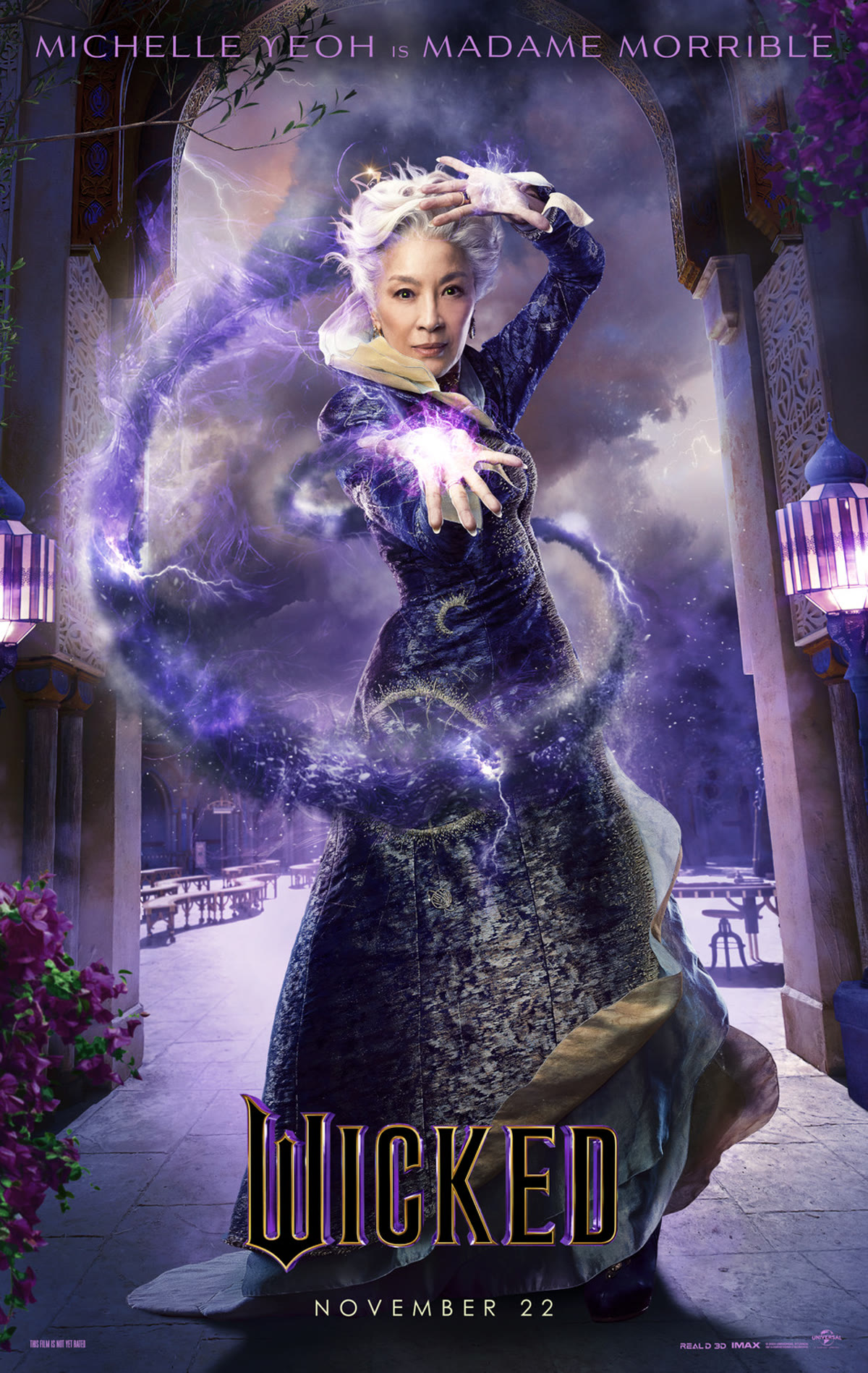
Official character poster: Madame Morrible

Madame Morrible

Shiz's regal headmistress — and the Wizard's true partner

Dean of Sorcery Studies at Shiz University, Madame Morrible first appears as a grand, encouraging mentor who recognises Elphaba's gift and recruits her for the Wizard. The audience eventually learns that she is the co-conspirator behind the Animals' persecution and Elphaba's framing. She uses her position to identify and direct talent — and to identify threats. In Act Two she controls the narrative about who is “Wicked.”

Role: Antagonist, the Architect Themes: Institutional complicity, the weaponization of mentorship, propaganda Notable songs: “The Wizard and I,” “Thank Goodness”
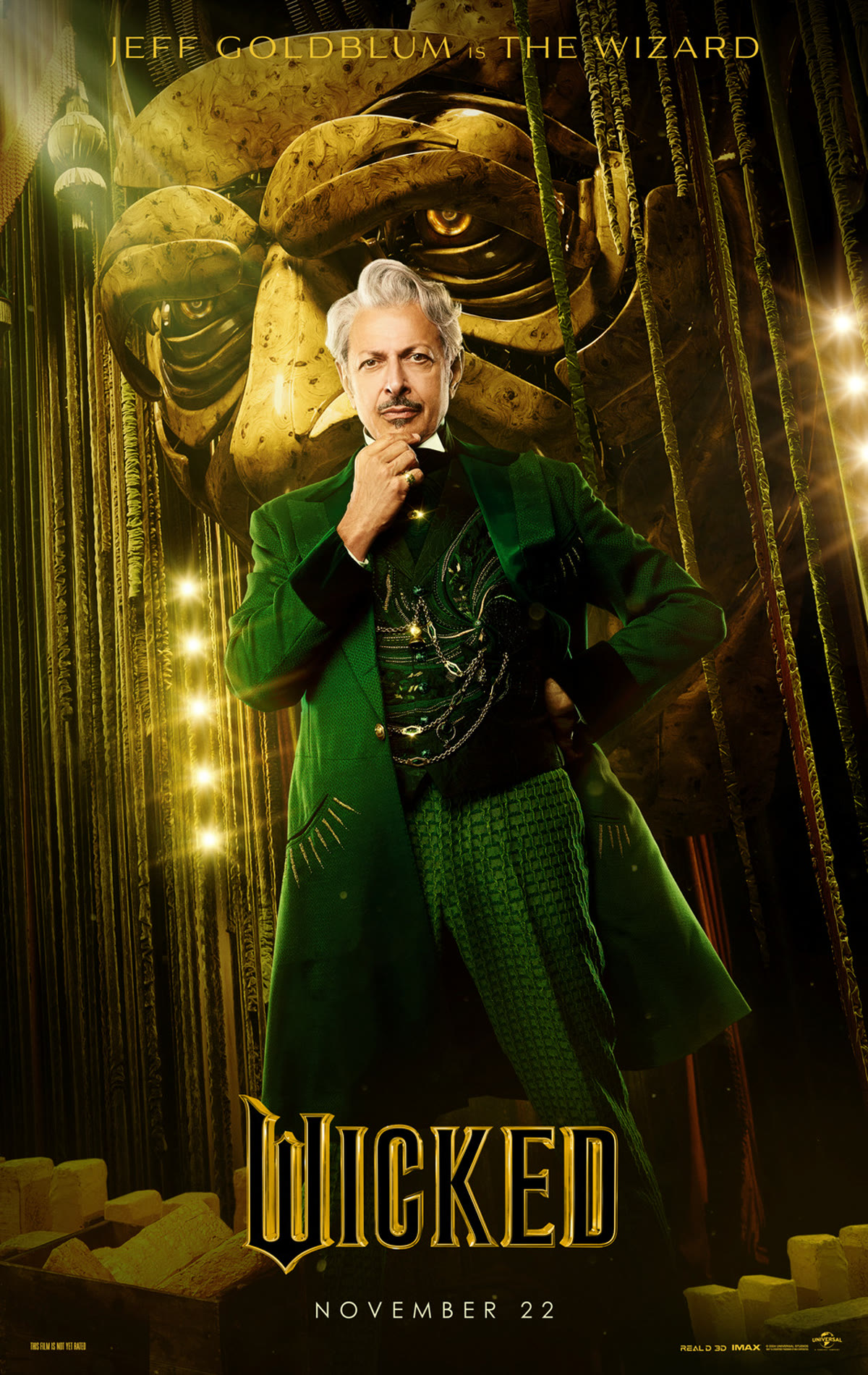
Official character poster: The Wonderful Wizard of Oz

The Wonderful Wizard of Oz

A man behind a curtain of green

The mysterious ruler of Oz arrived by hot-air balloon and built a regime of image and fear. He is a humbug — a con man from Omaha with no magical power of his own — who uses the Animals' persecution to consolidate control. He claims to be the source of all sorcery in Oz; in truth, he has been reading from the Grimmerie. He is also, in the stage show's darkest revelation, Elphaba's biological father.

Role: Antagonist / the fraud Themes: Charisma and fraud, manufactured power, the manufactured other Notable songs: “A Sentimental Man,” “Wonderful”
Alternate character poster: Elphaba standing on the Yellow Brick Road

Elphaba — a second portrait

The witch, on her own road

A different visual take on the same character — Elphaba alone, in silhouette against the Yellow Brick Road, with her staff and her hat. The imagery draws on the long Oz iconography: the lone traveller, the figure on the road, the woman in black against the yellow. Wicked is built in part on the tension between this kind of iconic visual shorthand and the more sympathetic human story it tells.

Source: Official 2024 film character poster, alternate composition
Alternate character poster: Glinda in a bubble

Glinda — a second portrait

The Sorceress, in her bubble

A different visual take on the same character — Glinda in her iconic travelling bubble, tiara and gown catching the light. The image captures the fairy-tale inheritance that Wicked both uses and subverts: the Good Witch arriving from the sky, beautiful and unreachable, who is also — in this telling — the woman who stayed behind when her friend flew.

Source: Official 2024 film character poster, alternate composition
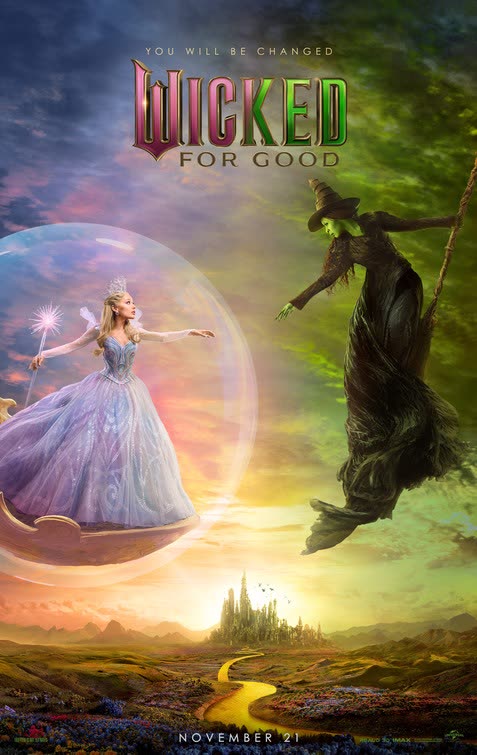
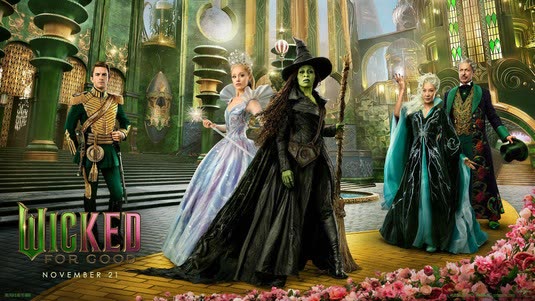
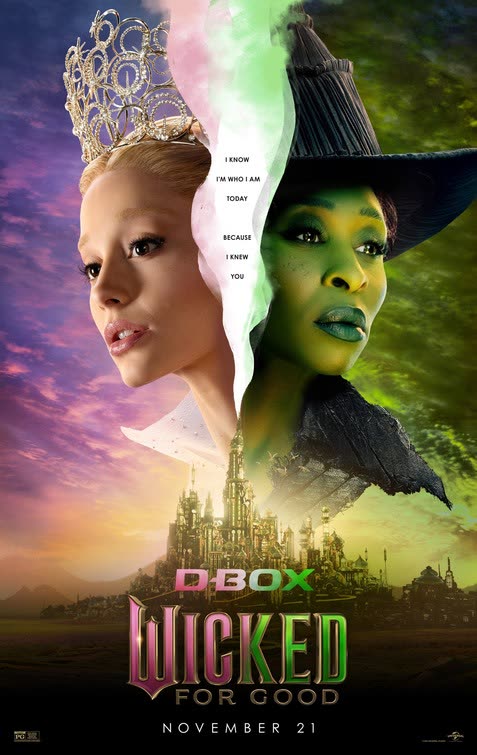
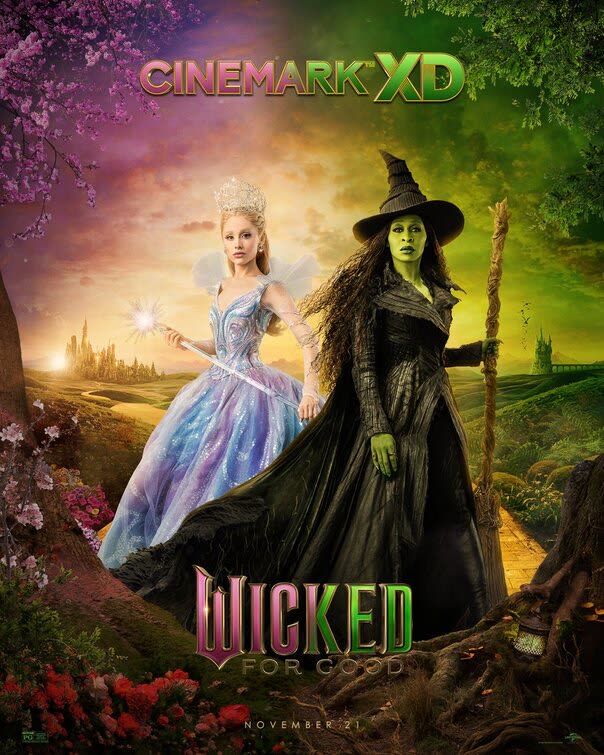
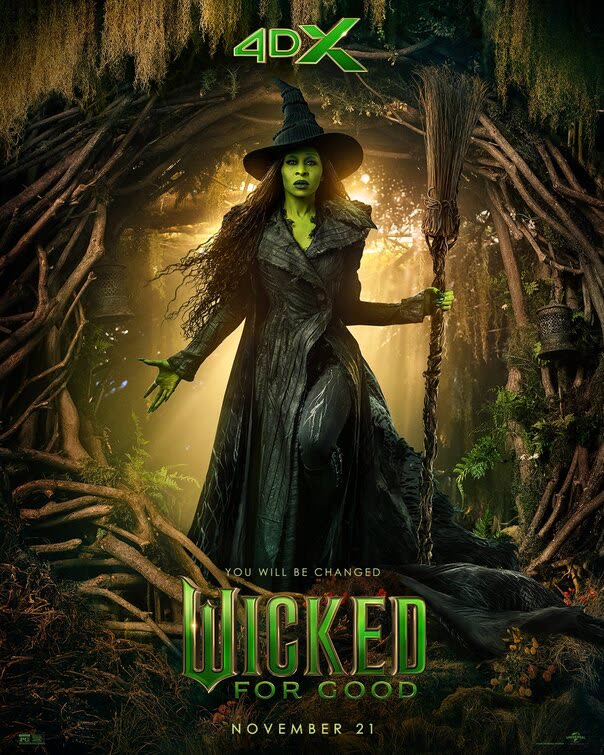
Elphaba in Wicked: For Good (2025) — the Wicked Witch of the West

Elphaba — as the Wicked Witch

The character at her story's later stage

In Wicked: For Good (the 2025 sequel film covering Act Two), Elphaba has fully transformed: she is now the Wicked Witch of the West, exiled, hunted, and operating from the forest. This is the visual endpoint of the arc the original poster only hints at — the same character, same green skin, same defiance, now with the hat, broom, and the in-universe consequences of "Defying Gravity" already behind her.

Source: Official 2025 film character poster (For Good)
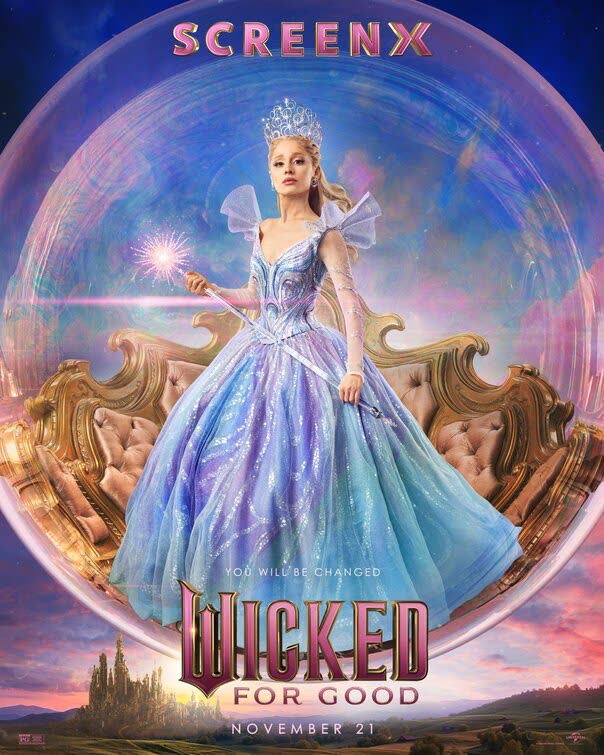
Glinda in Wicked: For Good (2025)

Glinda — post-transformation

The Good Witch, on the throne she paid for

By the time of Wicked: For Good (2025), Galinda has fully become Glinda the Good — the public-facing head of the Oz regime, the figure on the throne, the narrator of the story. The pink-and-pastel palette remains, but everything else has hardened. This is the visual cost of the arc the original poster's pose only hinted at.

Source: Official 2025 film character poster (For Good)
Fiyero in Wicked: For Good (2025)

Fiyero — in his uniform

The Winkie prince, in the field

The 2025 sequel's poster for Fiyero — in his princely military uniform, hand over heart in a cornfield — captures the moment the arc pivots. The same actor (Jonathan Bailey), the same costume language, but the audience now knows what the gesture will cost.

Source: Official 2025 film character poster (For Good)
Nessarose in Wicked: For Good (2025)

Nessarose — Governor of Munchkinland

On the throne the Wizard gave her

In the 2025 sequel, Nessarose is fully installed as Governor of Munchkinland — the regal maroon-and-gold costuming and the seated pose on her throne make visible what Act One only foreshadows. She has traded her religious sincerity for the apparatus of state.

Source: Official 2025 film character poster (For Good)
Boq in Wicked: For Good (2025)

Boq — the Tin Man in waiting

A character already on his way to becoming metal

In the 2025 sequel, Boq (Ethan Slater) is on the arc that ends in the Tin Man — a character literally hardening into something that cannot feel. The clockwork-and-armour visual framing of the 2025 poster is a deliberate nod to where the story is taking him.

Source: Official 2025 film character poster (For Good)
Madame Morrible in Wicked: For Good (2025)

Madame Morrible — full partner of the regime

The Architect, uncloaked

In the 2025 sequel, Madame Morrible's role as the Wizard's partner-in-crime is no longer concealed behind the headmistress's graciousness. Her 2025 character poster presents her as the Architect she has always been — the co-designer of the narrative that calls Elphaba "Wicked."

Source: Official 2025 film character poster (For Good)
The Wizard in Wicked: For Good (2025)

The Wizard — exposed

The man behind the curtain, on stage

By 2025's For Good, the Wizard (Jeff Goldblum) has been exposed as a fraud — the hot-air-balloon man from Omaha with no magical power of his own. His 2025 poster visually reflects that exposure: the costuming is still regal, but the posture and framing read as cornered rather than commanding.

Source: Official 2025 film character poster (For Good)
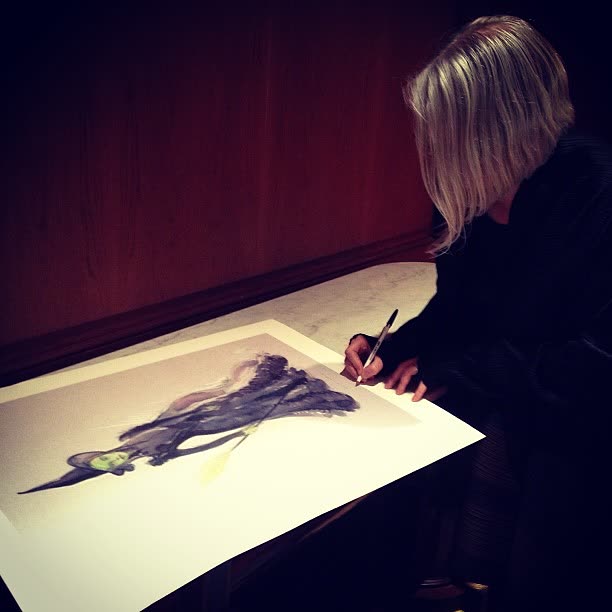
Susan Hilferty's original Elphaba costume design sketch

Elphaba — foundational costume design

The original Tony-Award-winning designer's drawing

This is the original Broadway costume design sketch by Susan Hilferty, the designer who won the 2004 Tony Award for Best Costume Design of a Musical for her work on Wicked. Photographed at the 2012 donation ceremony at the Smithsonian National Museum of American History, where the original Elphaba dress was gifted to the museum's collection alongside the Ruby Slippers from the 1939 film. The image shows the foundational design — the silhouette, the hat, the green skin, the dark gown — that every subsequent Elphaba costume, photograph, and poster is a descendant of.

Source: Susan Hilferty, costume designer. National Museum of American History, Smithsonian Institution. Context: Donation ceremony for the original Elphaba dress, 2012
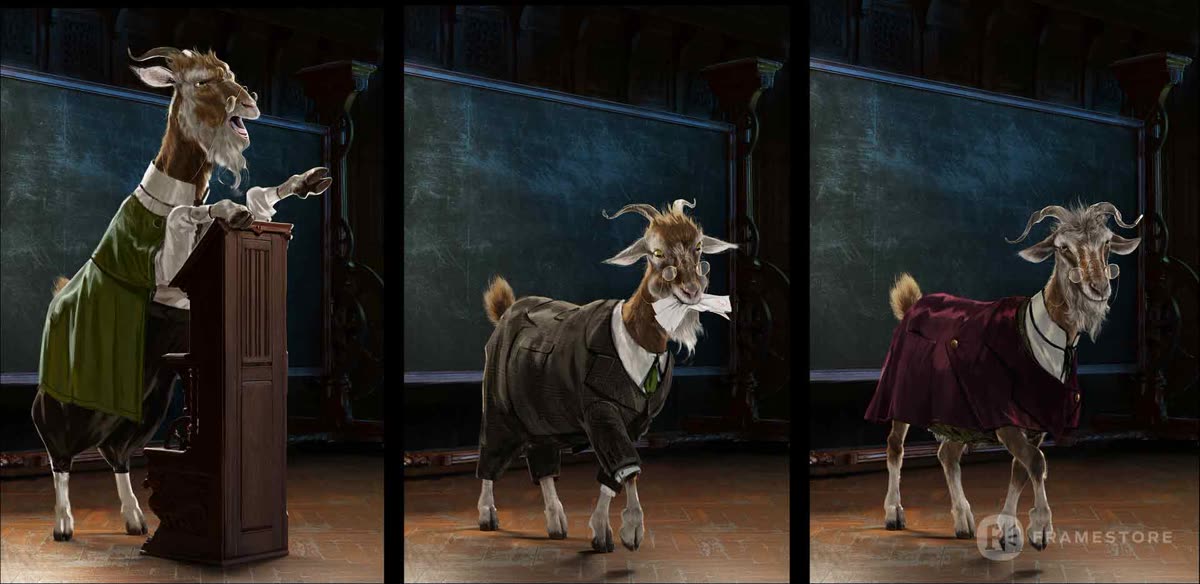
Doctor Dillamond — concept art costume exploration (three outfits)

Doctor Dillamond — character concept art

Three costume directions for the goat professor

Character concept art from the visual-effects house Framestore (the studio that designed and animated the talking Animals for the 2024 film), showing three possible wardrobe directions for Doctor Dillamond — a tweed-jacket working academic, a green-academic-robe lecturer at the podium, and a burgundy ceremonial gown. This is the design-exploratory stage: the art that the costume and VFX teams worked from before the final on-screen version was locked.

Source: Framestore — Wicked: Art Department Context: Pre-production character design exploration, 2024 film
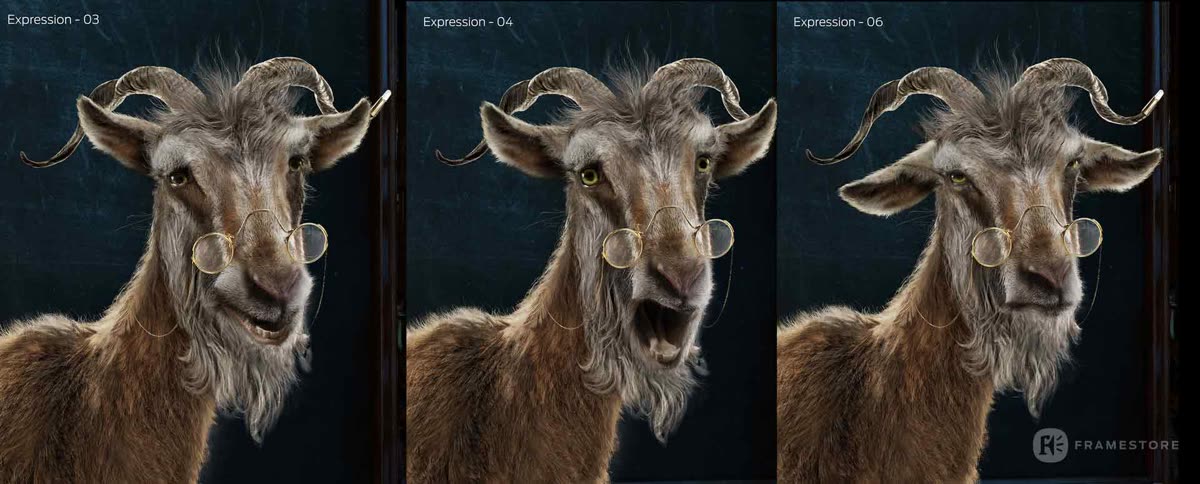
Doctor Dillamond — concept art facial expressions (three expressions)

Doctor Dillamond — expression sheet

Three of the facial expressions modelled for the goat professor

From the same Framestore art-department set as the costume exploration, this is an expression sheet for Doctor Dillamond: three of the facial expressions (gentle speech, exclamation, somber) modelled and rendered before the final animation. These are the building blocks the animators used to make a talking goat whose emotions a human audience could read.

Source: Framestore — Wicked: Art Department Context: Pre-production character animation reference, 2024 film
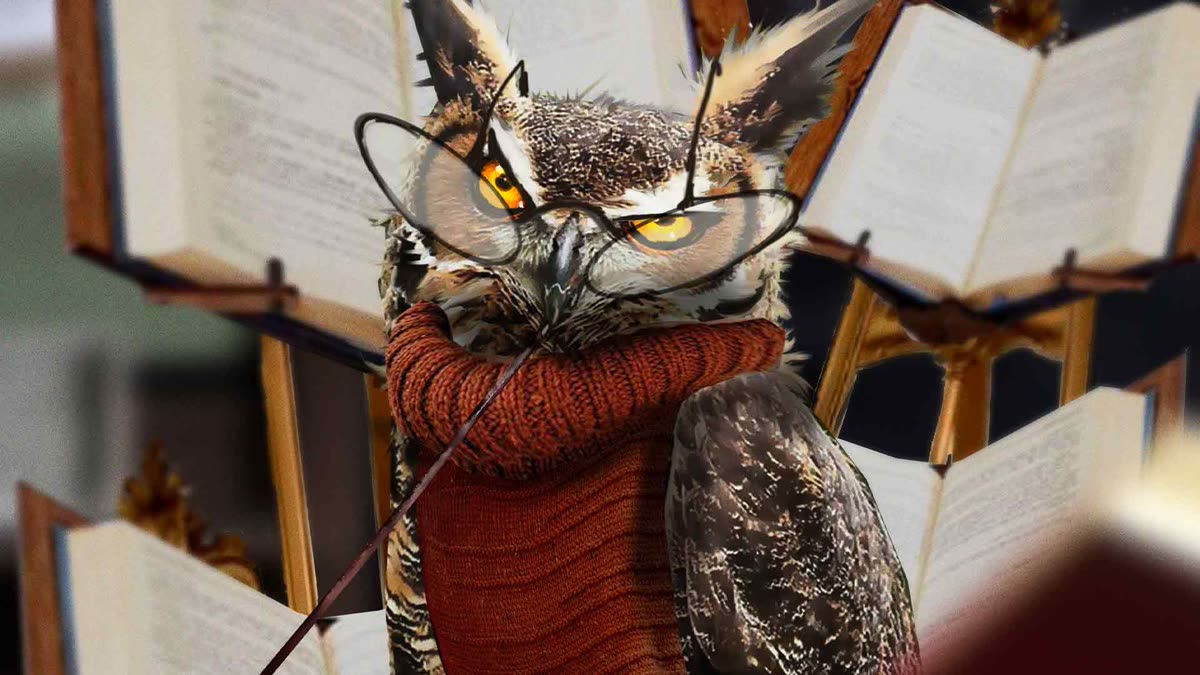
Shiz University owl professor — Framestore character concept art

Shiz faculty — the owl professor

One of the talking-animal professors of Shiz University

Framestore character concept art for one of the talking-animal professors at Shiz University. In Wicked, the talking Animals are a discriminated-against minority of Oz; the faculty of Shiz includes goats (Doctor Dillamond), an owl, a snow leopard, a tamarin monkey, and others. This piece shows one of the design directions for that menagerie.

Source: Framestore — Wicked: Art Department
Shiz University snow leopard professor — Framestore character concept art

Shiz faculty — the snow leopard professor

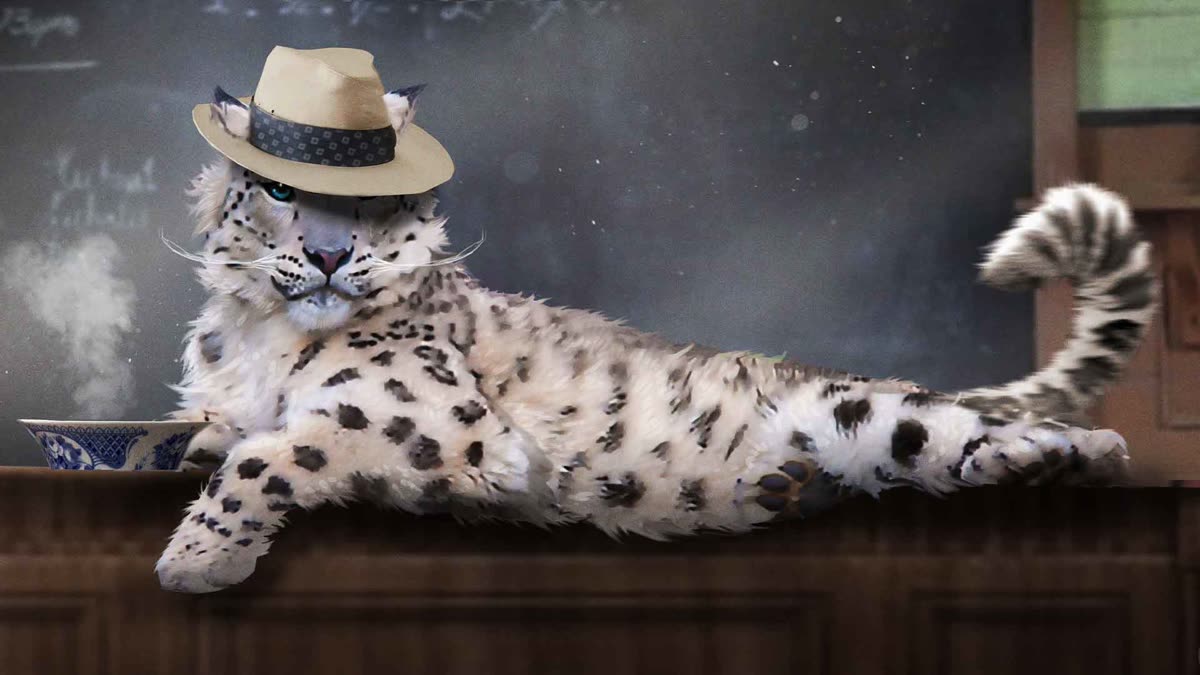
Another of the talking-animal professors of Shiz

Framestore character concept art for the snow leopard professor — one of the talking-animal academics at Shiz University. The Animals are a persecuted minority of Oz, and their presence in the faculty is part of the political texture of the first act.

Source: Framestore — Wicked: Art Department
Shiz University tamarin monkey professor — Framestore character concept art

Shiz faculty — the tamarin professor

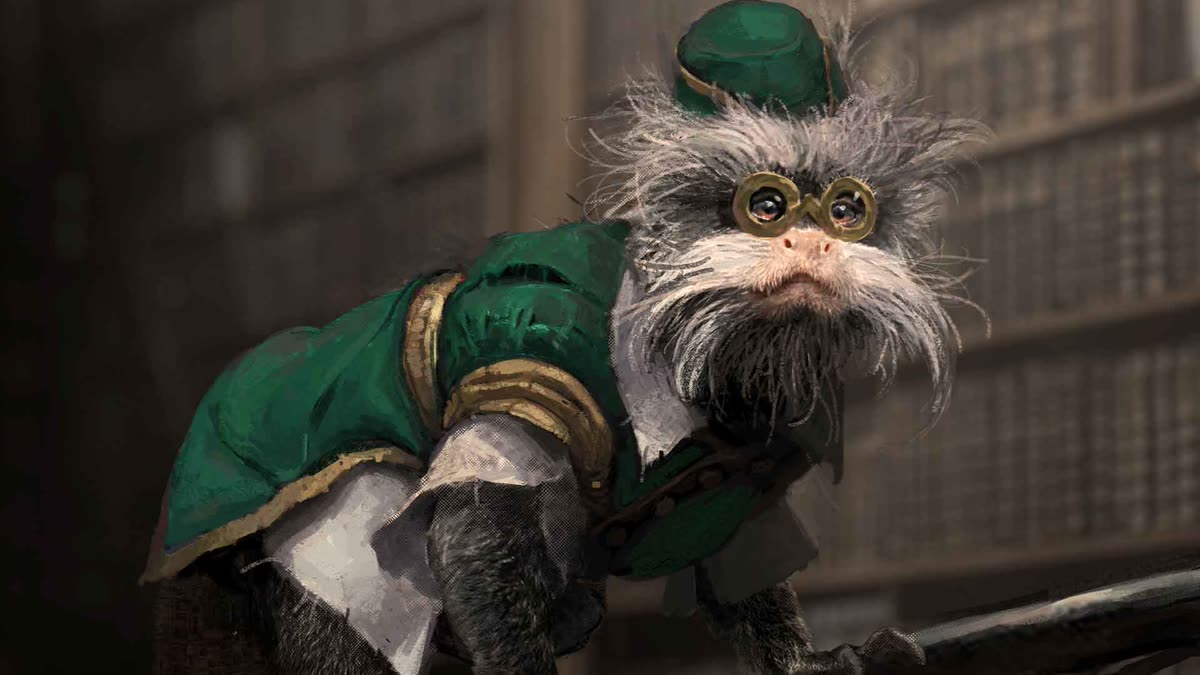
The third of the talking-animal professors of Shiz in this concept set

Framestore character concept art for the tamarin monkey professor — the third of the talking-animal Shiz faculty in this concept set. Like the goat, the owl, and the snow leopard, the tamarin is one of Oz's sentient Animals, all of whom are losing their voice as the story progresses.

Source: Framestore — Wicked: Art Department
Emerald City monkey guards — Framestore character concept art

Emerald City monkey guards

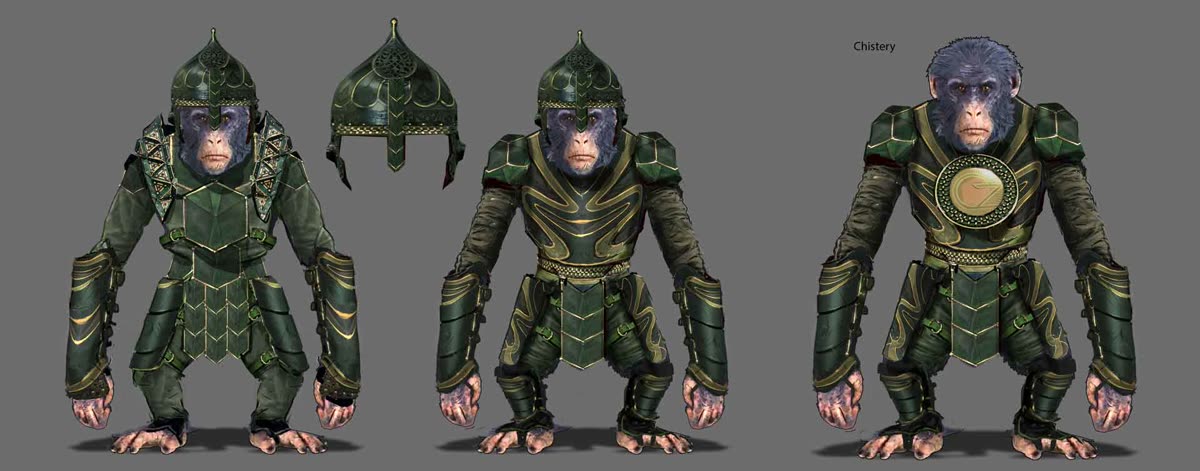
The Wizard's winged-monkey enforcers

Framestore character concept art for the winged-monkey guards of the Emerald City — the Wizard's enforcers. In the Wicked telling, the monkeys are not the chaotic wild creatures of the 1939 film but a militarised force in the Wizard's service. This is a costume-exploration piece showing different armour directions for the troop.

Source: Framestore — Wicked: Art Department
Ozdust Band — Framestore character concept art

The Ozdust Band

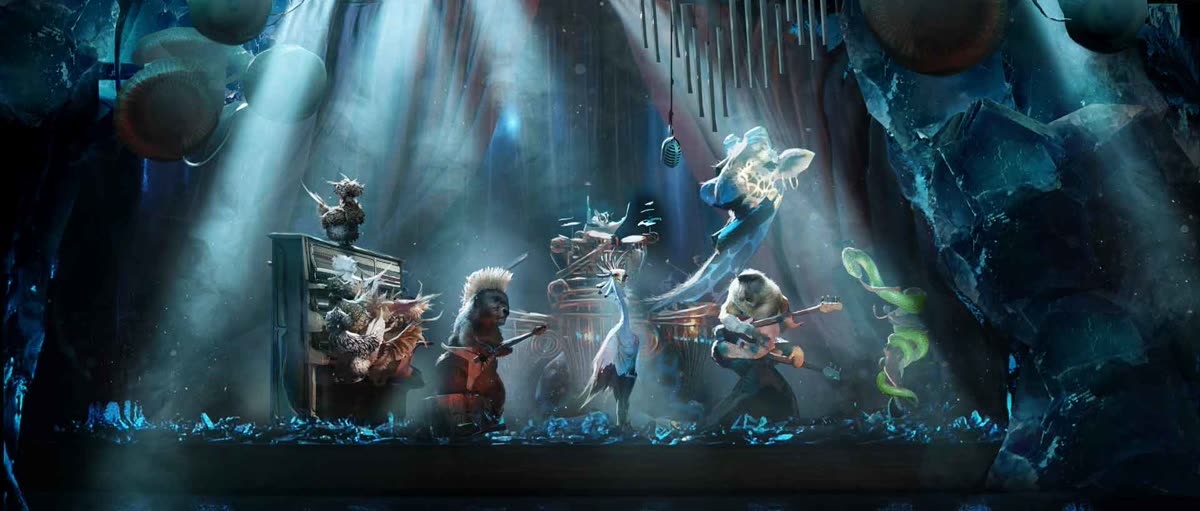
The creature-musicians of the Ozdust Ballroom

Framestore character concept art for the band that plays the Ozdust Ballroom — an ensemble of fantastical creature-musicians including a hedgehog keyboardist, a mohawked string-player, a bird drummer, a blue fairy lead singer, a bear guitarist, and a spectral dancer. The Ozdust scene is one of the musical's set pieces, and this is the character design that underpins it.

Source: Framestore — Wicked: Art Department

Reading the Characters

Wicked is a story about who gets to tell the story. The play opens with a city celebrating the death of the Wicked Witch of the West — and the rest of the show is the version that Glinda, the Wizard, and Madame Morrible never wanted told. The Animals are being silenced because they have a memory. Elphaba is branded Wicked because she sees the silencing for what it is.

The supporting cast is built to make this theme legible: Boq, who loves the wrong person for the wrong reasons. Doctor Dillamond, who knows too much. Fiyero, who has the privilege to walk away but doesn't. Glinda, who has the most to lose and the most to gain from staying in the Wizard's good graces. Read together, the cast is a portrait of a society that is choosing, step by step, to make a monster of someone who is only trying to be honest.