The Books
L. Frank Baum wrote fourteen Oz novels between 1900 and 1920, plus several short story collections. Not all of them fed into Wicked — but the ones below did, and they are worth reading on their own terms.
❦
Primary Sources — The Six Books That Feed Wicked
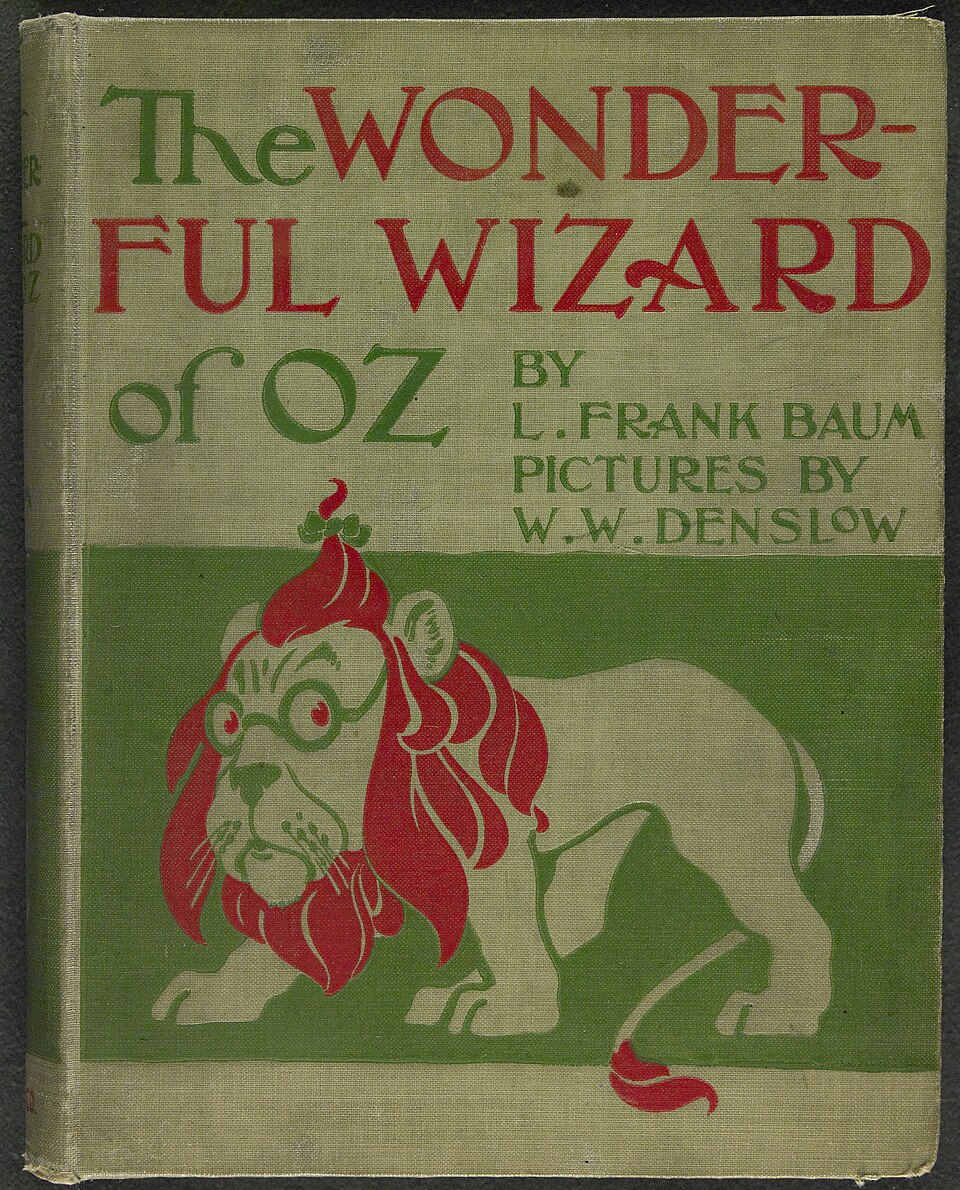
The Wonderful Wizard of Oz (1900)
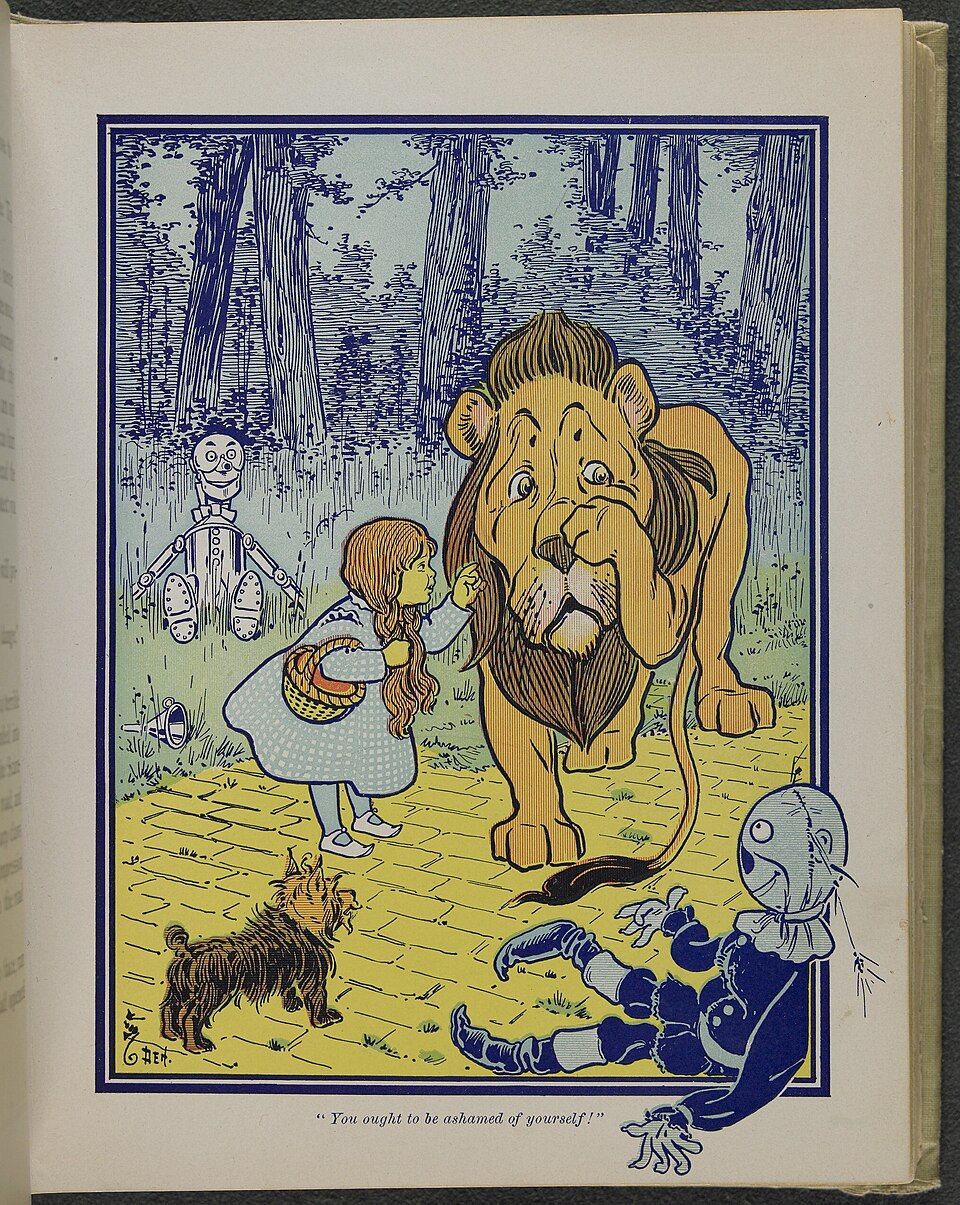
Dorothy, a Kansas farm girl, is swept by a cyclone into the Land of Oz. There she meets the Scarecrow, the Tin Woodman, and the Cowardly Lion; travels the Yellow Brick Road to the Emerald City; defeats the Wicked Witch of the West; and is told by Glinda the Good Witch that the silver shoes on her feet can take her home.
This is the foundational text. Almost every element of the musical — the two witches, the Wizard, the talking animals, the monkeys, the Emerald City — can be traced here. Baum wrote it as a modern American fairy tale, deliberately distinct from European ones: no prince, no king, no lost royalty, just a child and a journey.
Used by Wicked for: the two-witch frame, the Wizard-as-fraud, the silver shoes (gold in the film), the Wicked Witch's death by water, the Lion's cowardice, the Scarecrow's brainlessness, the Tin Man's heartlessness.
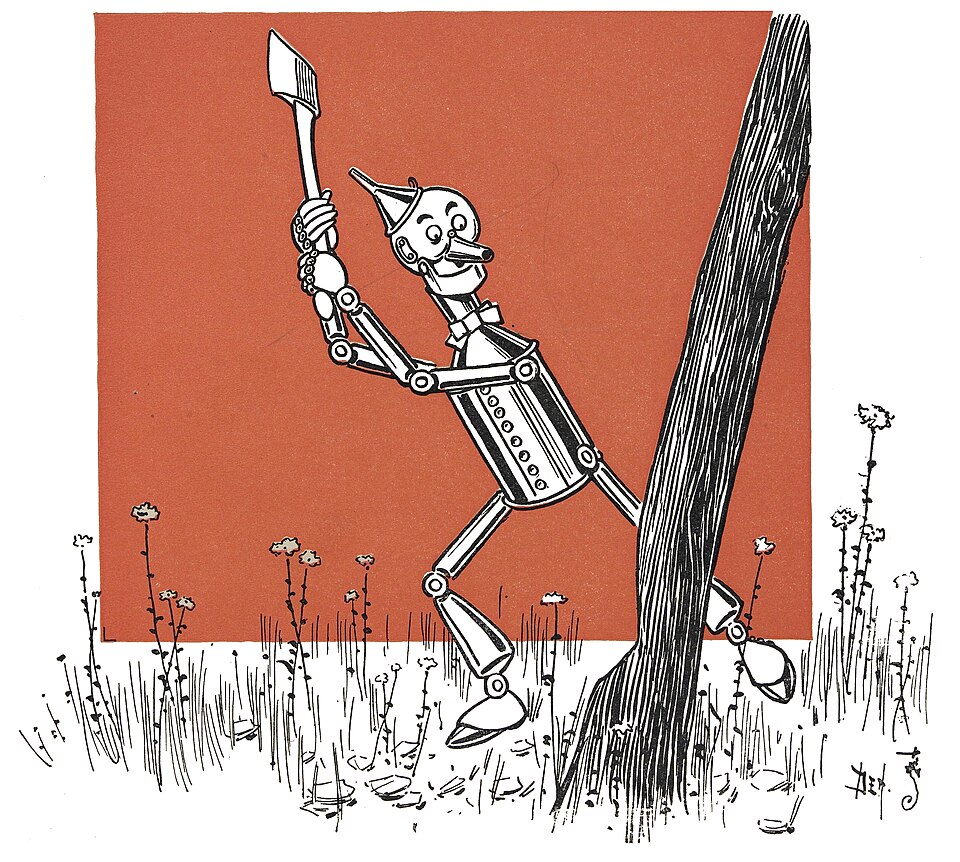
The Marvelous Land of Oz (1904)
The Scarecrow, deposed from the Emerald City throne, journeys through Oz with a boy named Tip, the Sawhorse, the Wogglebug, the Tin Woodman, and the Highly Magnified Wogglebug. The book ends with the revelation that Tip is actually Princess Ozma of Oz, transformed by the witch Mombi — and the new ruler of Oz is crowned in the Emerald City.
The Scarecrow's tenure as king of the Emerald City — which the Wicked musical references — comes from this book. So does Glinda's role as a political figure who knows the truth about Ozma and chooses to wait for the right moment to restore her. Glinda in Baum is not a fairy godmother; she is a careful, patient power broker.
Used by Wicked for: Glinda's political savvy, the Scarecrow as a former ruler of the Emerald City, the idea of a wizard who's a humbug.
The Patchwork Girl of Oz (1913)
The Patchwork Girl, Scraps, is brought to life by the witch Dr. Pipt (with the Powder of Life) to be a servant for his wife. She immediately runs off, and is joined on her travels by the Scarecrow, the Tin Woodman, the Woozy, and the glass cat. The book is structurally a chase-and-discovery narrative, lighter than most of the middle Oz books.
This is the source Oz Wiki specifically identifies as one of the books the Wicked musical references. The "Patchwork Girl" reference matters because the musical's aesthetic — fragments stitched into a new whole, the body as a record of its making — comes from Baum's book. Elphaba is literally a patchwork: green skin, black hat, broom, in the musical's iconography.
Used by Wicked for: the patchwork-body metaphor, the "made" quality of Elphaba's self.
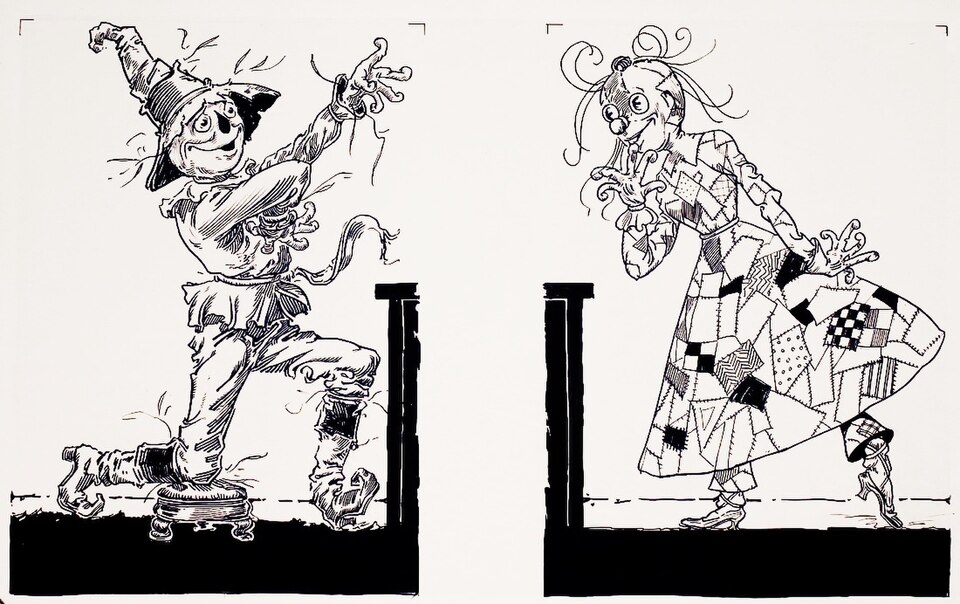
The Scarecrow of Oz (1915)
The Scarecrow, lost in the western part of Oz, is carried by a sea-bird to Jinxland, a country in the Nonestic Ocean. He and his friends Cap'n Bill and Trot rescue the young princess Gloria from the shape-shifting witch Blinkie. The book introduces some of the more playful non-human Oz creatures and shows the Scarecrow as an adventurer rather than a king.
Per Oz Wiki, this is the other book the Wicked musical explicitly references. The musical's Fiyero-as-Scarecrow connection (Fiyero is changed in the Wicked Years) traces back here, where the Scarecrow is shown as still questing, still growing, well after his "deficiency" has been solved.
Used by Wicked for: Fiyero's later "becoming" — transformed in a way that recalls the Scarecrow's ongoing change.
The Tin Woodman of Oz (1918)
Nick Chopper, the Tin Woodman, travels with the Scarecrow and the Wogglebug to find his former sweetheart, the Munchkin girl Nimmie Amee, who has been put under a spell by the witch of the same enchanted axe that dismembered Nick. They discover that the Wicked Witch of the West had created a second tin man — Captain Fyter — to keep Nimmie company, but the two tin people had rusted together over the years.
The Tin Woodman's tragic backstory is the most important thing this book offers Wicked. The musical makes Boq the Tin Man; this book shows how the Tin Man was actually created — dismembered limb by limb, each piece replaced with tin until nothing human remained. It is the source for the Wicked Years' idea that love can be lost by degrees.
Used by Wicked for: Boq's transformation into a tin man, the loss-of-limb-by-limb metaphor for how love (or self) is destroyed.
The Emerald City of Oz (1910)
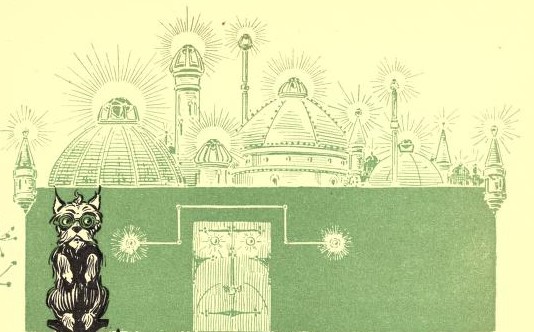
Dorothy, the Wizard, and the Cowardly Lion visit the Emerald City at a moment of political crisis: the Nome King is gathering an army to invade Oz. Glinda intervenes, the Wizard and Dorothy travel underground to the Nome Kingdom to negotiate, and the book ends with Oz sealed off from the mortal world by a spell of Glinda's.
This book is the source for the underground tunnels beneath Oz that the Wicked Years and the 2024 film both reference as the location of Elphaba's castle Kiamo Ko. The "Impassable Desert" surrounding Oz in the musical comes from this book's end: Glinda literally walls Oz off from the rest of the world.
Used by Wicked for: the Impassable Desert, the Nome King's underground tunnels, Glinda's protective political magic, the Wizard's diplomatic role.
❦
Other Baum Oz Books (For Context)
Baum wrote fourteen Oz novels. The Wicked musical draws most heavily on the six above, but other books contribute the wider world. None of them has a dedicated card here because they are not direct Wicked sources, but the table below shows where each fits in the canon and what it adds to the world the musical inhabits.
| # | Title | Year | Key contribution to the wider Oz world |
|---|---|---|---|
| 3 | Ozma of Oz | 1907 | Dorothy's return, the Nome King as a major villain, the royal family of Oz formally introduced, the royal kitchen maid Billina. |
| 4 | Dorothy and the Wizard in Oz | 1908 | An earthquake sends Dorothy and the Wizard underground; introduction of the vegetable people, the wooden Gargoyles, and the place of Oz's underground. |
| 5 | The Road to Oz | 1909 | Dorothy, the Shaggy Man, and Button-Bright travel to the Emerald City for Ozma's birthday; the book is a series of encounters in fairy lands on the way. |
| 8 | Tik-Tok of Oz | 1914 | The clockwork man Tik-Tok as a main character; the Nome King continues his war on Oz; the Shaggy Man's origins. |
| 10 | Rinkitink in Oz | 1916 | Rinkitink, the kindly king of the island of Pingaree, joins Oz's wider cast. |
| 11 | The Lost Princess of Oz | 1917 | Ozma is kidnapped; the search for her shows how Oz is governed when its ruler disappears. |
| 13 | The Magic of Oz | 1919 | The Nome King's final attempt to conquer Oz; the Wizard invents many new magical devices. |
| 14 | Glinda of Oz | 1920 | Baum's last Oz book. Glinda is the central figure for the first time; she and Ozma travel to the Skeezer kingdom. Glinda's politics, magic, and authority are presented as the most powerful in Oz. |
After Baum's death in 1919, the series was continued by Ruth Plumly Thompson (1921–1939, 19 books) and then by John R. Neill, Rachel Cosgrove, and others, plus the 1939 MGM film, the 1978 stage musical The Wiz, and Maguire's 1995–2011 novels. Wicked draws only on Baum's first fourteen books, MGM's 1939 film, and Maguire's novels — not on Thompson or the later continuations.
Cross-reference: which book gave us which element of Wicked?
See the Source Map for a scene-by-scene breakdown.