Filter:
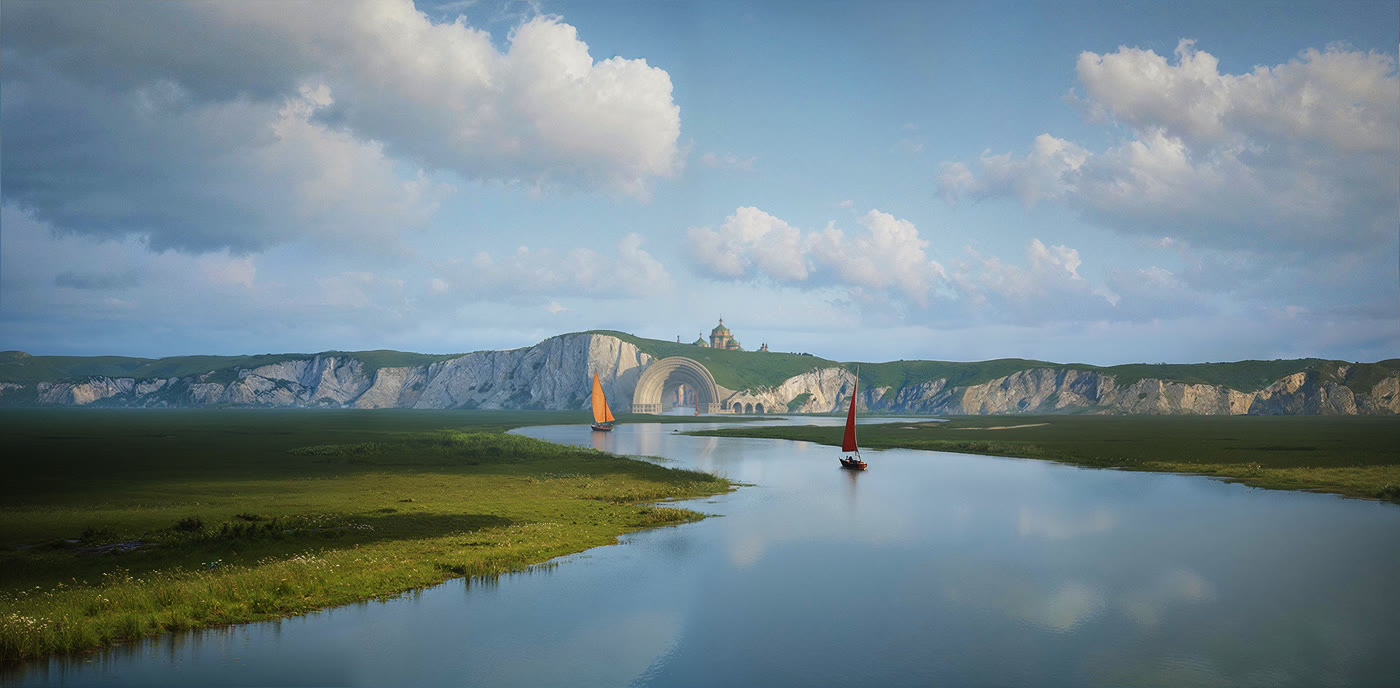
Concept art of the Land of Oz, with the Emerald City visible in the distance

The Land of Oz

A continent cut off from the rest of the world

The setting of Wicked is the entire continent of Oz — a vast, fertile land surrounded on all sides by a strip of impassable desert that has kept it isolated from the rest of the world for so long that most Ozians believe nothing else exists. The land is divided into four quadrants (Munchkin Country to the east, Quadling Country to the south, Winkie Country to the west, and Gillikin Country to the north) and ruled from the central Emerald City.
Source: L. Frank Baum, 1900 Featured in: Stage musical, 2024 film
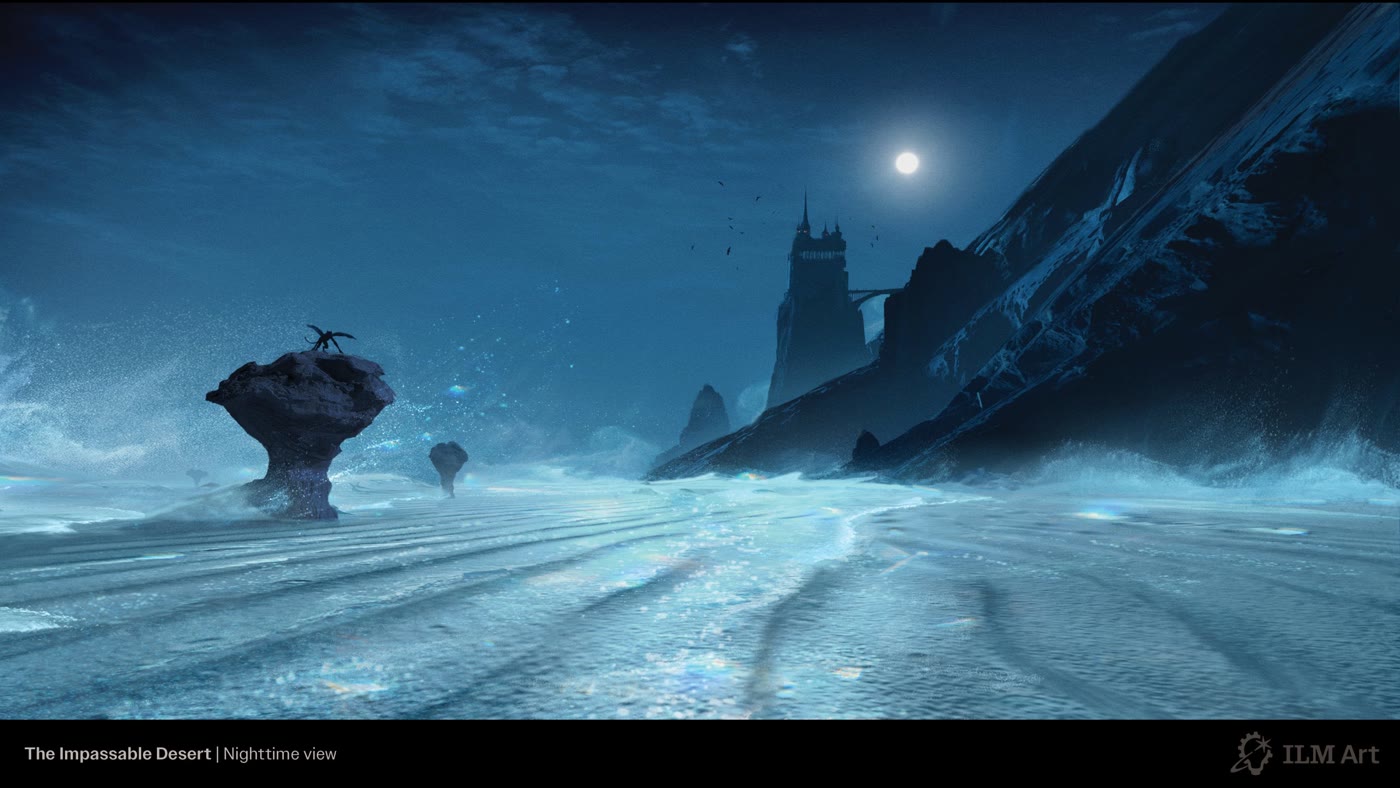
Concept art of the Impassable Desert at night, with Kiamo Ko on the horizon

The Impassable Desert

The Deadly Desert that walls Oz off from the world

A ring of dead, crystalline terrain encircling Oz. It is impassable on foot and the reason Ozians have no contact with the rest of the world. The Wizard of Oz is the only person in living memory to have crossed it — by hot-air balloon, from Omaha, Nebraska. The desert is not just geography; it is the single most important fact about Oz, the one condition that has allowed the Wizard's regime to survive.

Significance: Oz's enforced isolation; the Wizard's unique authority Featured in: “No One Mourns the Wicked,” the Wizard's exposition scenes
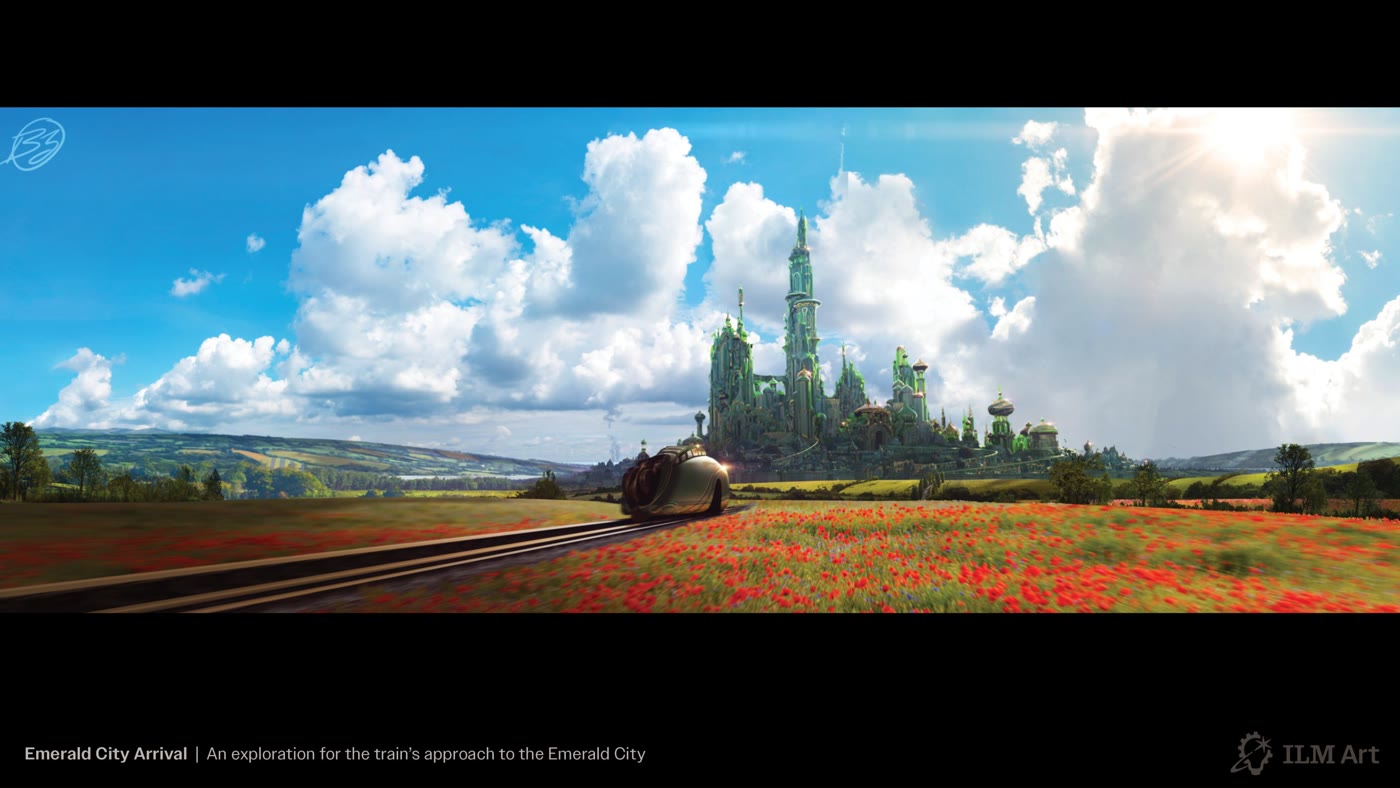
Concept art: the train approaches the Emerald City through a field of poppies

The Emerald City

The gleaming capital — seat of the Wizard's power

A vast metropolis of green stone and gold at the centre of Oz. Everyone within its borders is required by law to wear green-tinted spectacles, so that the city appears to be made entirely of emeralds. It is the destination of Elphaba and Glinda's “One Short Day” — and the place where Elphaba meets the Wizard and begins to unravel the truth about his regime.

Symbolism: Manufactured wonder, the cost of enforced beauty Featured in: “One Short Day,” “Thank Goodness,” “Defying Gravity”
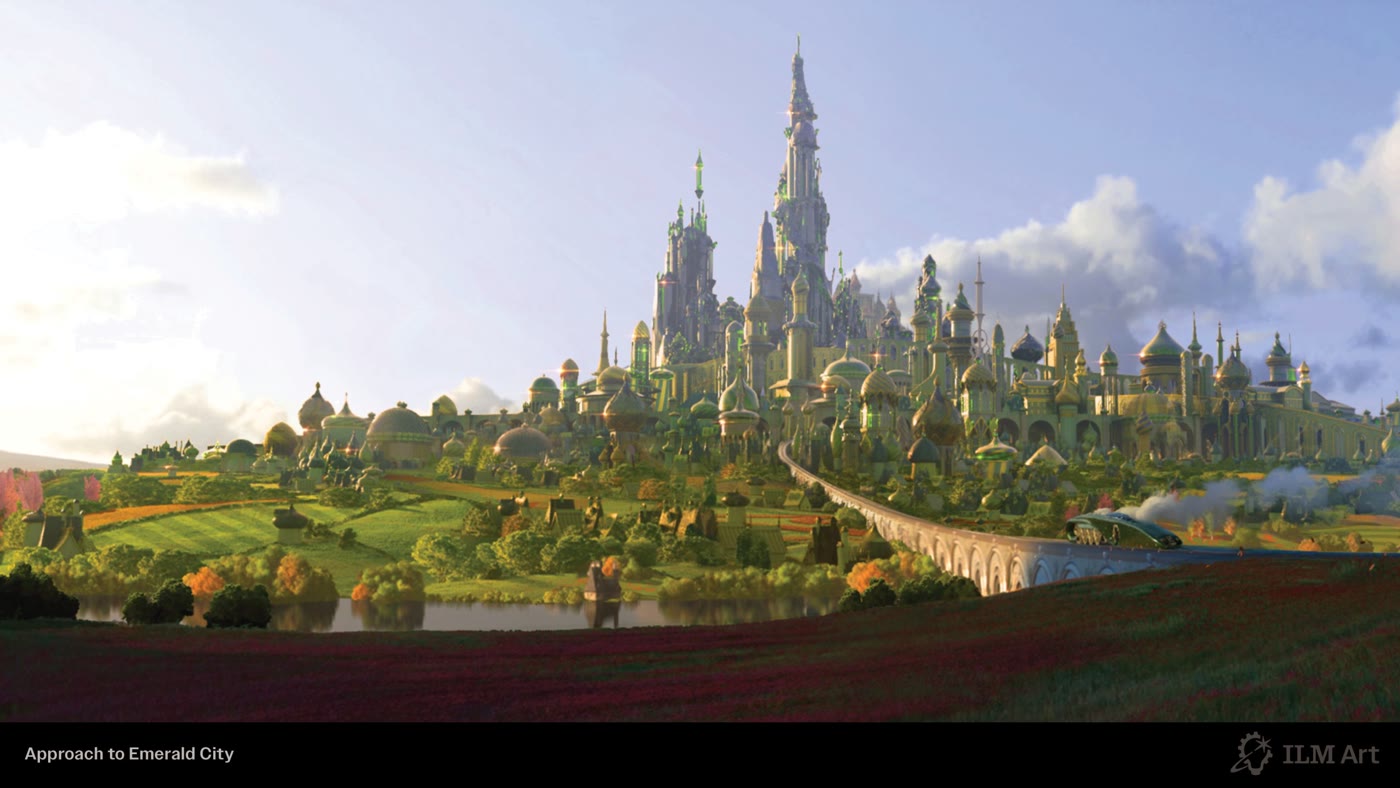
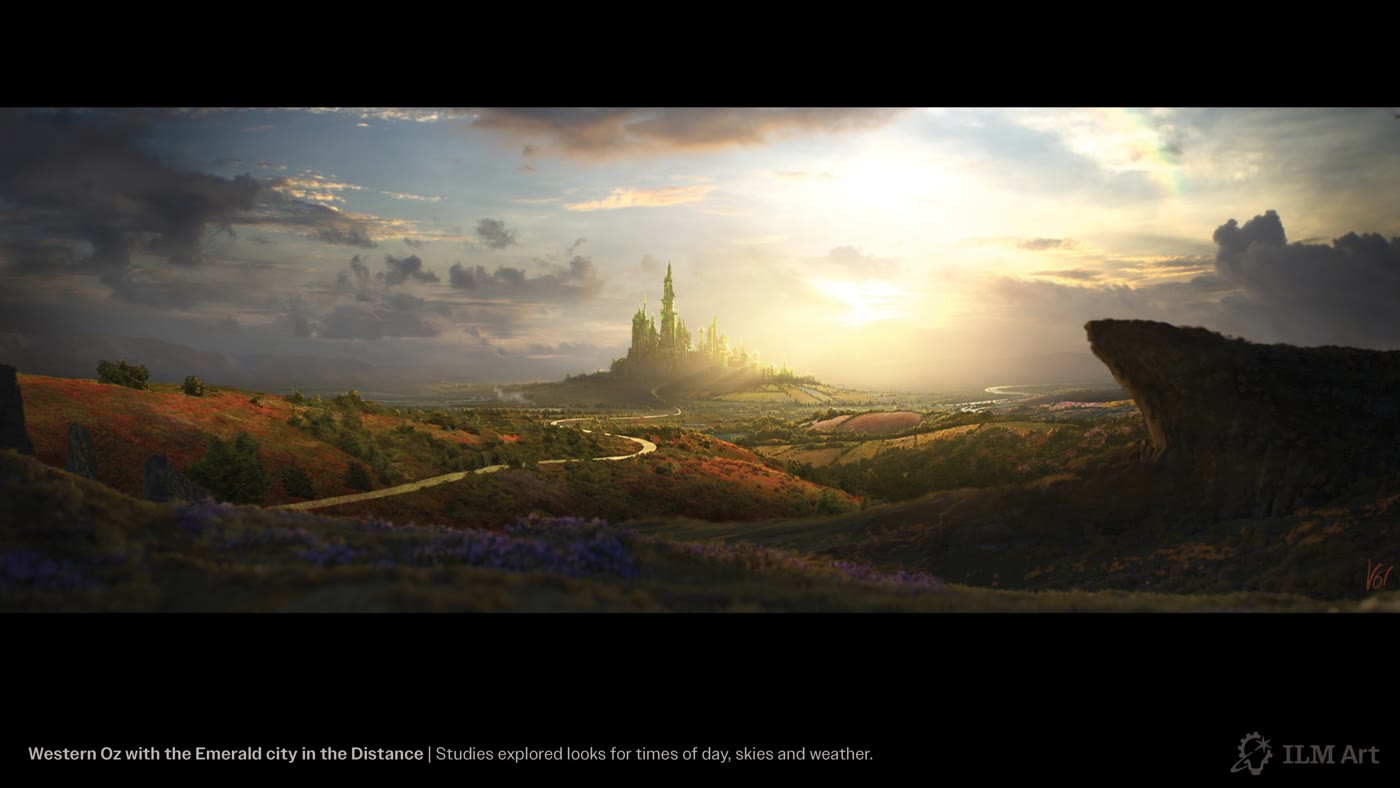
Concept art: panoramic view of the Emerald City from the approach

The Emerald City — from the West

First sight of the capital, from the poppy fields

The first wide view the audience gets of the capital — a fairytale city of spires and bridges rising out of the rolling green countryside, with the train cutting a path through it. The image captures Oz at its most inviting, and sets up the slow reveal of what the city actually is.

Source: ILM Wicked concept art, “Approach to Emerald City”
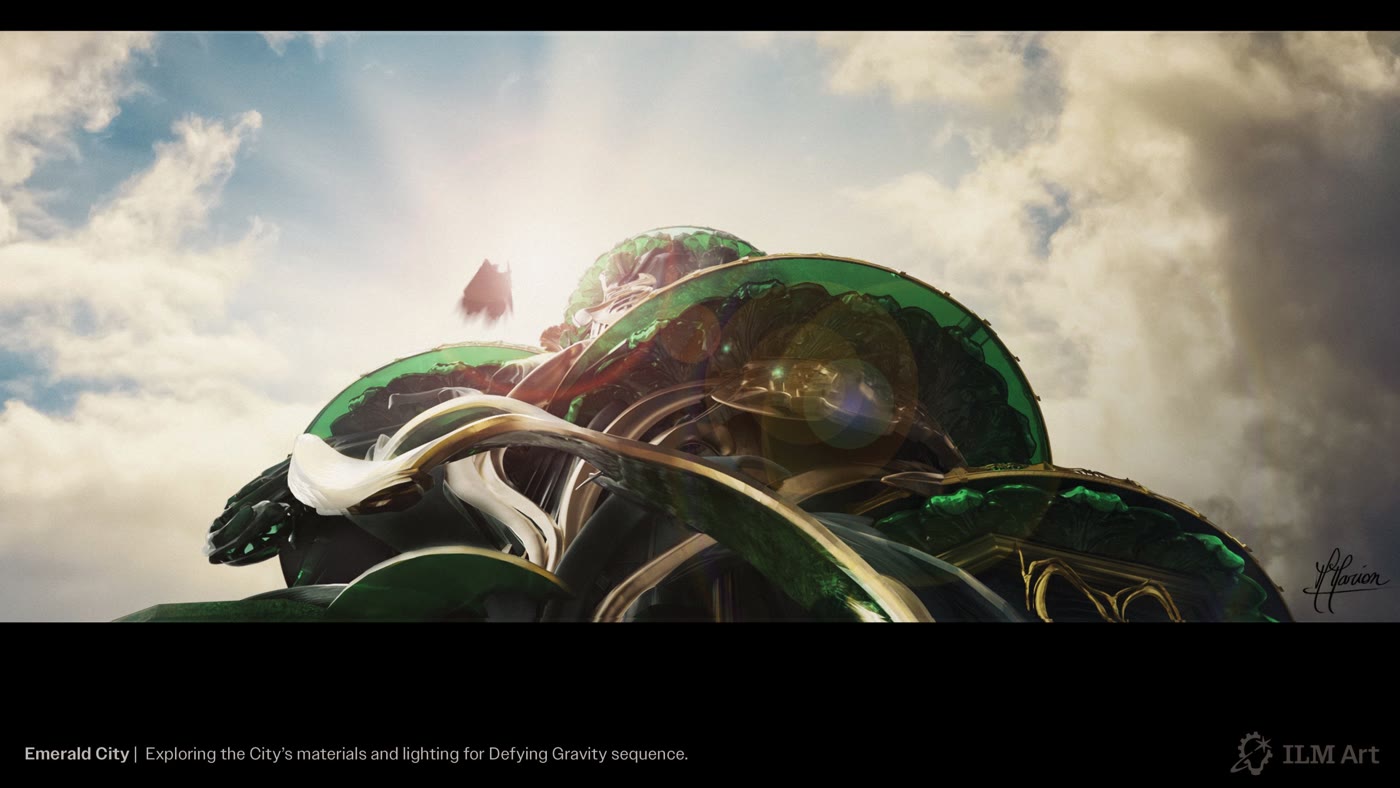
Concept art: looking up at the Emerald City during the Defying Gravity sequence

The Emerald City — the Wizard's Stage

The city as seen by Elphaba, at the moment of her break

A low-angle, vertiginous view of the city — the green, jewel-like underside of its architecture, with a small figure on a broom against the vast sky. The image is built to capture the perspective of the show's signature number, “Defying Gravity,” when Elphaba literally rises above the Wizard's reach.

Source: ILM Wicked concept art, “Defying Gravity” lighting study
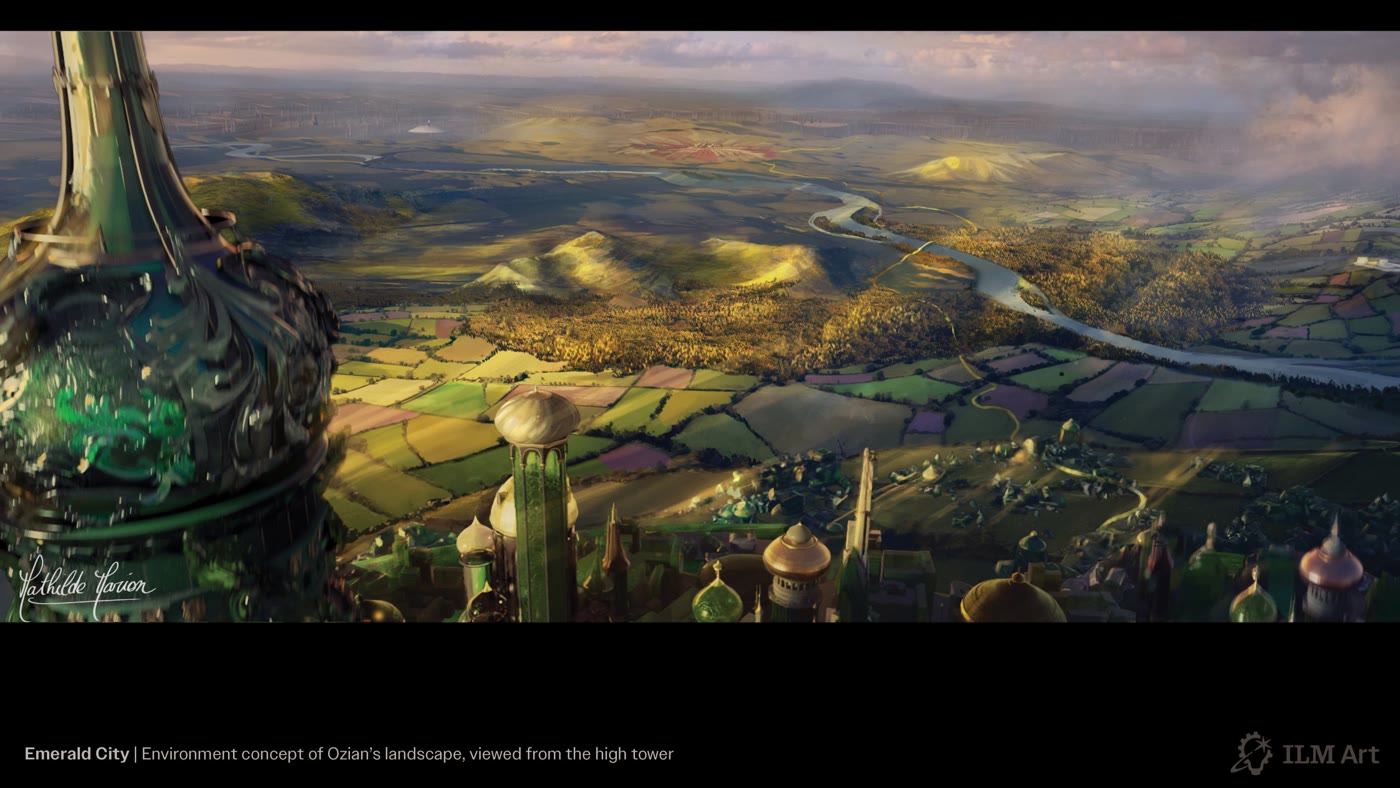
Concept art: view of the Land of Oz from high in the Emerald City

The Land of Oz — seen from the City

A view from the centre, looking out

The same continent as in the entry on the Land of Oz, but seen from the city's high vantage — the entire green continent laid out below. It is the perspective of the Wizard and his court: the rulers, looking down at the ruled.

Source: ILM Wicked concept art, “Emerald City panoramic view from a high tower”
Concept art: Shiz University, the school at the heart of the story

Shiz University

The school where Elphaba and Galinda first meet

A craggy, ancient-looking university in the hills of Gillikin Country, the most prestigious institution of higher learning in Oz. Elphaba is brought here as a child by her father (to remove her from his home); Galinda is sent as a finishing-school student. It is the entire setting of Act One: a closed society of students, professors, prefects, and the unspoken social hierarchy that turns the school into a small-scale version of the regime outside its walls.

Location: Gillikin Country, northern Oz Featured in: “Dear Old Shiz,” “What Is This Feeling?,” “The Wizard and I,” “One Short Day”
Concept art: the approach to Shiz University

The Approach to Shiz

First sight of the school, from the road

The opening image of the school for arriving students: an ancient university built into the cliffs, with a long, winding approach from the road. The image grounds Shiz in a sense of place — the school as somewhere remote, isolated, its own world.

Source: Oliver Beck, Senior Environment Concept Artist, 2024 film
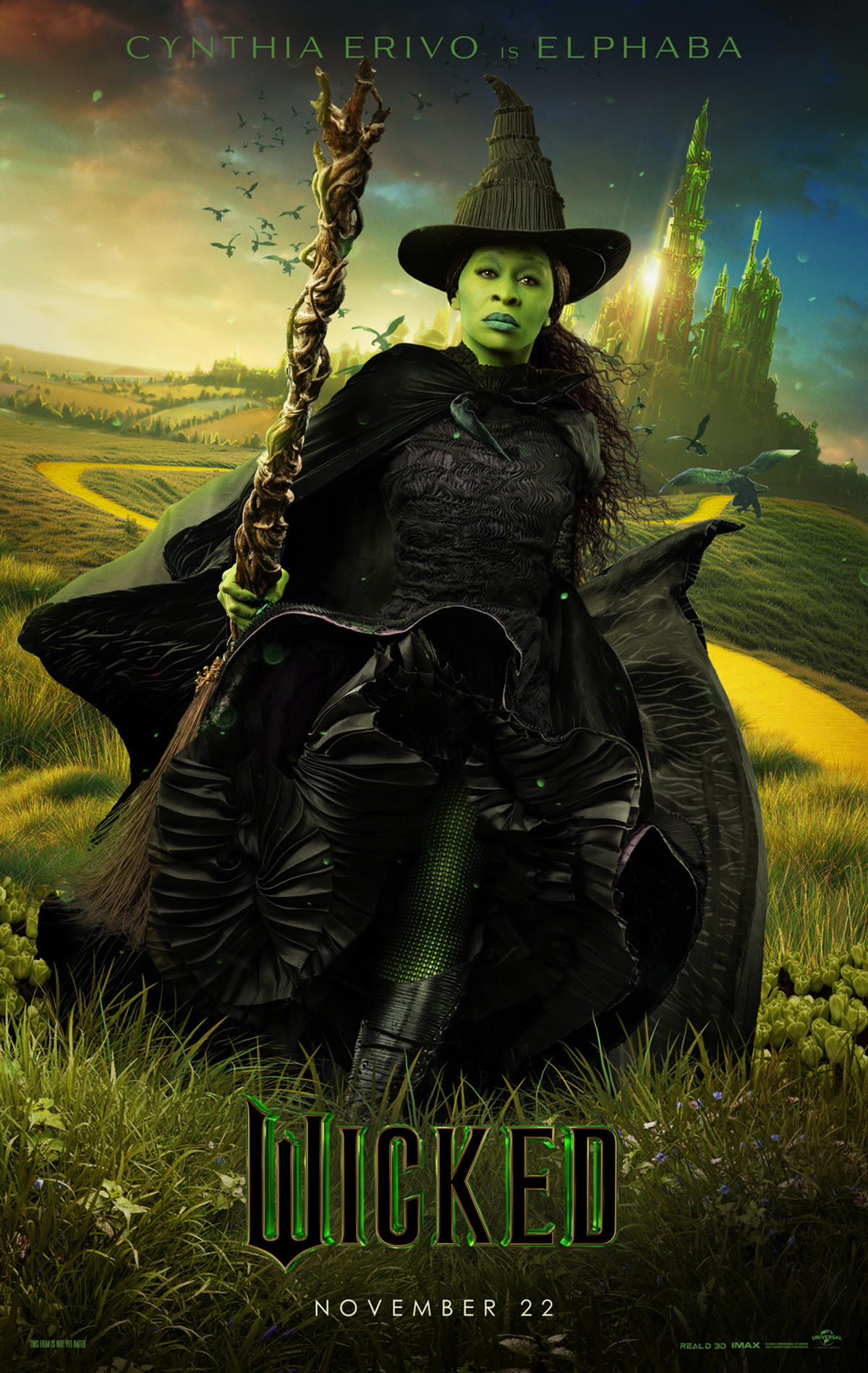
Elphaba character poster referencing the Yellow Brick Road

The Yellow Brick Road

The road that runs from the East to the West

A yellow-brick thoroughfare that runs from Munchkinland, through the centre of Oz, to the Wizard's stronghold at Kiamo Ko. In Wicked the road is the means by which Elphaba escapes the Wizard's reach and returns to the land she was born to defend. The image here is the Elphaba character poster: the witch, alone, on the road.

Connection to 1939: Dorothy's path to the Wizard in the MGM film
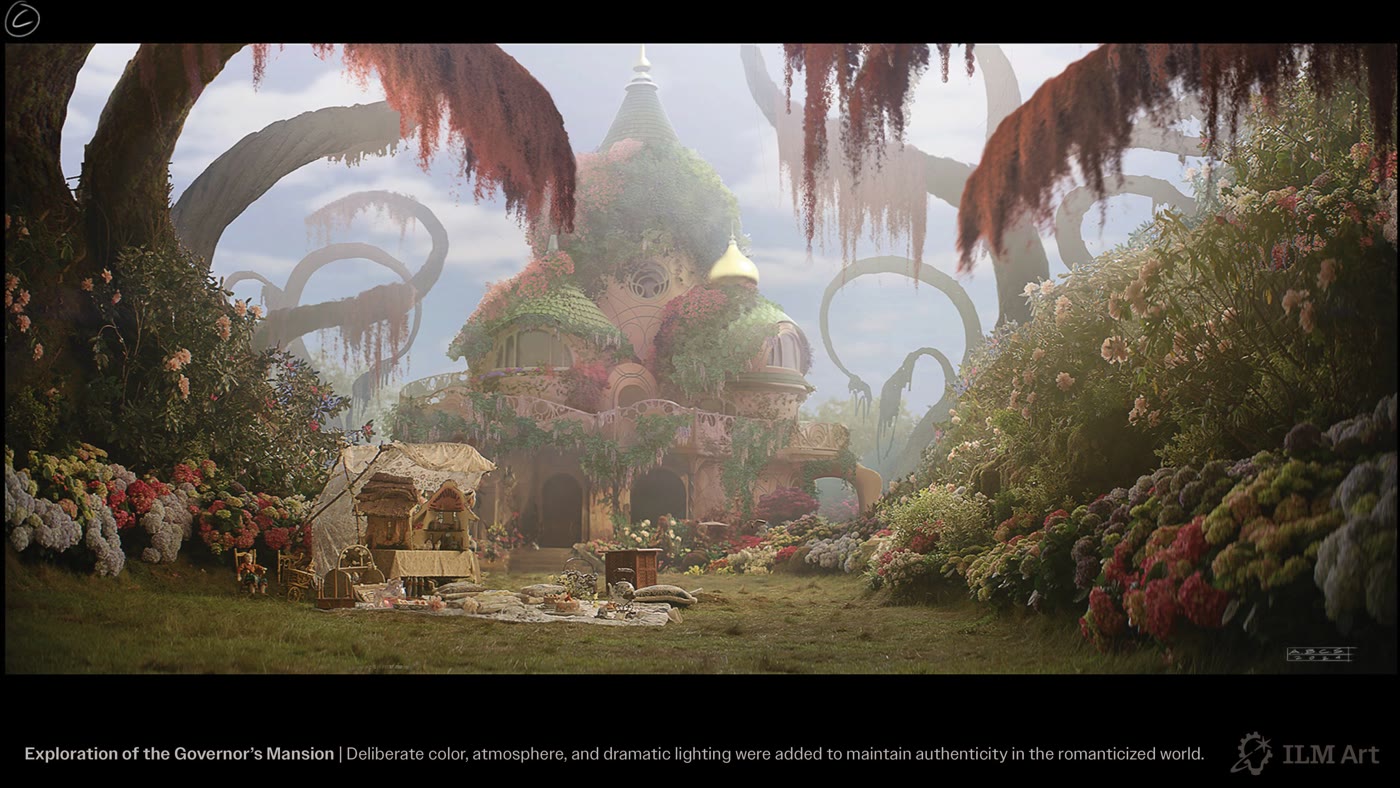
Concept art: the Governor's Mansion, the Thropp family home in Munchkinland

The Governor's Mansion

The Thropp family home in Munchkinland

The family seat of the Thropps, the (eccentrically) ruling family of Munchkinland. Elphaba's father is the Governor; her mother (now dead) was the first scandal of Elphaba's life. The mansion is the setting for Elphaba's childhood — the place she was disowned from, and that Nessarose inherits.

Region: Munchkinland (eastern Oz) Significance: The Thropp family seat; site of Elphaba's childhood
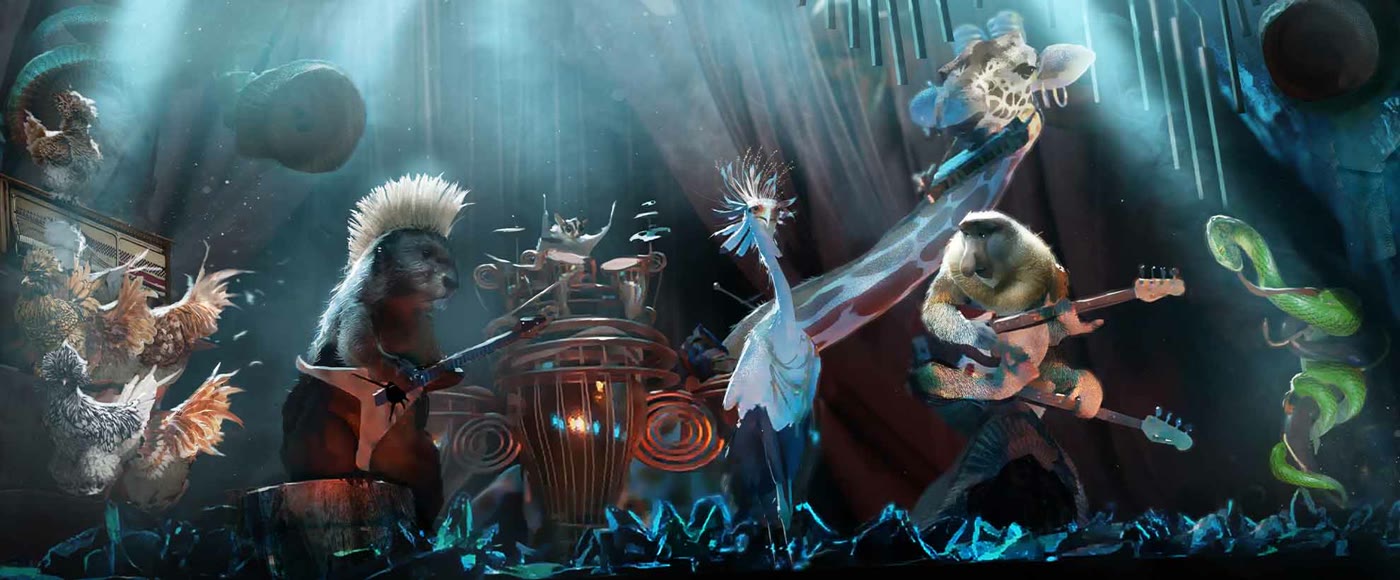
Concept art: the Ozdust Ballroom band

The Ozdust Ballroom

Oz's seediest dance hall — and Fiyero's first stop at Shiz

A run-down nightclub on the outskirts of Shiz University. Fiyero, the new transfer student, takes a group of classmates here on his first night. The number “Dancing Through Life” is set in the Ballroom. It is the show's most deliberately “un-Oz-like” location: a place where the fairytale aesthetic gives way to something grittier, more like a real dance hall.

Featured in: “Dancing Through Life” Tone: The only major location outside the university or the Emerald City in Act One
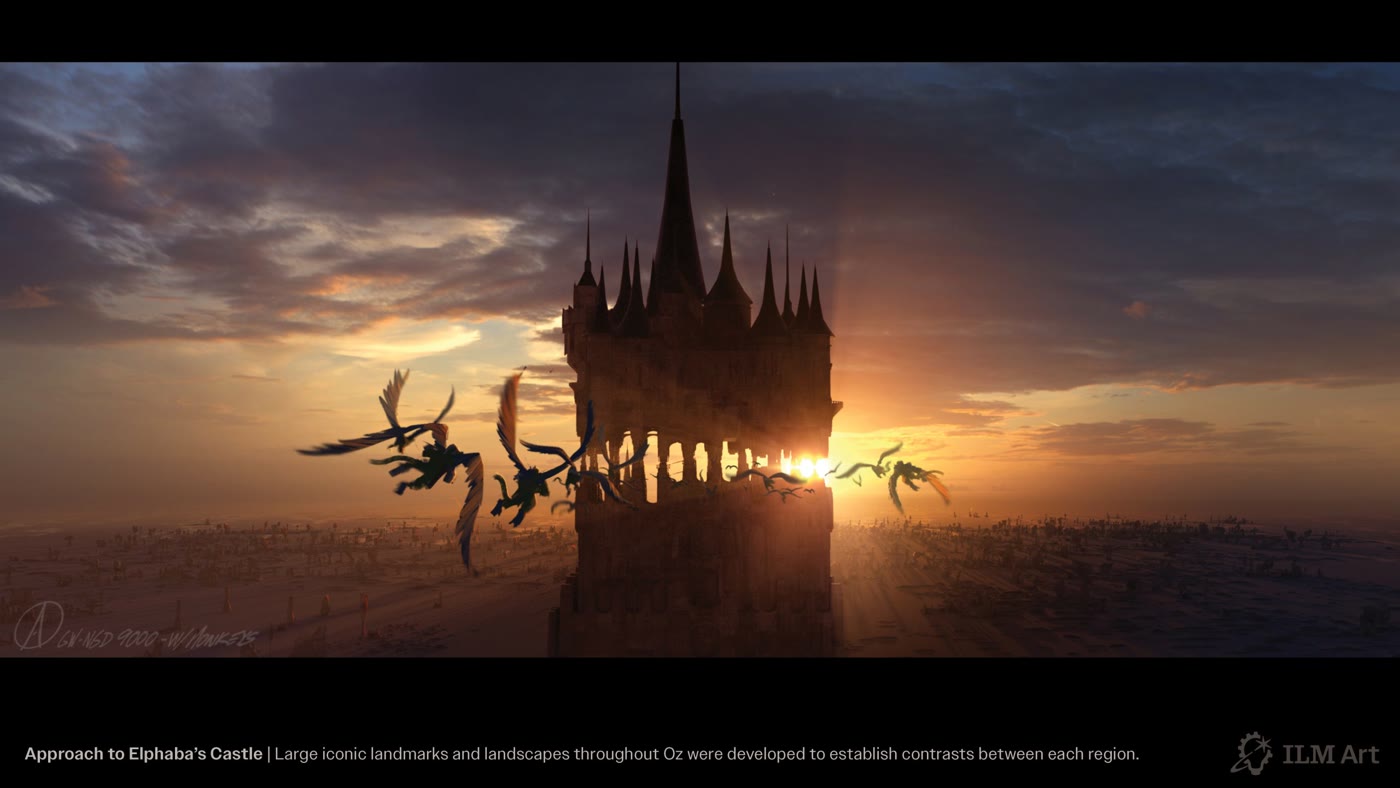
Concept art: Elphaba's Castle, the dark fortress at Kiamo Ko

Kiamo Ko (Elphaba's Castle)

The fortress in the west, where Elphaba makes her last stand

A dark, Gothic fortress in the western reaches of the Winkie Country, far from the Emerald City and outside the Wizard's easy reach. Elphaba claims it as her stronghold after her break with the Wizard. It is, deliberately, the inverse of every other location in the show: where the Emerald City is bright, manufactured, and watched, Kiamo Ko is dark, isolated, and unwatched.

Region: Winkie Country (western Oz) Significance: Elphaba's stronghold in Act Two Connection to 1939: The Witch's castle in the MGM film
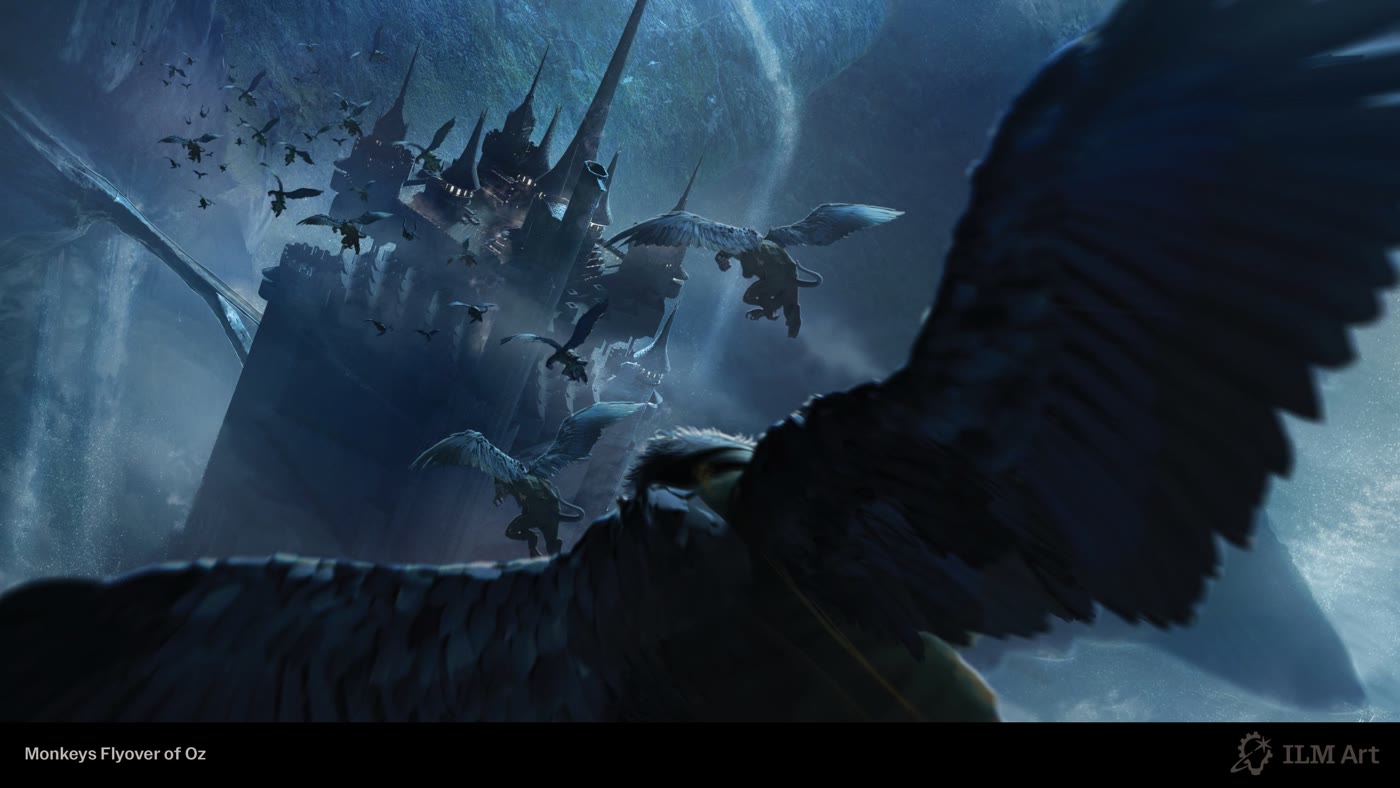
Concept art: winged monkeys flying over the Land of Oz

The Wilds of Oz

The ungoverned spaces between the cities

The vast, lightly-tamed lands between Shiz, the Emerald City, and Kiamo Ko. They are crossed by the Yellow Brick Road, by the Wizard's winged-monkey patrols, and by anyone who is escaping one thing and heading toward another. In the story, the wilds are where Elphaba goes to disappear, and where Fiyero follows her.

Significance: The space outside the Wizard's easy control Visual reference: The 2024 film's flying-monkey flight studies
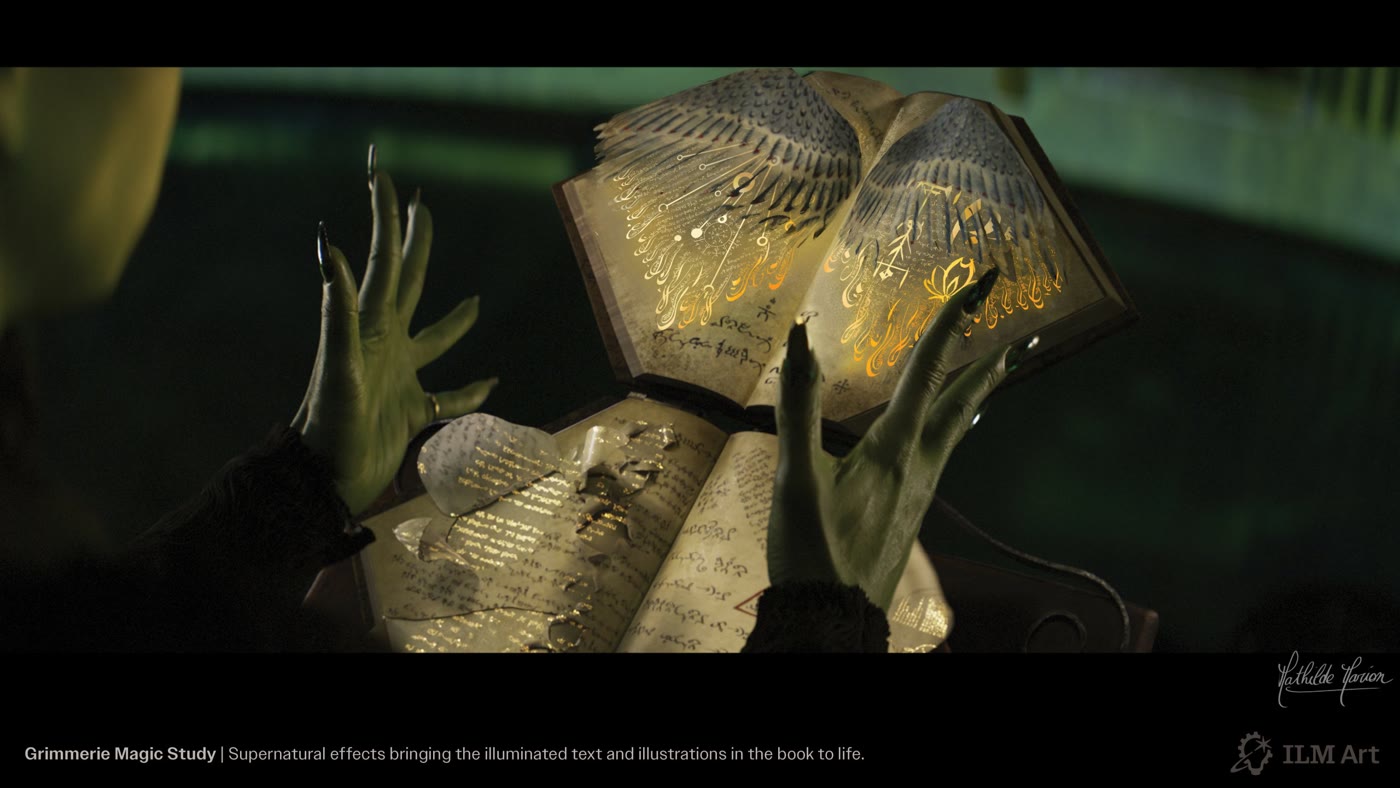
Concept art: the Grimmerie, the spellbook at the heart of the magic

The Grimmerie

The book of spells that is the true source of Oz's magic

A spellbook of unknown origin — older than the Wizard, older than the Emerald City, possibly older than the continent itself. The Wizard has been reading from it to perform the magic that sustains his regime. Elphaba, who can read the Grimmerie fluently (almost no one can), is the first person to realize what is in it. The book is the most dangerous object in Oz, and it falls into her hands.

Significance: The actual source of magical power in Oz Featured in: “Defying Gravity,” the climactic Act One sequence

A Geography of Power

Wicked is set in a place where the geography is political. Shiz is in the north, away from the capital, where the Wizard's control is loosest and the school can pretend to be neutral. The Emerald City is at the centre, where it can be watched and where the spectacles law keeps the public looking the right way. Kiamo Ko is in the west, far enough from the centre that the Wizard cannot reach it — which is why Elphaba chooses it as her base when she breaks with the regime.

The desert is the most important place of all. The Impassable Desert is the one fact about Oz that the Wizard did not create — and the one that guarantees his regime cannot be challenged from outside. Every other location in the story is, in some way, downstream of that fact.